One country tries to defy death, another flirts with death

Shortly before Christmas, a young woman was killed in our republic. At only 24, she had already made a small mark on our democracy that many have struggled to make over 3 decades rule. Cerinah Nebanda was a parliamentarian. Her death was sudden, multi-organ failure. Rumours spread about who could have done this cruelty in a land where a fundamental change was delivered 27 years ago ensuring all Ugandans could finally sleep peacefully in their homes- something that was unheard of since our independence.

This death came as a shock in a year when we commemorated our 50 years of independence in a way that looked more like 27 years of independence. Many people scrambled for the microphone, some to with outrage, sorrow, fear and others to defend themselves. To wash themselves clean- even if it meant using words mixed with anger and threats. Some Ugandans left their thoughts online.

You couldn’t escape from the name Nebanda. In my small village in Kibona, Bushenyi, an older man came to my home to ask me about what could have killed this young woman – with a kind of worrisome voice I rarely get from him. In a country where every night a district is born, many local people are mostly pre-occupied with local politics. But name of Nebanda who hails from a village, more than 500kms from my own, found its way to my Christmas day. A government autopsy report told the citizens that the young woman’s death had to with narcotic drugs and everybody else trying to get a second expert opinion was apprehended.

Continue reading “One country tries to defy death, another flirts with death”

Uganda threatens to withdraw troops from missions, UN distances self and Congo circus continues.

On Friday, Uganda’s Premier announced Uganda would pull its troops out of all peacekeeping mission over accusations that Uganda and some generals were backing M23 in Eastern DRC.

But like most people said, the threat was politicking which Uganda seems to gain an upper hand since the UNSC president has already said the report doesn’t necessarily reflect the views of the UN.

Could the views of UN be far from the contents of the report or could they be closer but UNSC will play safe in light of Uganda’s threats?

The UN Group of experts report will be out in about two weeks and seems by that time, Uganda and Rwanda and UN will have reached a settlement. This leaves the people of Congo in watching the same of old games.

Mineral looting vs security concerns

Uganda called the allegations in UN report baseless and complained that the UN wasn’t giving them credit where they have done well but this isn’t convincing. Our history in Congo shows that for every warlord that comes out strong, there’s a godfather in the neighbouring country.

This is done either by top generals in the armies with a blind eye of the presidents or big companies and agents who are trading in guns for minerals.  And many times the companies have a link to the top leadership in east African countries. However this is not to ignore role of western and Chinese companies in this conflict.

Continue reading “Uganda threatens to withdraw troops from missions, UN distances self and Congo circus continues.”

Uganda withdraw from peacekeeping missions would threaten regional peace

When UN report on Congo was first leaked in July 2012, Uganda’s support for M23 was largely ignored. So it appeared like Kampala had gotten away with as the world attention was drawn to Rwanda’s involvement and support for M23. Neither did we hear of the role of Kabila in this conflict.

Following the leak, US Secretary of State Hillary Clinton in August came to Uganda and met president Museveni.

In the wake of the M23 military advances, the AU summit tasked the International Conference on the Great Lakes Region (ICGLR) to look at the renewed Congo conflict. President Museveni offered to broker the talks between government and M23 rebels, the offer which President Kabila’s government was against. Nonetheless Uganda hosted three summits.

Three months down the road, it was revealed that Uganda has not been a spectator as M23, a group of former fighters from CNDP- an ethnic Tutsi rebel movement, marched taking over territory with much more advanced arms.

Who are M23?

The report says Bosco Ntaganda, a former Congolese general nicknamed the Terminator, who is wanted by the international criminal court, controls the rebellion on the ground while Sultani Makenga is in charge of operations.

M23 fighters had been folded into the army three years ago but they walked out and started the fresh fighting “to force the government to honor its agreement.”

Continue reading “Uganda withdraw from peacekeeping missions would threaten regional peace”

Escaping military service and kidnap, one Eritrean woman’s Ordeal

By Reem Abbas

When Fatima (not real name) escaped Sawa, a military camp in Eritrea, she had already been there for two long years doing the compulsory military training that is supposed to end after 18 months.

For many young Eritreans, the service never quit ends. The months become years and many youth, men and women, find themselves stuck in the military service for over a decade.

Fatima and five of her friends escaped one night from the camp without any sense of direction. They walked for three days until they reached the border with Sudan, digging up mud to drink water and having nothing to eat.

There, they found themselves face-to-face with Sudanese soldiers who detained them for two days. The rest escaped except Fatima. She was left behind and remains in Sudan, ten years later.

Fatima was then taken to a military outpost and not long after, late at night, she was rapped by one of the soldiers.

I met Fatima through a friend who found out about her story through another Eritrean in Khartoum. I didn’t even hesitate for a minute when I read my friend’s email and agreed to meet her the next day. My friend thought her story was worth telling, I felt humbled by the opportunity to tell her story.

I opened the door to find an Eritrean man David (not real name) who is probably in his 50s. And inside there was Fatima. Although I’ve read a guideline to interviewing victims of violence online at the Dart Center’s website, all of a sudden, I didn’t feel like I could do this. How could I remain composed through all of this? This was a huge challenge, but I felt a responsibility to tell this story and look for other women who have suffered a similar ordeal.

First, I chatted with Fatima and David about Sudan. In fact we talked about if they liked tea sugary or not too sweet. The conversation flowed smoothly and Fatima began telling her story and answering my questions without hesitation.

As Fatima spoke, her thin body drowned in her Sudanese toub (a cloth worn by Sudanese women) and her face testified to years of suffering endured. At 24, Fatima entered Sudan in 2000 and until now, in her 34th year she’s still stuck in Sudan.

At the military outpost, after her brutal rape, the soldier took Fatima to live with him in his tent.

“I later became very sick and I found out that I was pregnant,” said Fatima. She said she tried to escape at least three times, but was always caught and returned to the soldier, a man she had two children with.

After she had her first child, she says she halfheartedly accepted her reality and realized it is very difficult to escape. She stayed there, raising her two children with a man who verbally abused her and sometimes, beat her.

Their house was a tent inside the military camp with no access to electricity or the basics. She cooked with coal or wood and never left the tent.

“He worried that I would get to know people if I left the tent, so I never left, I never went to the market, I know I was in Kassala, but never saw it,” said Fatima.

For 10 years, Fatima was forcibly living with a Sudanese soldier. As time passed by, she learned Arabic, a language she did not speak a word of when she came from her homeland.

“When I was alone, I cried until my eyesight was almost gone,” said Fatima who was holding her glasses.

Continue reading “Escaping military service and kidnap, one Eritrean woman’s Ordeal”

Ethiopia without Zenawi; Will it be freer?

In December 2010 I traveled to Cancun, Mexico to cover the UN climate change talks – the COP16.  It was there that I met and had a brief chat with the late Ethiopian President Meles Zenawi. Zenawi had been selected by African heads of state to represent collective views of African states at the talks.

It wasn’t easy to access him, just like any other leader at such a big world summit but I got a moment after he appeared on a panel talking about economy and climate change. He was as sharp as a tack cutting through all figures of what price the continent’s people were paying as a result of global warming and other climatic effects and what it would take for us to adapt to the changing patterns.

After the session I had a brief interview with him before he was led to some stall he had to visit. On the way back I had one more question for him and I did make a successful attempt.

I was amazed by his interest in details. I had told him am Ugandan but he wanted to know where exactly in Uganda I was from. When I mentioned west,  he still wanted to know which town I was from. Then I went on to say near Mbarara and on his insistance I finally said Bushenyi. I had yet to visit Ethiopia where I have great friends who are like family to me in many ways.

When I finally visited the country later that month, I was told about the suppression of the people. I was shocked to know that even a Facebook status complaining about food prices and what government was or wasn’t doing could put one in trouble. I found it a great country with great history whose peoples were yet to see freedom.

Image

Ethiopia appears in the last deck of countries when it comes to civil liberties, press freedom and Meles presided over a government that did little listening to dissenting voices.

Continue reading “Ethiopia without Zenawi; Will it be freer?”

La Pirogue puts a human face to illegal immigration

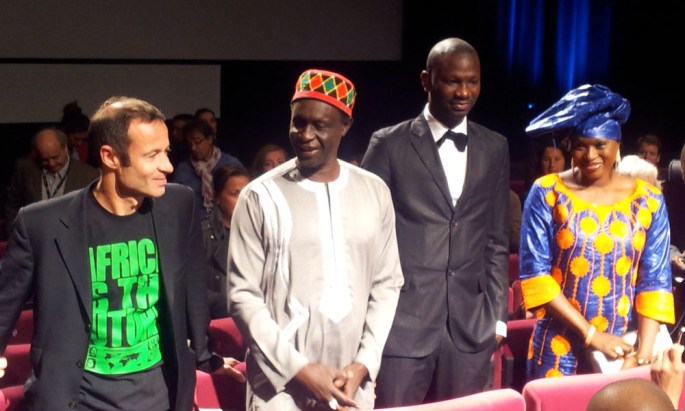
La Pirogue, a film by Moussa Toure was first screened at Cannes festival today. The Director Mr. Toure and the part of the cast arrived at the venue accompanied by a man who has held the Senegalese flag for decades through his music, Youssou n’Dour.

Youssou n’Dour, one of the most popular Senegalese alive, is now the Culture minister after his failed attempt to run for presidency early this year. Before the film Toure told the audience, “with this film as a small African boy I feel I am making my mark of history.”

Moussa Toure, Film director and some of the cast at Cannes2012

La Pirogue (Shallow canoe used for fishing) in French mostly features Senegalese model, Comedian and actor Souleymane Seye Ndiaye who plays the character Baye Laye who leads a group of 30 illegal immigrants on a deadly journey across the Atlantic to Canary Islands.

Continue reading “La Pirogue puts a human face to illegal immigration”

Hunting Kony; View from former Uganda advisor on LRA ICC case

Dr . Payam Akhavan, is a former UN Prosecutor at The Hague, he advised the Ugandan Government on the LRA case before the ICC as part of a broader strategy of isolating and defeating Kony in 2003-2005. He is now a professor of international law at McGill University n Montreal. I have known Payam  for a few years. Here is what he told me about KONY2012

“The video is ten years too late.  Watching it, one imagines that nobody was ever involved in this struggle before they started filming.  Back in 2003, we devised a brilliant strategy with highly competent Ugandan officials on how to eliminate the LRA by depriving them of rear-bases in southern Sudan.  Within two years, the war in Uganda was over and Joseph Kony’s force of several thousand was reduced to a few hundred fugitives in the Congo.

The failure to capture him thus far has nothing to do with lack of funds. It is a complex intelligence operation against a cunning and ruthless adversary who knows how to survive in the jungle.  The millions in funds gathered so far are needed for rehabilitation of former child soldiers and their communities, not to pay overhead for NGOs in America.  The video may be useful for public education since the world is woefully ignorant about Africa.  But its content is at best uninformed and at worst deceptive.  Exploiting other people’s suffering for self-promotion is unethical.

Had the Ugandan communities directly affected been consulted, the video would have had a very different focus, and the millions of dollars in funds too would have reached those that need it most.”

More perspective on Kony2012

I know Glenna Gordon from her time in Uganda and she was one of the few American journalists who covered the later stages of the Kony war in northern Uganda. She was part of a group of journalists who travelled well with Ugandan and South Sudan officials between 2005-2009 as they went into the jungles to try and secure a peace deal with Kony. In fact she’s the one who took that photo of Invisible Children  founders holding guns among SPLA soldiers. She lived in Uganda for years and worked in West Africa too. She’s the kind of journalist and voice that I wish viewers of this video would hear more often. This was her take on the video when she spoke to the Washington Post.

 I can’t bring myself to watch the video. I found all of their previous efforts to be emotionally manipulative, and all the things I try as a journalist not to be. After the peace talks in 2008, they put out another video, and I saw the footage used in these videos blending archival footage with LRA and SPLA and videos of them goofing off. It was the most irresponsible act of image-making that I’d seen in a long time. They conflated the SPLA with the LRA. The SPLA is a government army, holding weapons given by the government, and yet they did not create any division between them and LRA. That’s terrible.

And for that Ms Gordon got a response from filmmaker defending Invisible Children with the worst of all narrative of three boys trying to save Africans instead of playing Angry Birds.

Continue reading “More perspective on Kony2012”

Kony2012; My response to Invisible Children’s campaign.

For the last many hours i have followed a campaign by Invisible Children NGO called KONY2012 that has gone viral getting more than 20 million hits on Youtube. I am a story teller and i know the danger of a single story  . It is something many people can easily ignore especially if we are outsiders to the story.

This is the video i recorded late in the night. It’s longer than i would have wanted but i just wanted to put my views out there on a conflict I have covered as a journalist and a people I have worked among as a communications officer at Isis-WICCE. I don’t in any way think I represent views of Uganda like some comments i have seen. This is me talking about the danger of portraying people with one single story and using old footage to cause hysteria when it could have been possible to get to DRC and other affected countries get a fresh perspective and also include other actors.


Uganda Nodding disease patients; Is it a crime to seek better healthcare?

Yesterday March 5, I was part of a group of women from various organisations who visited Mulago hospital acute pediatric ward to pass on a few items to children suffering from what we have come to call Nodding Disease. I learnt about the condition in 2006. It was a friend from the US who was here to work with a team investigating the condition that had told me about it. She wondered why it had not made it to the media. I really wanted to go up north and do a report or two about this mysterious disease but I never made it because at the time I worked at NTV as a reporter and it was a busy year with Kony peace talks that took precedence. Well I failed to get back to the story in subsequent years.

In brief nodding disease is a mentally and physically disabling disease that only affects young children mostly between the ages of 5 and 15. It is currently in Uganda South Sudan and Tanzania. Victims get siezures on the smell of food or getting cold and the cause is unknown and so is the cure.

About six years down the road, on Monday I was standing together with women from Uganda Women Network, FIDA, Isis-WICCE and the activist Jackie Mwesige who has been pushing the women movement to do something about this.  The women had come with blanks and some items for both the child and their caretakers to hand them over. The hospital administration had been informed in time.

I arrived at about 1:15pm and I was quite surprised to see police deployed at the unit. At first I thought we were in a wrong ward, may be a ward where a wanted person was being kept. We were only here to show our support to 25 nodding disease victims who were transported to Mulago on March 02 after local leaders realized they were not getting much hearing from the central government in Kampala.

Police guarding the ward at Mulago.

All the children are from Kitgum and they part of 3000 children currently suffering from this unknown disease. The nodding disease was given prominence in Ugandan leading papers late last year and since then there has been major coverage even in international media. It took us two hours to negotiate our entry into the ward. Kitgum woman Member of Parliament Beatrice Anywar who has been at the top of calling for well-wishers to support families was present.

Continue reading “Uganda Nodding disease patients; Is it a crime to seek better healthcare?”