Ethiopia without Zenawi; Will it be freer?

In December 2010 I traveled to Cancun, Mexico to cover the UN climate change talks – the COP16.  It was there that I met and had a brief chat with the late Ethiopian President Meles Zenawi. Zenawi had been selected by African heads of state to represent collective views of African states at the talks.

It wasn’t easy to access him, just like any other leader at such a big world summit but I got a moment after he appeared on a panel talking about economy and climate change. He was as sharp as a tack cutting through all figures of what price the continent’s people were paying as a result of global warming and other climatic effects and what it would take for us to adapt to the changing patterns.

After the session I had a brief interview with him before he was led to some stall he had to visit. On the way back I had one more question for him and I did make a successful attempt.

I was amazed by his interest in details. I had told him am Ugandan but he wanted to know where exactly in Uganda I was from. When I mentioned west,  he still wanted to know which town I was from. Then I went on to say near Mbarara and on his insistance I finally said Bushenyi. I had yet to visit Ethiopia where I have great friends who are like family to me in many ways.

When I finally visited the country later that month, I was told about the suppression of the people. I was shocked to know that even a Facebook status complaining about food prices and what government was or wasn’t doing could put one in trouble. I found it a great country with great history whose peoples were yet to see freedom.

Image

Ethiopia appears in the last deck of countries when it comes to civil liberties, press freedom and Meles presided over a government that did little listening to dissenting voices.

Continue reading “Ethiopia without Zenawi; Will it be freer?”
When mountains moved

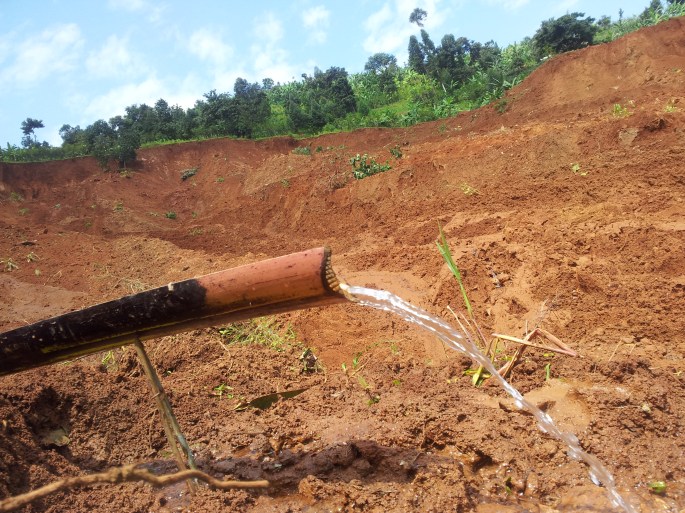
On June 25, two villages of Bunakasala and Bunamulembwa were buried when a part of the hill in Bududa district gave way in an afternoon downpour. Fifteen houses were buried and 8 people are now confirmed to have been killed by the landslide in the eastern district, which lies on the slopes of Mt.Elgon. The number could have been bigger had it not been a market day in the parish.

Almost two weeks later I visited the landslide scene with a colleague from the UgandaSpeaks project. We had gone to deliver relief items collected through organizing Ugandans on Twitter via #TweepsHelpBududa to help survivors of the landslides.
We took a van, which was generously availed by Aramex, full of clothes and blankets, basins and other things which Ugandans mostly in Kampala had brought together.

On Friday July 6, Javie Ssozi and I made it to Bududa. We made a call at the district headquarters to register our presence and items. Minutes after, we headed to Bududa on a bumpy non-tarmacked road.

Water from a river partly buried by the moved land. read more about perceptions abt the landslides from the area: http://www.academicjournals.org/ajar/pdf/pdf2011/4%20Jan/Kitutu%20et%20al.pdf

At the site, we met the team from Office of the Prime Minister (OPM) and Red Cross. Excavators continued to plough deep into the hilltop in hope of recovering the 4 remaining bodies. It is believed it is a woman and her 3 children still buried deep in the soil. The faces at the site are some of those that cant easily leave your head. A husband watching waiting to see if this will be the day they find his dead children and wife, an elderly woman whose house narrowly escaped – by few inches- the path of the land moving landmass, a young woman who literally ran out of harms way but her young son couldn’t make it.

Survivors come to the Red Cross tent for counseling and treatment where need be and the rest of people sit visibly worried because they know this is not the first or the last they will face this. We made sure we handed over blankets especially to women survivors who have young children. We left the rest for Red Cross and a couple of volunteers to hand over.

Site of the landslide in Bududa

At the site I met with a gentleman from OPM who discussed the issues that many out here have been into since the landslide. He says they cannot forcibly evict or resettle people for there’s no such a law that gives them the powers. He however said many people have expressed willingness to leave the hills and be resettled.

Continue reading “When mountains moved”

La Pirogue puts a human face to illegal immigration

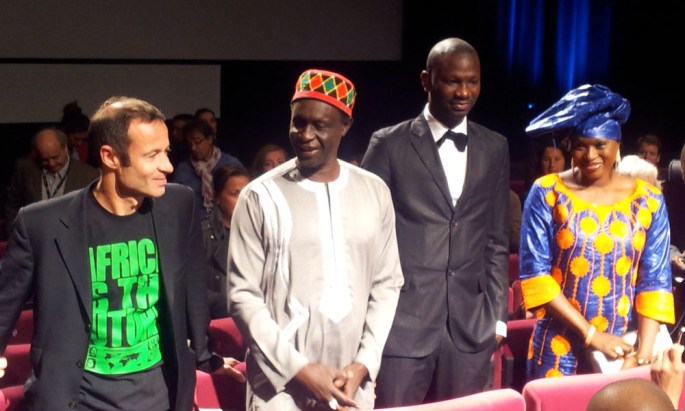
La Pirogue, a film by Moussa Toure was first screened at Cannes festival today. The Director Mr. Toure and the part of the cast arrived at the venue accompanied by a man who has held the Senegalese flag for decades through his music, Youssou n’Dour.

Youssou n’Dour, one of the most popular Senegalese alive, is now the Culture minister after his failed attempt to run for presidency early this year. Before the film Toure told the audience, “with this film as a small African boy I feel I am making my mark of history.”

Moussa Toure, Film director and some of the cast at Cannes2012

La Pirogue (Shallow canoe used for fishing) in French mostly features Senegalese model, Comedian and actor Souleymane Seye Ndiaye who plays the character Baye Laye who leads a group of 30 illegal immigrants on a deadly journey across the Atlantic to Canary Islands.

Continue reading “La Pirogue puts a human face to illegal immigration”

Cannes Film Festival; through my eyes

I am in Cannes for two weeks as part of a project by CFI together with other six bloggers from Madagascar, Togo, Tunisia, Egypt, Lebanon and Georgia to write on the film festival.

So far I have written on the films from the African continent that feature in this year’s official selection and yesterday i had a brief interview with the MD of Nigeria Film Corporation talking about Nollywood.

Continue reading “Cannes Film Festival; through my eyes”

Uganda women protest topless against Police public groping of female politician

On Friday, Ugandans witnessed another episode of police brutality. It wasn’t just the brutality we are used to seeing.  In this video ran by NTVUganda  a police officer was, publicly before the cameras, groping an opposition politician Ingrid Turinawe.

Ingrid has been at the forefront of various pressure groups in Uganda for the last 5 years. She was one of the leaders of the Activists for Change (A4C), a pressure group that led the famous Walk to Work protests that took place in many parts of Uganda for the greater part of 2011 as the Arab spring was going on.

The group has been banned because in our country where we still use very colonial laws to the advantage of a dictatorial regime, the attorney general has powers to declare a group illegal even without evidence of  the need to ban them. This law threatens even a blogger or writers who mention A4C as government could claim that they are  promoting an illegal group  with intention to ‘incite violence’. Already two journalists have been summoned by the police over an interview had with the head of the group. Human rights groups have warned on the dangers of the government-increased crackdown on freedom of speech, expression and assembly in Uganda.

Once the group A4C was banned, some of its leaders rebranded it into For God and my Country (4GC), taking after the country motto. It was after the launch of the new group that Uganda police brutality came back to our living rooms.

This time a male police offer publically groping Ingrid as another pulls her leg out of the car. The police officer didn’t grope her once, he did it repeatedly and in the video we hear Ingrid asking why the police officer was doing that. One other police officer warns his colleague but does nothing to stop this.

Continue reading “Uganda women protest topless against Police public groping of female politician”

What would you do?

“What would you do if instead of me from the moment you were born, every day they told you that you are less than another person, that you deserve less, that you don’t know enough to talk, that you have half the brains of another human? What would you do if you had to watch what you say, wear, do every moment of your life out of fear that someone might call you a name and the whole world might see you as “bad” so you could never be comfortable in who you are? What would you do if you were banned from going to school or harassed brutally on the way to school every day?  You would not be as strong as me. You would give up. But I won’t give up. I will keep fighting no matter what the society hands me.” -Meetra Alikozay, a member of Young Women for Change, a rights based group in Kabul run by young Afghan women.

Through their work i have learnt about issues affecting women in Afghanistan. I hope to one day watch This is my City too.

Follow them on Facebook.

Happy Easter

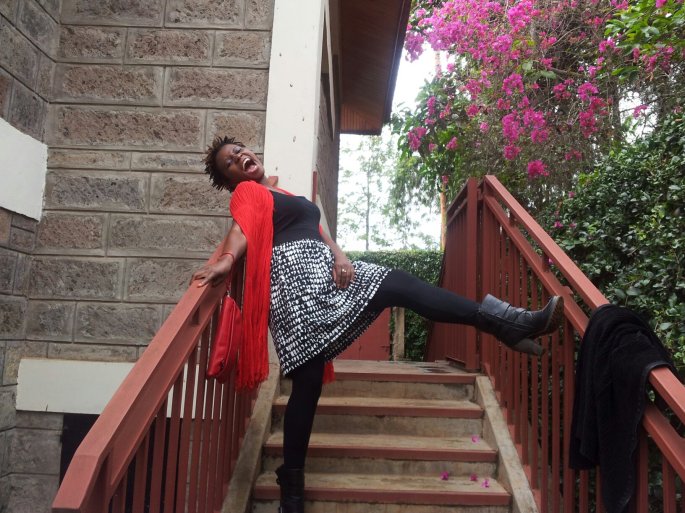
This is the second Easter  holiday I have spent outside home. This time am next door in Nairobi with friends. Last months have been hectic and I am taking a few days to celebrate, appreciate, reflect on the gift of friendship and freedom. So my friend Rachel took these photos yesterday in cold Nairobi weather.

Easter is about freedom and someone recently asked “so Rosebell, what’s your favourite bible character?”   David! To me he represents human flaws, freedom and victory. And in the end I love the fact that in the end despite all flaws God calls him “Man after my own heart”.

So to all friends, real friends, family and everyone who values freedom, may you be free!

“Then you will know the truth, and the truth will set you free.” John 8:32

Hunting Kony; View from former Uganda advisor on LRA ICC case

Dr . Payam Akhavan, is a former UN Prosecutor at The Hague, he advised the Ugandan Government on the LRA case before the ICC as part of a broader strategy of isolating and defeating Kony in 2003-2005. He is now a professor of international law at McGill University n Montreal. I have known Payam  for a few years. Here is what he told me about KONY2012

“The video is ten years too late.  Watching it, one imagines that nobody was ever involved in this struggle before they started filming.  Back in 2003, we devised a brilliant strategy with highly competent Ugandan officials on how to eliminate the LRA by depriving them of rear-bases in southern Sudan.  Within two years, the war in Uganda was over and Joseph Kony’s force of several thousand was reduced to a few hundred fugitives in the Congo.

The failure to capture him thus far has nothing to do with lack of funds. It is a complex intelligence operation against a cunning and ruthless adversary who knows how to survive in the jungle.  The millions in funds gathered so far are needed for rehabilitation of former child soldiers and their communities, not to pay overhead for NGOs in America.  The video may be useful for public education since the world is woefully ignorant about Africa.  But its content is at best uninformed and at worst deceptive.  Exploiting other people’s suffering for self-promotion is unethical.

Had the Ugandan communities directly affected been consulted, the video would have had a very different focus, and the millions of dollars in funds too would have reached those that need it most.”

Support Nodding Disease victims; the most urgent challenge to a northern Uganda child

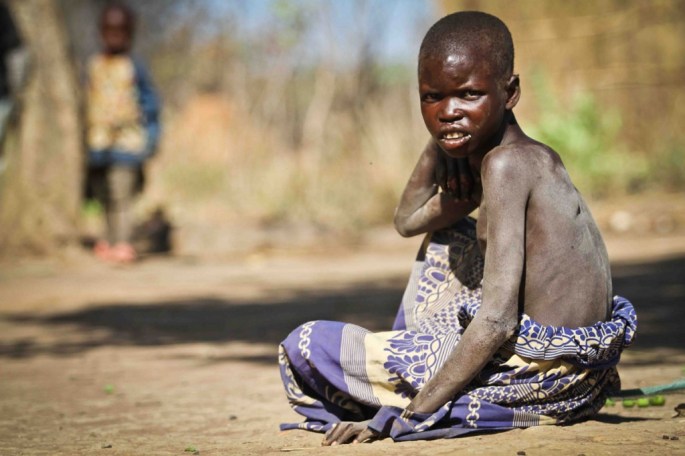
12 year old Nancy Lamwaka one the thousands of victims of LRA war but now tormented by a new disease.

Over the last few days I have received thousands of emails in response to the video I put out in response to KONY2012. Most of the emails were from grateful people who had learnt something from my video.  I am unable to read all the responses and reply you all at this time but your efforts are very much appreciated.

Most responses indicated they want to support the Ugandan child and be sure that the help goes to the right cause.

The cause

More than 3000 children in northern Uganda are currently battling a mysterious disease that has come to be known as nodding disease. Please read more from Wikipedia about Nodding Disease. There are so far 170 reported deaths.

In brief,  nodding disease is a mentally and physically disabling disease that only affects children between the ages of 5 and 15. Victims get seizures on the smell of food or when they get cold. Read more from previous blog

The World Health Organisation and Centre for Disease Control (CDC) have been working on research to establish the cause and how the disease is transmitted with no success so far.

Why we need to act fast:

With the healthcare system in northern Uganda wrecked by war and in a country where the right to healthcare is not guaranteed, most children suffering from this disease have been going through unbearable suffering. Parents are forced to painfully tie their children to trees.

Continue reading “Support Nodding Disease victims; the most urgent challenge to a northern Uganda child”

More perspective on Kony2012

I know Glenna Gordon from her time in Uganda and she was one of the few American journalists who covered the later stages of the Kony war in northern Uganda. She was part of a group of journalists who travelled well with Ugandan and South Sudan officials between 2005-2009 as they went into the jungles to try and secure a peace deal with Kony. In fact she’s the one who took that photo of Invisible Children  founders holding guns among SPLA soldiers. She lived in Uganda for years and worked in West Africa too. She’s the kind of journalist and voice that I wish viewers of this video would hear more often. This was her take on the video when she spoke to the Washington Post.

 I can’t bring myself to watch the video. I found all of their previous efforts to be emotionally manipulative, and all the things I try as a journalist not to be. After the peace talks in 2008, they put out another video, and I saw the footage used in these videos blending archival footage with LRA and SPLA and videos of them goofing off. It was the most irresponsible act of image-making that I’d seen in a long time. They conflated the SPLA with the LRA. The SPLA is a government army, holding weapons given by the government, and yet they did not create any division between them and LRA. That’s terrible.

And for that Ms Gordon got a response from filmmaker defending Invisible Children with the worst of all narrative of three boys trying to save Africans instead of playing Angry Birds.

Continue reading “More perspective on Kony2012”