Kisenyi; a case for urban poor in Uganda
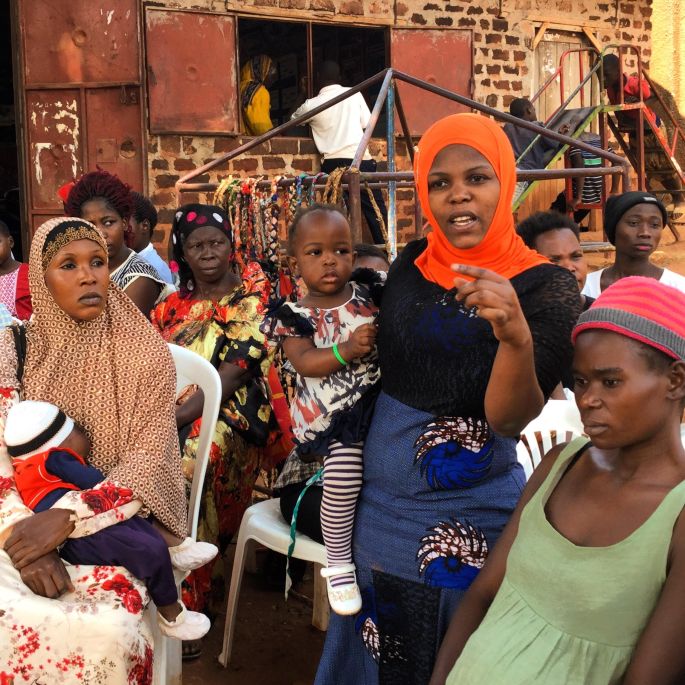
Right in the middle of down town Kampala is a slum called Kisenyi. It’s a place with a mix of many language spoken in Uganda, Eastern Congo, Tanzania, Rwanda, Kenya, Somalia and Ethiopia. The roughest Kampala neighbourhood I have ever been. We visited Kisenyi on Saturday 28th with friends, some of whom I know personally and others through twitter after @AndyKristian called us for a photo shoot. I had only passed by the outskirts of Kisenyi as a journalist. I had never seen anything like that before. In just a few minutes from the crazy crowded bus parks we were in a place where we felt visibly foreign.
It wasn’t long we were moving through the garbage, heaps of polythene bags, flowing sewage besides little wooden houses which most people sleep in. We were with a young man that runs a program for kids in that neighborhood and that’s why it was easy to move around.
Andy and Ed Echwalu were ready with cameras. You can’t shoot without getting the toughest kids on the block to guard you here. Before the shoot, a crowd of kids gathered, it was quite touching to see a child beg you to buy them sugarcane for 100 shillings for lunch. We were there around 1pm, most of these kids don’t easily find a meal. There are all sorts of businesses going on but survival business like selling empty water bottles. More than three quarters of the kids and youth here were intoxicated with all sorts of substances. There were a few women who came to the shooting site. There were lots of young girls too.
“Is it outrageous to want to live in peace?”
On Sunday 22nd, Uganda watched in horror as a city enforcement officer , who later turned out to be a police officer, brandished his AK47 shooting indiscriminately at a group of unarmed civilians who had gathered at a demolition site carried out by Kampala city authorities. NTV Uganda brought the news in and people I was with said you could have mistken the scene to be Mogadishu. In this video, at 5:30 you see the animal that Uganda’s security forces have become. A man using a stick, a gun and a pistol to violate citizens.
Two historic stories of Africa in 2011
As the year 2011 closed, December 7 marked a historic day in international justice. The first former head of state Luarent Gbagbo appeared before the International Criminal Criminal for crimes allegedly committed during the Dec 2010-April 2011 post election violence in his country Cote d’ivoire. Gbagbo had take over and retain power by force and trickery. Over 3000 people died in Cote d’Iviore.
He faces four charges of crimes against humanity, including murder and rape. Throughout the conflict I had kept in close touch with friends in the country and their distress was beyond what I could imagine. Everyday Africa was treated to the drama of two people claiming to have won an election. Many thought Ivory Coast could head in the direction of Kenya and Zimbabwe, where compromise had to be reached because Africa’s old men didn’t wish to leave.
Why Occupy Nigeria?
2011 was quite a year. It saw the fall of 4 dictators, three of them on the African continent. Many waited to see if the Arab spring that North Africa enjoyed would cross the Sahara and come down. There were a few protests in Uganda, Swaziland, Gabon, Cameroon and Senegal which didn’t yield a lot. Nonetheless, many African citizens had learnt a great lesson from the Tunisia, Egypt and Libya. They learnt that they could stand up to their leaders. Now that Nigeria, the largest (population) country on the continent has kicked off 2012 with #OccupyNigeria we wait to see how the government handles the situation after today’s strike and what lessons we can draw.
The protest against President Goodluck Jonathan’s decision to remove fuel subsidies has united many who say this will suddenly more than double the cost of living for most Nigerians. This year the Ugandan government has promised to start work on an oil refinery and the sector is already hit with corruption and bribery allegations. At the heart of the subsidies debate in Nigeria is why hasn’t government invested in refineries instead of selling crude oil and import fuel at a much higher price. I asked two Nigerian friends, both are taking part in today’s protests, about the issue because Uganda government has to learn from African countries like Nigeria that have been producing oil for five decades. Here is the two responses.
Read more…
No near end to violence as DR Congo election is disputed.
I am in Brussels where two days ago Congolese community had clashes with Police when they went out to demonstrate agains the president Joseph Kabila’s ‘re-election’ which has so far been rejected by international election observers and leading opposition candidate Etienne Tshisekedi.
The Carter Center said “we find the irregularities are significant enough to undermine the credibility of the election results.”
Again the contention is on the tallying process. Earlier the opposition had warned that the Electoral body had chosen to announce first results from Kabila’s strongholds in Katanga, a move seen by many as way to psychologically prepare the population if Kabila is finally announced as a winner. But Once again we have a Cote d’Iviore situation, both men have announced themselves as winners of the election. There are reports of government moving troops into Kinshasa and rounding up youth linked to the opposition. The situation is unpredictable and no one seems to know how this stalemate will be solved. And as tensions flare I am reminded of women of DRC, eastern DRC in particular who have endured all sorts of inhumane acts by soldiers and militias. On this day they see the little hope of having a government that can bring peace wane.
And I bring a story of Ester Munyerenkana a health worker at Panzi. I have held onto this story for quite a while. Her and other health workers daily have to deal with the end result of the broken political system and violence in Congo Read more…
Child marriages in Uganda
This week I was in Kasese taking part in validation of a study soon to be released by Isis-WICCE on child marriages in Uganda. I met Sarah Biira, 19 year old who had her first child at 13 years. Kasese is a post conflict area but has largely been ignored in terms of development. It has been under conflict since 1940s and the education of a girl child is a challenge because of poverty, cultural beliefs and loss of livelihoods to war.
Here is Sarah’s story.
Obama’s troops in Central Africa to fight LRA; will they deliver?
Many Ugandans, through various social networks, have expressed skepticism over the 100 combat troops the US deployed to Uganda to help stamp out the rebels of Lord’s Resistance Army currently operating in the Democratic Republic of Congo (DRC), Central African Republic (CAR) and parts of western South Sudan.
They think what they are actually here to do is secure for their country Uganda’s newly found oil.
The mistrust and suspicion of American military interventions is well understood considering its record world over. However, I found many who are opposed to this deployment lacking much knowledge on what havoc the LRA have inflicted on the peoples of the three countries whom governments have largely ignored. And also many don’t look at what alternatives are there to stop these brutal massacres Read more…
Talking Africa Nobel Peace Prize winners with Al Jazeera
Last week, President Ellen Johnson Sirleaf and Leymah Gobwee won the the Nobel Peace Prize jointly with Tawakkul Karman from Yemen for their work of bringing peace in non-violent ways in their countries. I met Leymah last year at the Man Up Campaign conference alongside the World Cup in South Africa. I have interviewed President Sirleaf twice. I thought it was very significant for African women to be recognised in the area of peace and security. Most often the image of African women is that of a victim of war and not a participant in bringing about peace.
Here is what I shared with Al Jazeera Newshour the day the winners were announced on Friday 7 October.
This week at the press briefing in Kigali, I asked President Paul Kagame what this prize meant for Africa.
I am only happy for the women of Africa. We need to go beyond this being a symbol for women. Women need attention not just in Africa but in the rest of the world. When I travel and read i see marginalisation of women. We appreciate the quest to empower women and have them as an integral part of our society on equal terms. But as we get help here in Africa, i feel we may need to take this help to some of these countries. For instance you go to discuss business in these countries and all their boards have about 20 men and one or two women. They too need help. This Prize is a reminder that we should work beyond the prize that was given for us to meet expectations of women of Africa. We need more women presidents!
In the interview I mentioned the status of women in South Sudan and I intend to write a separate post soon from my recent trip to Juba and interactions with women leaders in that country.