Ugandan journalists freed in South Sudan

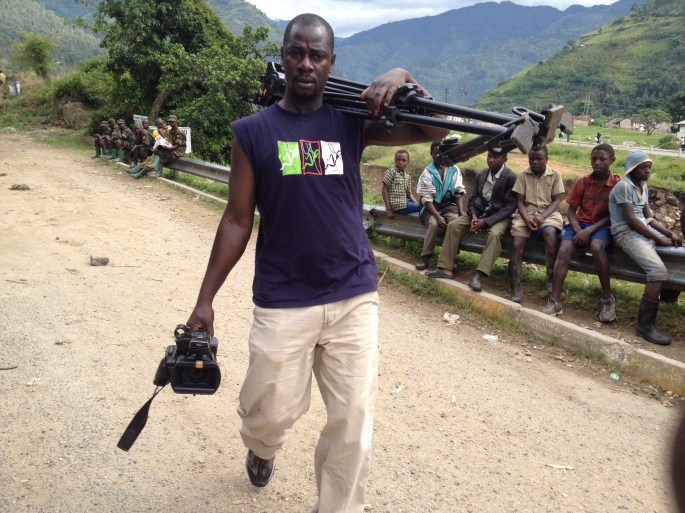
Today at about 1200hrs EAT, South Sudan authorities freed two Ugandan journalists who have been in detention since Saturday. The Justin Dralaze and Hillary Ayesiga who were filming in Juba, the capital of South Sudan without clearance were held by South Sudan security for four days.

The Ugandan Embassy and Uganda Ministry of Foreign Affairs intervened in the case for the last five days but it was a lot of work on part of two South Sudanese Human Rights lawyers that finally brought security in South Sudan to release the journalists without charge.

The two are expected to arrive in the country this evening. The two were held together with a Ugandan Juba based driver Muhammed Bukenya.

Here’s a poster from a social media campaign that Ugandan journalists used to call on President Kiir to intervene.
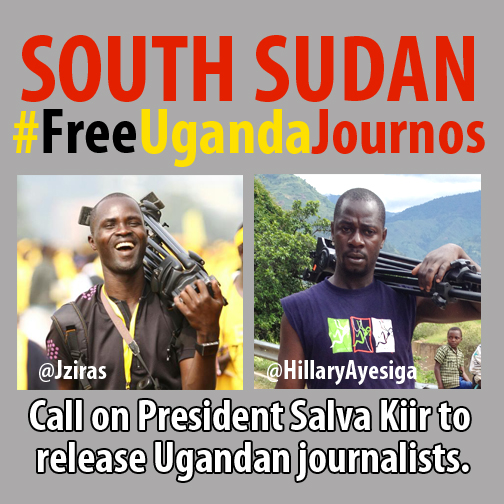
South-Sudan-Free-Justin-and-hillary- (2)

Read more from previous post.

President Salva Kiir free Ugandan journalists

Hillary while covering floods in Kasese, Western Uganda a few months ago.

This is Hillary Ayesiga a Ugandan journalist. I met Hillary in 2007 when we started working for Nation TV Uganda (NTV), a part of the Aga Khan’s Nation Media Group. It was the new station in Uganda, fairly professional- more than most TV stations to the best of my judgement.

Hillary was a colleague for close to two years when i worked at NTV and he is a friend. He’s a hard working journalist. He never shies away from stories.

On Saturday, Hillary was arrested in Juba, South Sudan together with Justin Dralaze, a video journalist that has worked with Reuters for long time until recently. The two had gone to South Sudan to do stories for Feature Story News (FSN), a US-based company.

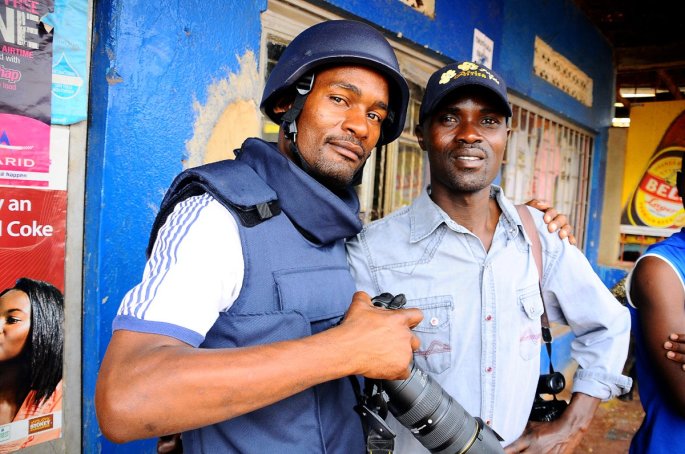
Justin (with a cap) on assignment with a Photojournalist

I have known Justin too for more than 7 years,we have survived riots and demonstrations in the land of Museveni where teargas is administered more regularly and with more zeal than immunisation against killer diseases.

Continue reading “President Salva Kiir free Ugandan journalists”

Does G8 move on extractive industries mean anything for African countries?

Ahead of the meeting of leaders of world’s major economies the G8, the British Prime Minister David Cameron announced the G8 and 15 developing countries have agreed to work together to make sure that “the poorest people benefit from their country’s natural resources, by improving the transparency of their extractive industries and land rights.”

The G8 which includes US, UK, Russia, Japan, Canada, Italy, Germany and France plays a big role in extractives industry in African countries.

Mr Cameron made the announcement during a panel session with African leaders at the Open for Growth on 15 June 2013. Of the 15 countries, 8 developing countries will be focused on improving the extractives sector while 7 are on land rights.

This seeming shift of G8 countries from aid to improving trade may be driven by various factors – increased Chinese penetration in African extractives industry and also the non-sustainability of the aid model for both receiving and donor countries as donor countries have been hit by the economic crisis.

Continue reading “Does G8 move on extractive industries mean anything for African countries?”

Push for transparency at G8 alone will not solve land grabs in Africa

This week I am working with the IFCampaign at the G8 in Enniskillen, Northern Ireland. The G8 leaders are discussing trade, taxes and Transparency and a good deal of parternships will be announced regarding G8 countries and role in developing countries. I will be blogging about any initiatives. This is the first in the series of blogs.

DSC_0187
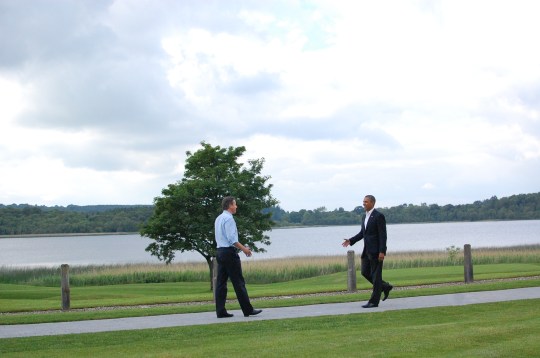
President Obama meeting British Prime Minister David Cameron

In May 2012, a few months before he passed away, Ethiopian Prime Minister Meles Zenawi while attending the World Economic Forum on Africa was asked a question that intrigues most African citizens. Why do African leaders- revolutionaries turn to looting their own countries once in power? The brainy later leader of Ethiopia responded by highlighting foreign corporations’ role in impoverishing Africa. He hinted that African leaders, in their quest to find jobs for an increasing unemployed population, were being held hostage by corporations that come in to invest.

Continue reading “Push for transparency at G8 alone will not solve land grabs in Africa”

Seven stories in seven days in Myanmar

I got off the Bangkok Airways flight at Yangon International Airport. At the arrivals, the long line for visas on arrival welcomes me and after an hour i get my visa. Things are a little slower than most places I have visited. So much paper work!!

I am in Myanmar for the Global Young Leaders forum run by the World Economic Forum. The Forum  will take place on the sides of World Economic Forum on East Asia both in Yango (Rangoon) and Nay Pyi Taw. I read in the Myanmar Times that the gathering of about 900 delegates will be the largest gathering the country has hosted in 20 years. I had read from ForeignPolicy  a few days before that “between 1900 and 1990, gross domestic product (GDP) growth  increased at no more than 1.6 percent a year — half of the rate of the rest of the world.”

From BBC I had read “from 1962 to 2011, Myanmar was ruled by a military junta that suppressed almost all dissent and wielded absolute power in the face of international condemnation and sanctions.” And i also have a Burmese friend who has been at the forefront working with dissents in the diaspora since late 1990s.

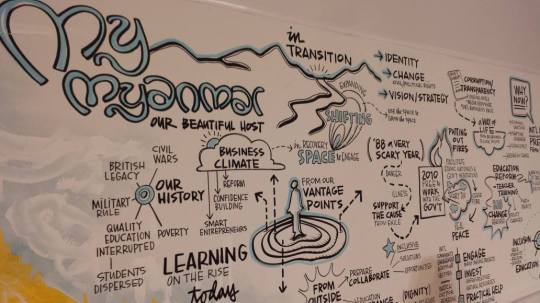
A mural at the Young Global Leaders Forum

As I go deeper into the Myanmar Times pages, I find an MTN advert and all the talk is invest in this, invest in that. It’s a country that has been closed to the world for long and now everybody is rushing. Everybody talks of how much opportunity exists.  MTN is here because for the first time the government is going liberalize the telecom sector.

20130603_113955

US is about to pump in a lot of money after decades of isolating the country. Myanmar has oil, gas, timber and minerals. Its a market of over 60 million people.

As we drive past the Yagon University, the driver smiles brightly and tells me Obama came to the university on his visit recently.

As we close in to my hotel, I realize how heavy it’s been raining and it trained for most of my first 48 hours in Myanmar.

Press Freedom Day: Ethiopia’s jailed journalist and Uganda’s restrictive laws

A few weeks ago I spent a night in Addis Ababa –in transit to Accra because of a flight delay. Like on many other trips to the capital that hosts the African Union, you immediately feel that somehow Meles is not dead. Former Prime Minister’s photos still greet you at the airport and on most roads. These photos give you a feeling of visiting an orphaned nation. You will not easily have a clue that Ethiopia has a new leader. Just like the photos of Meles in the streets, his policies are still well implemented by his party EPRDF and journalists like Reeyot Alemu are at still at the receiving end of these undemocratic policies and outright repression that he presided over.

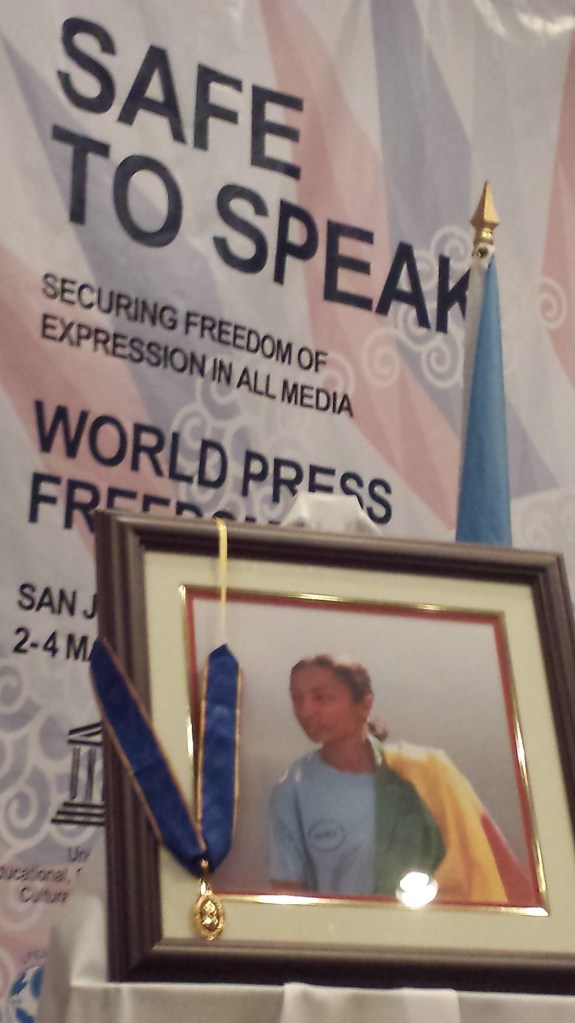
Reeyot's photo at the award ceremony for 2013 World Press Freedom Prize in San Jose Costa Rica.
Reeyot’s photo at the award ceremony for 2013 World Press Freedom Prize in San Jose Costa Rica.

Continue reading “Press Freedom Day: Ethiopia’s jailed journalist and Uganda’s restrictive laws”

Uganda and ICT: The world digitizes, Museveni wants millions for photocopying

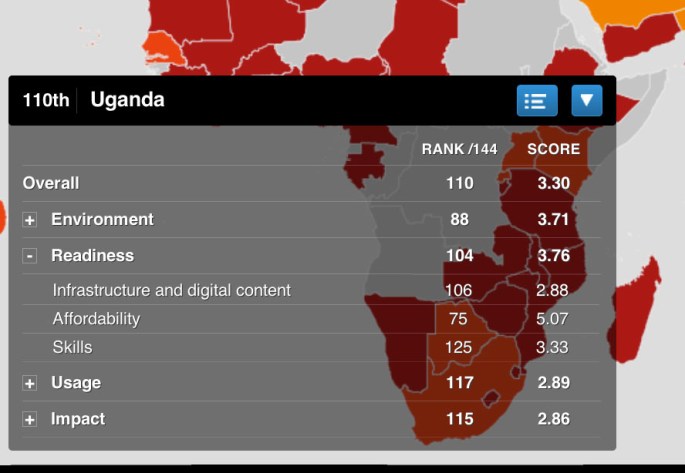
Uganda remained at the 110th position out of the 144 countries in the Global Information Technology Report 2013.

The Networked Readiness Index, calculated by the World Economic Forum, and INSEAD, ranks 144 economies based on:

their capacity to exploit the opportunities offered by the digital age. This capacity is determined by the quality of the regulatory, business and innovation environments, the degree of preparedness, the actual usage of ICTs, as well as the societal and economic impacts of ICTs. The assessment is based on a broad range of indicators from Internet access and adult literacy to mobile phone subscriptions and the availability of venture capital. In addition, indicators such as patent applications and e-government services gauge the social and economic impact of digitization.

Uganda ICT reeadiness

The Global Information Technology Report also shows that digitization has a measurable effect on economic growth and job creation.

Continue reading “Uganda and ICT: The world digitizes, Museveni wants millions for photocopying”

Freedom of expression and peace deals; a chat with Congolese journalists and activists

Congo is also like a little child, everybody thinks that they can bring us a solution without even properly reflecting on it, everybody on the outside.

Last week  I was in Congo to train a group  of journalists and activists in social media and activism. During this trip I interviewed 2 Goma-based journalists and a youth activist on the challenges of working in an area with conflicts that have no permanent front lines  Conflicts, in which often civilians pay the highest price as different armed groups fight over ever-changing political interests.  Late last year, Oxfam released a report that showed there were more than 25 armed groups in North and South Kivu provinces.

The latest conflict to hit Goma, the capital of natural resource rich North Kivu province in Eastern Congo, was last year when M23 rebels temporarily occupied the capital over disputes with government regarding their integration into the national army.

Often in these times, we mostly feed on reports from international media, written by journalists who fly in and out and can be fairly protected. In the case of Uganda we had most reporters covering the conflict from M23 frontline at the rebels invitation.

For Congolese journalists who are part of these communities who have suffered the wars for over a decade, the conditions are different. They often don’t have the protection of a large media house and they can make enemies with any groups no matter how ‘objective’ their reporting can be. Also in a country where the government troops commit crimes just like the militias do, the work of a local journalist or activist is tougher in Congo.

For instance, last year DRC government banned broadcasts on the conflict in eastern part of the country.

Continue reading “Freedom of expression and peace deals; a chat with Congolese journalists and activists”

“No such a thing as a rape culture” – Bangura.

While in Addis Ababa,  I met an amazing women and leader from Sierra Leon. She is also the UN Special Representative of Secretary General on Sexual Violence. Zainab Hawa Bangura opened my eyes on what I usually read in both studies and media reports – they call it culture of rape. I suspect i could have regurgitated such words before.

Listening to Bangura, her zeal, passion and dedication caught me. I am finishing this post coincidentally in Goma, Eastern DR Congo a place which one the high UN ranking officials dared to call the “rape capital of the world.”

And the words of the Bangura were directed at the continued description of African regions where there’s sexual violence in conflict as having “rape culture.” Often a description slapped on Eastern Congo where more than 5 million lives have been lost in wars since 1990s.

Continue reading ““No such a thing as a rape culture” – Bangura.”

From Gambia to the dictator!

This song by Gambian artists made it online mid December 2012 . It’s worth listening to and admiring the work on African artists who produce for us music to face the current realities!

Happy first friday of 2013!