Two historic stories of Africa in 2011

As the year 2011 closed, December 7 marked a historic day in international justice. The first former head of state Luarent Gbagbo appeared before the International Criminal Criminal for crimes allegedly committed during the Dec 2010-April 2011 post election violence in his country Cote d’ivoire. Gbagbo had take over and retain power by force and trickery. Over 3000 people died in Cote d’Iviore.

He faces four charges of crimes against humanity, including murder and rape. Throughout the conflict I had kept in close touch with friends in the country and their distress was beyond what I could imagine. Everyday Africa was treated to the drama of two people claiming to have won an election. Many thought Ivory Coast could head in the direction of Kenya and Zimbabwe, where compromise had to be reached because Africa’s old men didn’t wish to leave.

Continue reading “Two historic stories of Africa in 2011”

Why Occupy Nigeria?

2011 was quite a year.  It saw the fall of 4 dictators, three of them on the African continent. Many waited to see if the Arab spring that North Africa enjoyed would cross the Sahara and come down. There were a few protests in Uganda, Swaziland, Gabon, Cameroon and Senegal which didn’t yield a lot. Nonetheless, many African citizens had learnt a great lesson from the Tunisia, Egypt and Libya. They learnt that they could stand up to their leaders. Now that Nigeria, the largest (population) country on the continent has kicked off 2012 with #OccupyNigeria we wait to see how the government handles the situation after today’s strike and what lessons we can draw.

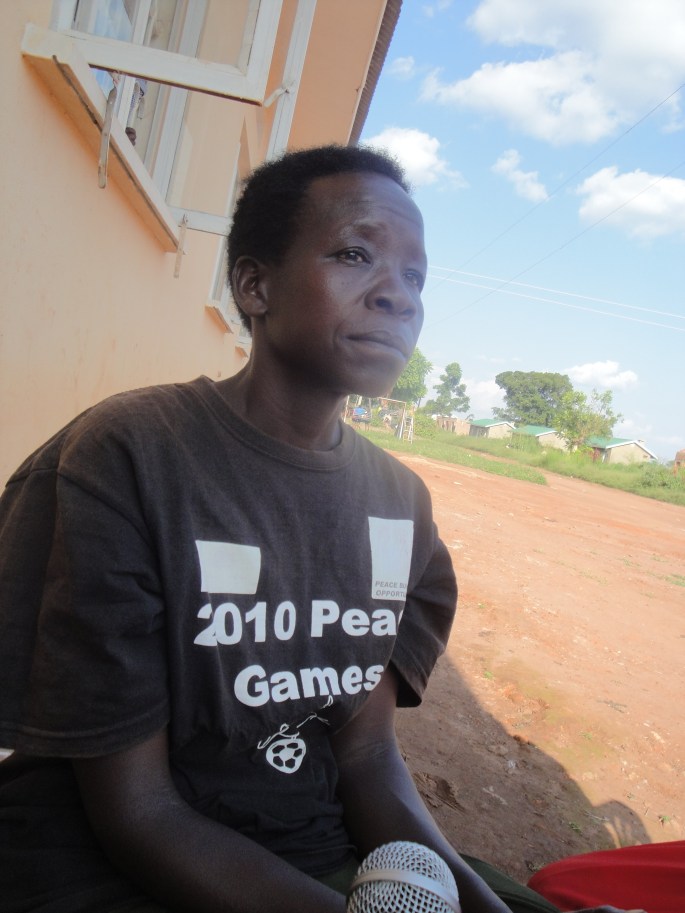
Photo by Esther Eshiet

The protest against President Goodluck Jonathan’s decision to remove fuel subsidies has united many who say this will suddenly more than double the cost of living for most Nigerians. This year the Ugandan government has promised to start work on an oil refinery and the sector is already hit with corruption and bribery allegations. At the heart of the subsidies debate in Nigeria is why hasn’t government invested in refineries instead of selling crude oil and import fuel at a much higher price. I asked two Nigerian friends, both are taking part in today’s protests, about the issue because Uganda government has to learn from African countries like Nigeria that have been producing oil for five decades. Here is the two responses.
Continue reading “Why Occupy Nigeria?”

No near end to violence as DR Congo election is disputed.

Photo by Edward Echwalu.

I am in Brussels where two days ago Congolese community had clashes with Police when they went out to demonstrate agains the president Joseph Kabila’s ‘re-election’ which has so far been rejected by international election observers and leading opposition candidate Etienne Tshisekedi.

The Carter Center said “we find the irregularities are significant enough to undermine the credibility of the election results.”

Again the contention is on the tallying process. Earlier the opposition had warned that the Electoral body had chosen to announce first results from Kabila’s strongholds in Katanga, a move seen by many as way to psychologically prepare the population if Kabila is finally announced as a winner. But Once again we have a Cote d’Iviore situation, both men have announced themselves as winners of the election. There are reports of government moving troops into Kinshasa and rounding up youth linked to the opposition. The situation is unpredictable and no one seems to know how this stalemate will be solved. And as tensions flare I am reminded of women of DRC, eastern DRC in particular who have endured all sorts of inhumane acts by soldiers and militias. On this day they see the little hope of having a government that can bring peace wane.

And I bring a story of Ester Munyerenkana a health worker at Panzi. I have held onto this story for quite a while. Her and other health workers daily have to deal with the end result of the broken political system and violence in Congo Continue reading “No near end to violence as DR Congo election is disputed.”

Faces of Panzi

A few months ago there was a report that put DRC  as one of the worst places in the world to be a woman. I found this kind of description troubling even in the face of what many of the women and Congo as a country have gone through. I even wondered how Dr.Denis Mukwege, the director at Panzi hospital, a man who has dedicated himself to the care of  sexually violated women, would think.

I had learnt about him through the media from a few awards he had won. I never expected to be in Bukavu, South Kivu and at Panzi soon. This week am at Panzi with a group of psychologists and Psychiatrists doing an assesment of trauma among health workers at Panzi. It’s the main hospital caring for survivors of sexual violence which is unacceptably high in South Kivu. Many health workers wondered how they could deal with trauma and sexual violence yet the source of all this-the conflict-is far from being solved.

I always wondered  how their hearts are not in pieces, how they are not resigned amidst all this heart breaking stories. But now interacting with them I am learning from their resilience and their frankness on the challenges they face.  For this week we are listening to the stories they listen to on daily basis. I am here with Isis-WICCE and the Stephen Lewis Foundation on their program- African Institute for Integrated Responses to Violence Against Women and HIV/AIDS which aims to create a network of African-based, women centered technical support on issues of violence against women, HIV/AIDS and counseling.

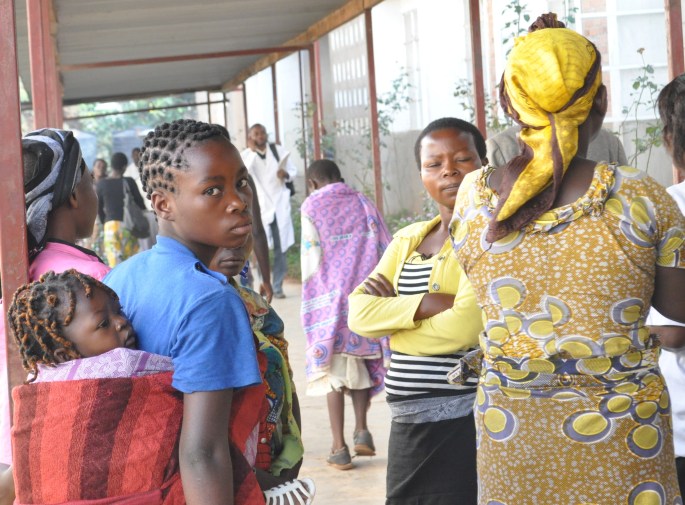
Not everyone here is a victim of sexual violence but it’s the hospital that has a big department dedicated to sexual violence. Below are random pictures i took during morning prayers and training of health workers.

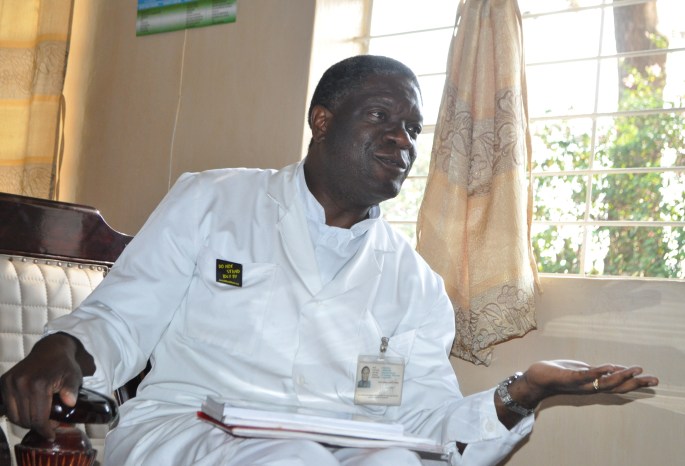
Dr.Mukwege at his office Tuesday Aug 23. during a meeting at Panzi Hospital
Dr.Christine O. and a colleague at one of the trainings in Panzi.
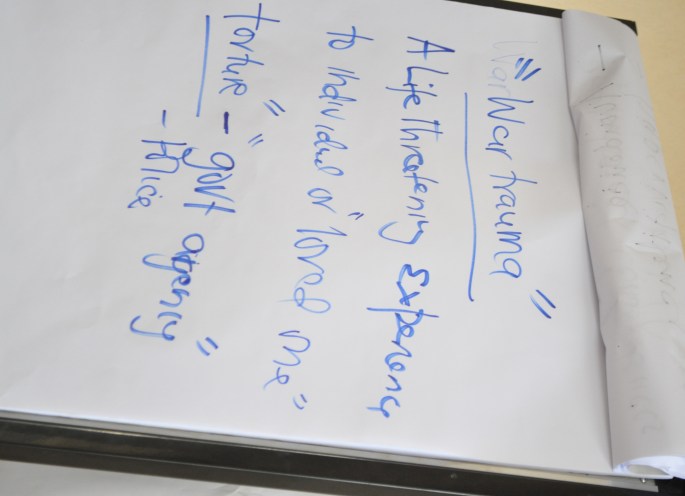
War trauma! so much to do about it.
A man reads the bible during the early morning service at Panzi hospital.
A woman praying at the morning service at Panzi hospital. The service is important for both patients and the caretakers plays role in both detecting those who need help and recovery.
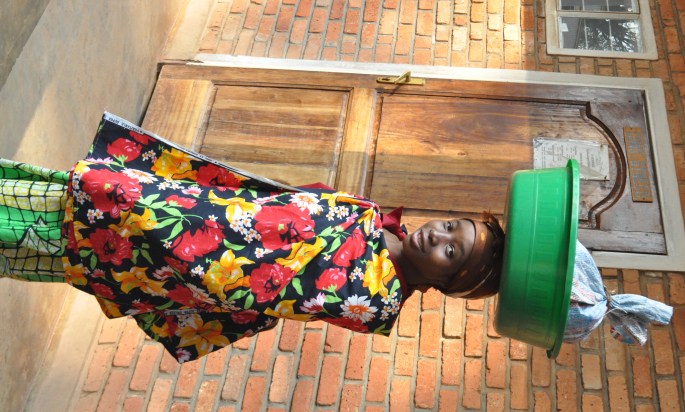
Beautiful girl in the corridors of Panzi

You are my child I shouldn’t be telling you this

This week I was in Lira in northern Uganda at a medical camp for women with reproductive health complications most of them sustained during the 23 year LRA war. Organisers had no idea 400 women would turn just on the the first day.

I was taking interviews from these women most of whom it was the first time they were going to see a gynecologist since the various sexual violations happened. It is always a tough position to be in. Women as old as 60 years narrating how they were raped, how no one wants to hear their story, how the community calls them all sorts of names it is beyond what i can describe.

One of the very first interviews, I was speaking to Akello (not real name) a woman who was abducted together with her co-wife. They reached the bush and were forcibly ‘married’ to one man. They both endured years of sexual violations including gang rapes. They returned 6 years ago, they didn’t know they both had HIV. Akello tells me they passed it on to their husband they had left behind and he died 3 years ago. She hasn’t really dealt with her own trauma and she blames herself for ‘killing’ her husband.

One of the women at the medical camp in Ogur Lira.

Just like in all interviews, we always take time out when the woman needs sometime pull herself together. At the end she calls me back and says “You are my child, I shouldn’t be telling you this.” I had no words to add, I just sat down for some minutes. I felt she wanted to spare me from listening, listening to horrors that many others preferred untold. We had been through it all, her life in the bush, her life after and how she hardly owns anything. How she struggles to feed and educate her 2 grand children. Of the 8 children she had, only one survived. It’s tougher to listen to a woman your mother’s or grandmother’s age talk about how she was raped. You can’t easily cry because you don’t want to derail her further. You can’t help see your mother in the faces of all these women left with almost nothing of their dignity. Yet they tell you these stories that mothers can never tell their children because they think you can help in a way.

I met Ester Abeja, she insisted that I put her face out. She was afraid that covering her face was more like what the community and government have done-ignore their plight. Like most of the women that turned up for the screening, she had complications. She is suffering from what doctors called uterine prolapse (the descent of the uterus into the vagina or beyond). In her case her uterus is hanging out. She was abducted and violated by the LRA rebels for many years.  Ester needs a surgery that would cost about 200 USD. She has had this condition for years and she is raising 5 children whom the husband abandoned. Before I spoke to her she was visibly traumatised and she told me many times she has thought of killing her husband who now has two other wives. We talked about it and she agrees that wouldn’t solve her problems, we have to concentrate on getting her the operation to remove her uterus.

Most of the women i spoke to had been abandoned by their families once they came back from the LRA. They face a high level of stigma. For those who had children with the rebels and came back with them it’s even much more difficult. Their children are called ‘Kony’s children.’

Ester Abeja.

Ester had one child with one of the rebels, she’s now about 6 years. “Do they think I wanted to be raped by these rebels? Do they think i wanted to kill my own child?” Ester wonders. She tells me another chilling story of how rebels forced her to kill her one year old baby gal by smashing her skull on a tree. Another young son was captured with her and she has no idea if he’s still alive.  She tells me she rarely sleeps and you can see it in her eyes.

I left Ester in Ogur. I am hopeful that Isis-WICCE, the organisation i worked with on this medical camp, can get money to get Ester and others the much needed surgery. There’s such lack of attention for survivors of sexual violence who are mostly women all over the LRA affected areas. And if she gets the surgery she will need support and most of these women need a lot of economic empowerment but few reach government programs.

One doctor from Lira told me, “When war ends, there’s a silent war that has to be fought.”

He said the challenge so far has been that “politicians think they will just put structures which they can use to say this is what i did during my time and ignore peoples needs.” And i don’t expect my government to get Ester the much needed help because even the health center we were at didn’t have any drugs to give to those with the simplest of the reproductive health problems.

Hunger; the ultimate failure by East African governments

The main focus has been on the humanitarian needs for the worst affected. The UN estimates that and extra $1.2billion is required to meet immediate needs and of this so far less than $300 million has been provided.

Yet the discussion cannot just be about meeting the needs of today. This crisis was predicted, governments and international community had enough time to respond and had they responded we would not be seing images of children with bare ribs arriving in Dadaab.   I have seen statements slamming international community for its slow response to the crisis but I have not seen many questions put these African governments expect for Kenya over opening a new camp for Somali refugees.

Read more of a blog i wrote for Channel16 published earlier this week.

South Sudan Independence; A new journey begins

Flag of the Sudan People's Liberation Army/Mov...
Image via Wikipedia

Tonight at midnight, South Sudan will be covered with jubilations, from Juba to Warab, Torit to Yambio, Wau to Raga and all other corners of the new republic. Several dignitaries from around the world will be there to give their blessing to the divorce and for the new nation on Saturday.

And the dream of many like John Garang de Mabior the great South Sudanese fallen leader will come to pass. He once said:

“It is not my intention to change the Comprehensive Peace Agreement but I must say South Sudan needs its own independence. I see it coming even when am not the leader of SPLA/M.”

South Sudanese reporter, Anthony Kamba wrote a piece capturing what the mood in Juba was like ahead of the historic day.

The UN Secretary General Ban Ki-moon wrong an opinion and called it Standing by South Sudan and in there, he captured the countries challenges but most important the opportunities.

‎”…South Sudan has remarkable potential. With substantial oil reserves, huge amounts of arable land and the Nile flowing through its center, South Sudan could grow into a prosperous, self-sustaining nation capable of providing security, services and employment for its population.”

It’s this optimism that I carry a few hours from the independence declaration. I was chatting with a South Sudanese friend and he said to me to understand the feeling I would need to talk to people who lived in places like Kenya where colonial struggles claimed many and lived long to see the Union Jack come down.

South Sudan has been born at time when Africa has made substantial steps in development unlike the 60s. With a population that is not even half that of my country Uganda, South Sudan will need its neighbours who are already a step ahead in all sectors and am optimistic they will be a good asset. Women in Sudan are more than 60 percent of the population, yet 80 percent of them are illiterate. Empowerment of women of South Sudan will be key to the country improving the gloomy development indicators faster. I remember I met one woman on one of the trips to Sudan who said they didn’t want to be like women of Eritrea “who fought but in the end they were pushed out of the system and told their place was only in the kitchen once independence was declared.”

In April I was in Juba working with grassroots women leaders. Juba is a melting pot. It’s where East, Central Africa meets the north and horn of Africa. It’s one of the most diverse African capitals I have visited. My Boda Boda rider was a young man about 20 years old. He was born in Torit, he lived in Masindi in western Uganda then Kenya before finally coming back to Sudan. He speaks about ten languages. Language is important for integration and most Sudanese have spent many years living in Uganda, Kenya and Ethiopia. These experiences can be harnessed to bring about changes in the new republic. South Sudan can take advantage of the booming sectors like education in Uganda where graduates spend years with no job.

It can get professionals from regional capitals who are not being put to use by their countries. These young people can be good for South Sudan as it starts from scratch. The new rich country where production is almost none existent will put pressure on its neighbours for some time because it is a great market for almost everything from food to industrial products to human resource. This can make South Sudan prosperous some years down the road.

But the all this optimism can only mean much if South Sudan can tame its ethnic divisions, corruption and the culture of hero worship. I know dangers of this culture because I am Ugandan. Twenty years after people fought to take power, we are still told if you didn’t fight for the five years in the bush, you are probably useless and you shouldn’t demand for good governance and a your share of the national cake. So Sudan must keep those heroes and heroines accountable. All Sudanese paid the price in this liberation and the country’s ruling party must start embracing alternative views.

I remember at one of the meetings a woman told me that in South Sudan if you don’t support SPLM you are equated to Bashir’s spy or the enemy. This stifling of people’s right to choose a party and oppose policies the way they see fit must be abandoned. And then the tribalism! You don’t want to see another Kenya of tribal politics and high inequality in the new country.

SPLM government must ensure they work for the good of all South Sudanese and shouldn’t hold the country at ransom and its oil revenues. The optimism rests on whether Salva Kiir and his government can deliver that country that many desired and fought for and died for. A country where they could be free and be free indeed.  When the midnight bells rings today, it will be a celebration of many thankful souls. Thankful that after all the loss and despair they went through they have lived to see this historic day. A day I pray will have even greater meaning when people of South Sudan look back some years from now.

DRC second worst place to be a woman in the world; what’s in a label?

DRC, orthographic projection.
Image via Wikipedia

Yesterday, the Trust Law which is part of the Thomas Reuters Foundation published a Danger Poll. The results were about the five top spots where it’s dangerous to be a woman in the world. Top was Afghanistan and second was Democratic Republic of Congo. The indicators were six; non-sexual violence, sexual violence, health threats, cultural or religious factors, lack of access to resources and trafficking.

When I first saw this on twitter via @VOACongoStory.  I replied: And these narratives stick!! #DRC #CongoRT @VOACongoStory poll by Trust Law .

DRC was put in that spotlight because of the war time rapes that are well documented in the Eastern DRC where different militias control different parts. The survey identified Afghanistan, Democratic Republic of Congo (DRC), Pakistan, India and Somalia as the top most dangerous countries for women in 2011.

We journalists love to jump up to the terms coined to describe a place or a people-sometimes without questioning. Our challenge is always, how do you describe a place or people to another person who has never been there and make them feel as if they are there? Sometimes the terms coined might well fit the situation but as an African, I have seen these terms thrown around by those outside the continent who are so ready to speak for us in their endeavor to get more funding to ‘save’ Africans. What they never think of is these terms stick even when these situations are gone. Many have heard of the war in Congo and mass rapes from different UN resolutions and regional agreements. Our very own army – Uganda committed horrendous crimes in DRC between 1998-2003 and so did four other African armies. The challenge we are faced with in the Congo is not so much in coining terms to describe a whole country as worst place to be a woman but rather finding real interventions to end the lawlessness in DRC that allows impunity to do anything from murder to rape.

So I had a discussion with my former editor at Inter Press Service Africa Terna Gyuse on why the world is fixed on coining terms instead of embarking on real interventions. I am also aware that these narratives put on an entire country last way longer. Before we know it everyman from Congo will be looked at a rapist or even asked questions on immigration forms like, did you rape anyone during the war? How do you help a country without creating negative connotations to a whole group of people? This was Terna’s response:

Part of the problem is there are too many people paid to sit in offices and sell campaigns or places they’ve never lived. They’re always busy fighting on someone else’s behalf, they are making so much noise they have to add extra something or the other to everything just to be heard. We all do it I suppose. They are sitting there, well paid and with their fingers on the triggers of access to everything, always adopting people they like to feel are helpless.

But (sadly) we let them do it. Always lining up to be “climate witnesses” for this group or whatever the flavour is. We go to too many meetings not to say anything  but to ask for help. We Africans are so often ready to be whatever they say we are. On conflicts Oh everyone knows those rural African men are sex-mad patriarchal rapist fiends, hopped up on drugs and tradition and the power of the gun. When we get good access, we’re still busy explaining ourselves to outsiders whether its access to the media, to powerful people elsewhere or to wealthy people elsewhere.

Seeing this term coined, ‘worst place to be a woman’, I thought this can easily be passed onto Uganda, Zimbabwe, Chad, South Sudan or even Central African Republic. The term made me wonder, I thought of Dr. Denis Mukwege, a Congolese gynecologist who founded a hospital in the eastern Congolese city of Bukavu to provide free care to the victims of sexual violence. The man has worked tirelessly to provide for women who would have lost lives and provided support for their psychological recovery. Having seen firsthand the worst impact of rapes of women of his beloved country, I wondered if Dr. Mukwege would ever evoke the term ‘worst place to be a woman’ as description of  his country.

I can only hope that all the killing, looting and raping, which includes men as victims too, will be presented as part of a complex story of DRC that has got many facets. That the world shdn’t just be satisfied in having the largest UN Peacekeeping mission in Congo with little results to show. We should question whether the agreements on the exportation of the blood minerals do hold and whether the Kabila government is doing enough.  It should also be told that despite the rapes, Congo has got women and men that are making shifts in making their communities better for all and that the redemption of Congo cannot come about by just throwing around labels.

Internet a 21st Century Human Rights issue?

This week the UN declared internet access a basic human right. To many in African countries which are still grappling with challenges ranging from health, infrastructure, unemployment etc this declaration may be difficult to see relate to. I am taking part in the Internet Freedom Fellows program funded by the Department of State and managed by the U.S. Mission in Geneva. The fellowship follows up on Secretary of State Hillary Clinton’s pledge to find innovative ways to promote the use of the Internet in support of human rights. While in Geneva earlier this week, I took part in an event where Ambassador Eileen Chamberlain Donahoe, U.S. Representative to the Human Rights Council, reiterated Clinton’s statement that the Internet is “the public space of the 21st Century.”

For many the internet is like being a square or a Baraza. However many in Africa are yet to see the internet as a basic right. Ben Scott, Clinton’s Policy Advisor on innovation whom I had a chat with called the internet is “the first truly  21st Century human rights issue.”

We were looking at internet freedom and before I had asked how this basic right would be realized for many in Africa. Scott said that just like mobile banking (MPesa, Mobile money) is doing tremendously well in Africa, the internet access will continue to be majorly tied to mobile telephone penetration in Africa. He indicated that Africa’s mobile phone penetration has surpassed Europe’s yet it’s still at 40 percent. This makes the internet and mobile phone market pose both an economic and political opportunity.

In most discussions it was clear that we have two types of freedoms related to the internet; freedom to access internet and freedom on the internet. All world leading economies have thrived on information systems and making them accessible to all citizens therefore increasing their participation in the economy. A connected society is going to be more prosperous and stable.

Many governments in Africa are moving to invest heavily in the laying down of internet infrastructure.As more people on the continent are connected to the internet, they will also seek a different kind of governance because of the access to information. This is what Scott called, a dictator’s dilemma.

‘Everyone recognizes that future of economy is largely based on information infrastructure. So governments want populations connected but at the same time they want to control speech on these networks and it’s a dilemma,” Scott said. “Internet tends to shift power from centralized institutions to many leaders representing different communities. Governments who want to censor are fighting a battle against the nature of the technology,” Scott said.

So the dilemma that despotic leader, whom we have in plenty on the continent, face is political speech versus economic prosperity.  Scott said: “You can’t have one and leave the other and that’s the exact dictator’s dilemma.”

This was well manifested in the recent protests in Uganda when the government instructed the internet service providers to shut down facebook and twitter. First the telecom industry is one of the leaders in tax revenues in Uganda and provides a lot of jobs for the Ugandan youth in a country where the number of unemployed graduates has become worrying. In the face of such a directive companies had a lot at stake, most telecoms provide internet and they feared a backlash. This directed was leaked to the press by people in the telecoms who were concerned that they would be the first victims of the backlash. So in the end the government didn’t achieve its mission. President Museveni cannot choose to get the taxes from the telecoms which help him run the country and at the same time easily pass directives to control information.

Clay Shirky, Adjunct Professor at New York University graduate program Interactive Telecommunications said no other invention has ever threatened the Westphalia state like the internet has done. The states in the past were able to effectively control radio, newspapers and TV but the internet is a challenge.

“This is a cultural and political choice. Protecting freedom of speech is a governance challenge. Westphalia where government controls everything survived the 20th Century media innovations, we are going to see if they can survive the internet,” Shirky said.

Only ten percent of Ugandans access the internet yet about 10 million of the 33 million Ugandans have mobile phones. The use of internet is partly hampered by illiteracy levels as well as cost but Uganda has a youthful population which is will take new information systems even with just post primary education.

There are real infrastructure problems hindering access to internet in Africa but we are seeing more investment. According to ComputerWorld, Uganda, Kenya, Tanzania, Rwanda and Burundi have linked forces together on a $400 million investment in terrestrial fiber optic cables. The new network is expected to run close to 16,000 kilometers from southern Sudan to Tanzania’s border with Zambia. The terrestrial network called the East Africa Backhaul System  will connect to the submarine fiber-optic cables on the East Africa coast.

However some governments have already moved to suppress freedom on the internet.  According to recent report from Freedom House, Ethiopia’s internet is one of the top less free in the world.Internet access has been denied and controlled through monopolizing the communications industry to curtail freedom of expression. In Ethiopia the few people that access the internet that is government controlled cannot freely express themselves.

This kind of control is what my friend Ssozi told me about when we shared about internet as a basic right declaration.  He said as long as access to information is not a right, internet being a basic human right declaration will not benefit most of the people living under undemocratic governments.

Even with infrastructure in place many worry that some governments in Africa may decide to go the China way which has put up what’s now famously called the ‘Great firewall of China’.  It’s a deceptive path for African governments who may be considering the China way of having economic prosperity and also stifling freedoms of expression and speech.

China spends a lot of money on building firewalls to prevent free speech but Scott believes this cannot easily be replicated. He says even with its economic might, it will be very costly for China in the long-run to block people from accessing information. The costs of bypassing the firewalls are way cheaper than putting one, some said.

In Africa, government still have a hold onto public broadcasting which many people rely on in the absence of cheap accessible internet. So for internet access as a basic right to be realized or even for it to make a difference in the way citizens in Africa can hold their governments accountable, development budgets and strategies for both by governments and international development organizations must take this into consideration.

There has to also be efforts to ensure protection in the face of growing desire by governments to curtail freedom on the internet in the wake of North Africa uprisings. We have seen internet play a key role in protests in Swaziland, Gabon and Uganda to some extent.

At a recent meeting of bloggers organized by Google Africa and Global Voices there was a general concern that many African government are employing tactics of threatening the internet user s directly instead of cutting off internet or attacking their sites which could bring about immediate condemnation.  In Uganda journalist Timothy Kalyegira is the first person to be arrested and charged for an online article written in Uganda Record.

Scott said that in the internet age there has to be a  “move from government to government diplomacy to a people to people diplomacy.”  When a question on recent Wikileaks case,  Scott argued that there’s need to balance state security and internet freedom. Yet it’s in the same name of security that authoritarian government crackdown on their citizens.

Shirky says the debate on whether there can be internet freedom is still very much open. “No country recognizes universal right to speak. The negotiation around this kind of freedom is going dominate the next 10 yrs.”

Africa must address youth unemployment to reduce poverty

Tanzanian Prime Minister Peter Mpinda has today said Africa cannot easily overcome poverty without investing heavily in agriculture. He said in most countries youth unemployment figures are alarming yet they have not made agriculture – largest economic sector- attractive to the youth.

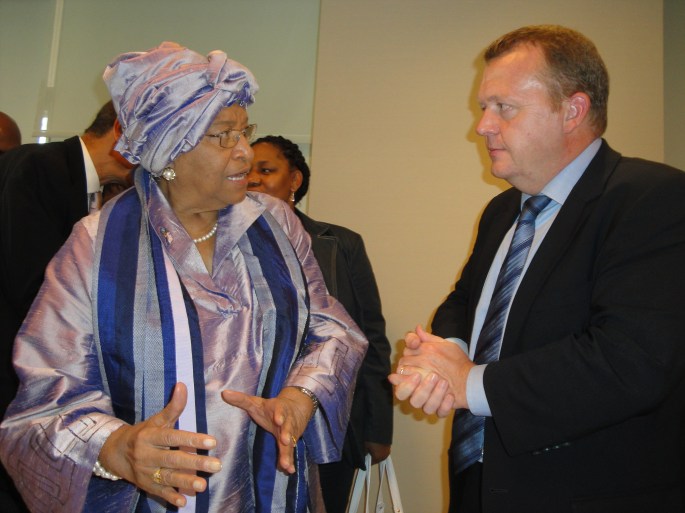
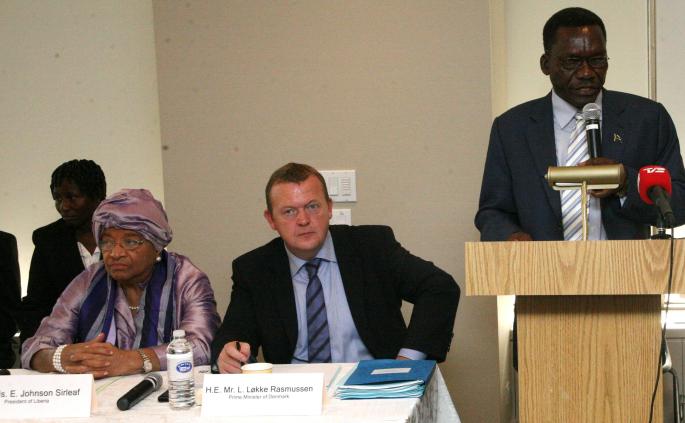
I had a brief chat with Liberian President Ellen Johnson Sirleaf  and i will be bringing it later. Here pictures from the event.

President Sirleaf with Danish PM Rasmussen. Rosebell's photo
Tanzanian Prime Minister Peter Pinda addressing the youth. Photo by Hilary Bujiku.
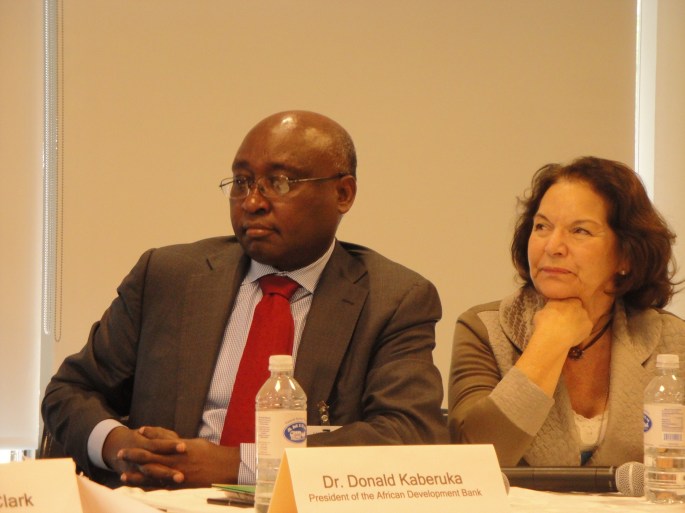
President of the African Development Bank Donald Kaberuka and ILO Executive Director. Rosebell's photo.