As the year 2011 closed, December 7 marked a historic day in international justice. The first former head of state Luarent Gbagbo appeared before the International Criminal Criminal for crimes allegedly committed during the Dec 2010-April 2011 post election violence in his country Cote d’ivoire. Gbagbo had take over and retain power by force and trickery. Over 3000 people died in Cote d’Iviore.
He faces four charges of crimes against humanity, including murder and rape. Throughout the conflict I had kept in close touch with friends in the country and their distress was beyond what I could imagine. Everyday Africa was treated to the drama of two people claiming to have won an election. Many thought Ivory Coast could head in the direction of Kenya and Zimbabwe, where compromise had to be reached because Africa’s old men didn’t wish to leave.
On Friday 16, I was honored to attend a public lecture in a small library in Amsterdam where Abdel Bari Atwan, named by Middle East Magazine as one of the 50 most ‘most influential Arabs’, was speaking on the eve of the one year commemoration of the Arab Spring.
Atwan in Amsterdam on Dec 16. Rosebell's photo
Atwan is editor-in chief of the London-based pan-Arab newspaper Al-Quds Al-Arabi. He discussed the Arab spring and the future of the Middle East and North Africa beyond the ‘revolution’.
Some of my favorite quotes from the meeting:
“We Arab people were suffered double humiliation. That brought about by imperialism and another by own very own corrupt government.”
I found this quote very meaningful for not only the Arab world but also of Africa. All year long many people have been watching closely to see if there will be a sort of African spring. And every time some friends asked me when is the African Spring, I replied, we won’t have a spring, ours will be the African Harmattan! None the less there has been inspiration from the north of the continent spreading south. In many ways our realities are close to those of the MENA countries and we can only wait and see what changes and how long will they take on the African continent. Just like Atwan said “whoever knew or predicted that the Arab people would depose four dictators in just one year?”
I have very passionate Yemeni friends and Atwan said he respected the struggle of Yemen, knowing how many guns are in the hands of so many people that the country has not moved to a civil war. He applauded the choice of non-violence of the people of Yemen even when they had access to arms. And he told us a famous saying about the difficulty of ruling Yemen with its tribes system that i loved.
“Riding a lion is smoother than ruling Yemen”
Then came Atwan’s passionate talk on the events in Libya and how he disagreed with the NATO military intervention. Even though he was glad that the killing of Muammar Gaddafi has been called a crime against humanity, he decried the west for allowing impunity of rebels turned government of NTC.
I was interested in the fact the the ICC had backed off the Libya case and of recent the prosecutor had indicated that Libya’s new rulers were capable of prosecuting Gaddafi’s son Saif al-Islam Gaddafi. Personally i found this ridiculous, how could the killers of his father offer him a fair trial in a country has no justice system. Having spent the earlier week hearing people decry the ICC being an African court, here i was with a situation which clearly an outside court could have done better.
When I asked Atwan about this he went beyond the case of Saif to talk about his recent trip to Tripoli and how many African countries and the were silent about crimes being committed about African people, both Libyans and immigrants.
There are at least 7000 black people in Libya being tortured and living in the most inhumane conditions all these atrocities being presided over by the new regime.Yet we see no human rights papers about them. Nothing from western governments who supposed intervened on human rights grounds. I will not be surprised if we soon hear that Saif has been executed. The West is keeping a blind eye to crimes committed by rebels because of they always put their interests above anything else.
And that was from a Palestinian man who lived in as a refugee in Jordan, managed to study in Egypt and later run one of the most respected Arab media outlets from London since 1989.
Atwan said for the future of the entire region, one must not put their eyes off Egypt. He said is Egypt becomes more islamist, chances are that most of the other countries will follow suit.
I am in Brussels where two days ago Congolese community had clashes with Police when they went out to demonstrate agains the president Joseph Kabila’s ‘re-election’ which has so far been rejected by international election observers and leading opposition candidate Etienne Tshisekedi.
The Carter Center said “we find the irregularities are significant enough to undermine the credibility of the election results.”
Again the contention is on the tallying process. Earlier the opposition had warned that the Electoral body had chosen to announce first results from Kabila’s strongholds in Katanga, a move seen by many as way to psychologically prepare the population if Kabila is finally announced as a winner. But Once again we have a Cote d’Iviore situation, both men have announced themselves as winners of the election. There are reports of government moving troops into Kinshasa and rounding up youth linked to the opposition. The situation is unpredictable and no one seems to know how this stalemate will be solved. And as tensions flare I am reminded of women of DRC, eastern DRC in particular who have endured all sorts of inhumane acts by soldiers and militias. On this day they see the little hope of having a government that can bring peace wane.
And I bring a story of Ester Munyerenkana a health worker at Panzi. I have held onto this story for quite a while. Her and other health workers daily have to deal with the end result of the broken political system and violence in Congo Continue reading “No near end to violence as DR Congo election is disputed.”→
This week I was in Kasese taking part in validation of a study soon to be released by Isis-WICCE on child marriages in Uganda. I met Sarah Biira, 19 year old who had her first child at 13 years. Kasese is a post conflict area but has largely been ignored in terms of development. It has been under conflict since 1940s and the education of a girl child is a challenge because of poverty, cultural beliefs and loss of livelihoods to war.
A few months ago there was a report that put DRC as one of the worst places in the world to be a woman. I found this kind of description troubling even in the face of what many of the women and Congo as a country have gone through. I even wondered how Dr.Denis Mukwege, the director at Panzi hospital, a man who has dedicated himself to the care of sexually violated women, would think.
I had learnt about him through the media from a few awards he had won. I never expected to be in Bukavu, South Kivu and at Panzi soon. This week am at Panzi with a group of psychologists and Psychiatrists doing an assesment of trauma among health workers at Panzi. It’s the main hospital caring for survivors of sexual violence which is unacceptably high in South Kivu. Many health workers wondered how they could deal with trauma and sexual violence yet the source of all this-the conflict-is far from being solved.
I always wondered how their hearts are not in pieces, how they are not resigned amidst all this heart breaking stories. But now interacting with them I am learning from their resilience and their frankness on the challenges they face. For this week we are listening to the stories they listen to on daily basis. I am here with Isis-WICCE and the Stephen Lewis Foundation on their program- African Institute for Integrated Responses to Violence Against Women and HIV/AIDS which aims to create a network of African-based, women centered technical support on issues of violence against women, HIV/AIDS and counseling.
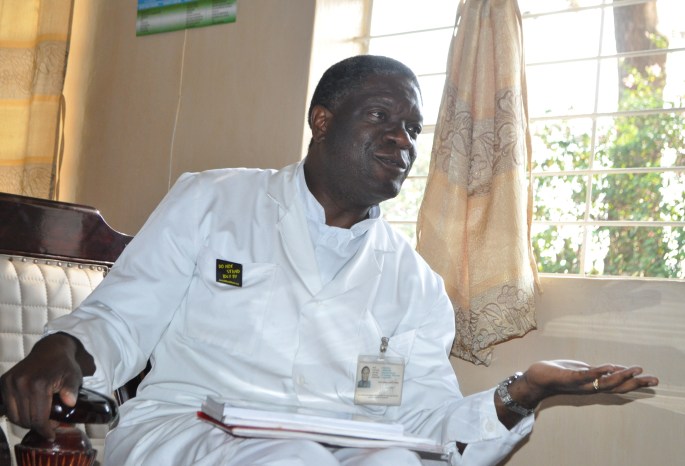
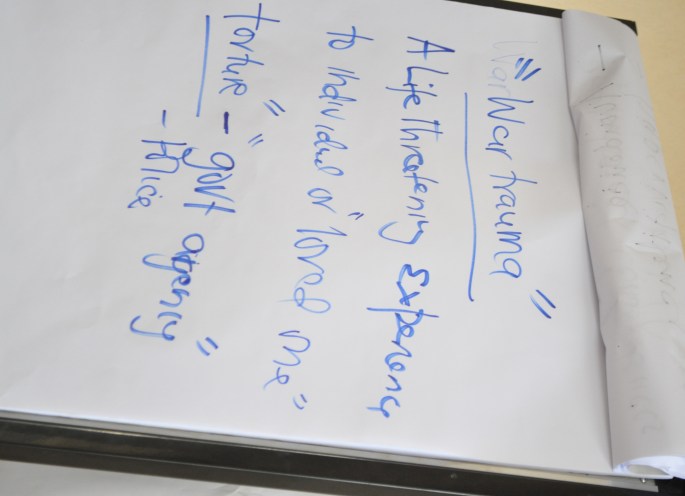
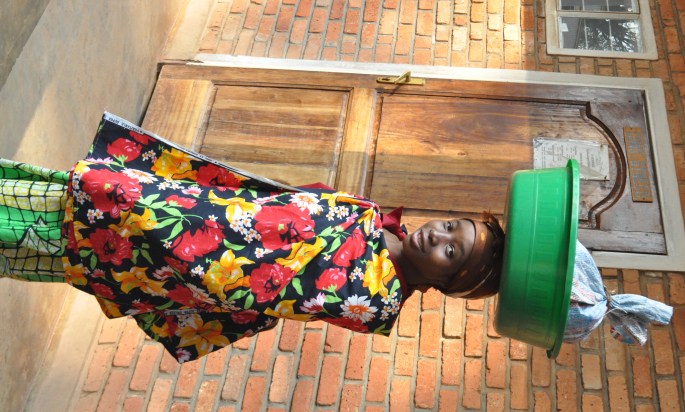
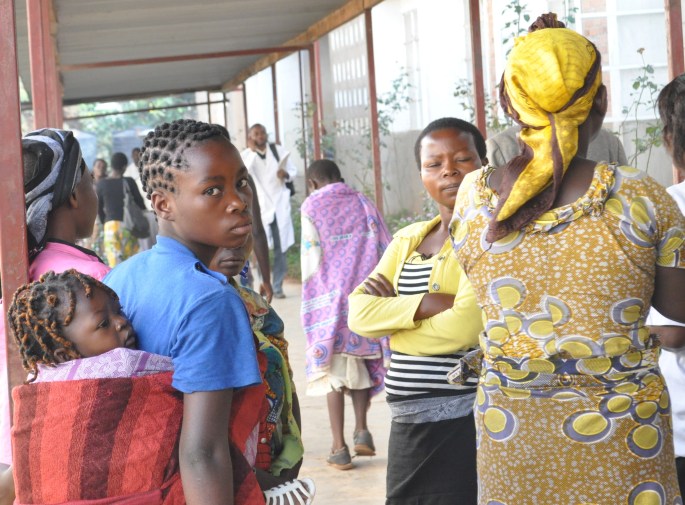
Not everyone here is a victim of sexual violence but it’s the hospital that has a big department dedicated to sexual violence. Below are random pictures i took during morning prayers and training of health workers.
Dr.Mukwege at his office Tuesday Aug 23. during a meeting at Panzi HospitalDr.Christine O. and a colleague at one of the trainings in Panzi.War trauma! so much to do about it.A man reads the bible during the early morning service at Panzi hospital.A woman praying at the morning service at Panzi hospital. The service is important for both patients and the caretakers plays role in both detecting those who need help and recovery.Beautiful girl in the corridors of Panzi
Tonight at midnight, South Sudan will be covered with jubilations, from Juba to Warab, Torit to Yambio, Wau to Raga and all other corners of the new republic. Several dignitaries from around the world will be there to give their blessing to the divorce and for the new nation on Saturday.
And the dream of many like John Garang de Mabior the great South Sudanese fallen leader will come to pass. He once said:
“It is not my intention to change the Comprehensive Peace Agreement but I must say South Sudan needs its own independence. I see it coming even when am not the leader of SPLA/M.”
The UN Secretary General Ban Ki-moon wrong an opinion and called it Standing by South Sudan and in there, he captured the countries challenges but most important the opportunities.
”…South Sudan has remarkable potential. With substantial oil reserves, huge amounts of arable land and the Nile flowing through its center, South Sudan could grow into a prosperous, self-sustaining nation capable of providing security, services and employment for its population.”
It’s this optimism that I carry a few hours from the independence declaration. I was chatting with a South Sudanese friend and he said to me to understand the feeling I would need to talk to people who lived in places like Kenya where colonial struggles claimed many and lived long to see the Union Jack come down.
South Sudan has been born at time when Africa has made substantial steps in development unlike the 60s. With a population that is not even half that of my country Uganda, South Sudan will need its neighbours who are already a step ahead in all sectors and am optimistic they will be a good asset. Women in Sudan are more than 60 percent of the population, yet 80 percent of them are illiterate. Empowerment of women of South Sudan will be key to the country improving the gloomy development indicators faster. I remember I met one woman on one of the trips to Sudan who said they didn’t want to be like women of Eritrea “who fought but in the end they were pushed out of the system and told their place was only in the kitchen once independence was declared.”
In April I was in Juba working with grassroots women leaders. Juba is a melting pot. It’s where East, Central Africa meets the north and horn of Africa. It’s one of the most diverse African capitals I have visited. My Boda Boda rider was a young man about 20 years old. He was born in Torit, he lived in Masindi in western Uganda then Kenya before finally coming back to Sudan. He speaks about ten languages. Language is important for integration and most Sudanese have spent many years living in Uganda, Kenya and Ethiopia. These experiences can be harnessed to bring about changes in the new republic. South Sudan can take advantage of the booming sectors like education in Uganda where graduates spend years with no job.
It can get professionals from regional capitals who are not being put to use by their countries. These young people can be good for South Sudan as it starts from scratch. The new rich country where production is almost none existent will put pressure on its neighbours for some time because it is a great market for almost everything from food to industrial products to human resource. This can make South Sudan prosperous some years down the road.
But the all this optimism can only mean much if South Sudan can tame its ethnic divisions, corruption and the culture of hero worship. I know dangers of this culture because I am Ugandan. Twenty years after people fought to take power, we are still told if you didn’t fight for the five years in the bush, you are probably useless and you shouldn’t demand for good governance and a your share of the national cake. So Sudan must keep those heroes and heroines accountable. All Sudanese paid the price in this liberation and the country’s ruling party must start embracing alternative views.
I remember at one of the meetings a woman told me that in South Sudan if you don’t support SPLM you are equated to Bashir’s spy or the enemy. This stifling of people’s right to choose a party and oppose policies the way they see fit must be abandoned. And then the tribalism! You don’t want to see another Kenya of tribal politics and high inequality in the new country.
SPLM government must ensure they work for the good of all South Sudanese and shouldn’t hold the country at ransom and its oil revenues. The optimism rests on whether Salva Kiir and his government can deliver that country that many desired and fought for and died for. A country where they could be free and be free indeed. When the midnight bells rings today, it will be a celebration of many thankful souls. Thankful that after all the loss and despair they went through they have lived to see this historic day. A day I pray will have even greater meaning when people of South Sudan look back some years from now.
Yesterday, the Trust Law which is part of the Thomas Reuters Foundation published a Danger Poll. The results were about the five top spots where it’s dangerous to be a woman in the world. Top was Afghanistan and second was Democratic Republic of Congo. The indicators were six; non-sexual violence, sexual violence, health threats, cultural or religious factors, lack of access to resources and trafficking.
DRC was put in that spotlight because of the war time rapes that are well documented in the Eastern DRC where different militias control different parts. The survey identified Afghanistan, Democratic Republic of Congo (DRC), Pakistan, India and Somalia as the top most dangerous countries for women in 2011.
We journalists love to jump up to the terms coined to describe a place or a people-sometimes without questioning. Our challenge is always, how do you describe a place or people to another person who has never been there and make them feel as if they are there? Sometimes the terms coined might well fit the situation but as an African, I have seen these terms thrown around by those outside the continent who are so ready to speak for us in their endeavor to get more funding to ‘save’ Africans. What they never think of is these terms stick even when these situations are gone. Many have heard of the war in Congo and mass rapes from different UN resolutions and regional agreements. Our very own army – Uganda committed horrendous crimes in DRC between 1998-2003 and so did four other African armies. The challenge we are faced with in the Congo is not so much in coining terms to describe a whole country as worst place to be a woman but rather finding real interventions to end the lawlessness in DRC that allows impunity to do anything from murder to rape.
So I had a discussion with my former editor at Inter Press Service Africa Terna Gyuse on why the world is fixed on coining terms instead of embarking on real interventions. I am also aware that these narratives put on an entire country last way longer. Before we know it everyman from Congo will be looked at a rapist or even asked questions on immigration forms like, did you rape anyone during the war? How do you help a country without creating negative connotations to a whole group of people? This was Terna’s response:
Part of the problem is there are too many people paid to sit in offices and sell campaigns or places they’ve never lived. They’re always busy fighting on someone else’s behalf, they are making so much noise they have to add extra something or the other to everything just to be heard. We all do it I suppose. They are sitting there, well paid and with their fingers on the triggers of access to everything, always adopting people they like to feel are helpless.
But (sadly) we let them do it. Always lining up to be “climate witnesses” for this group or whatever the flavour is. We go to too many meetings not to say anything but to ask for help. We Africans are so often ready to be whatever they say we are. On conflicts Oh everyone knows those rural African men are sex-mad patriarchal rapist fiends, hopped up on drugs and tradition and the power of the gun. When we get good access, we’re still busy explaining ourselves to outsiders whether its access to the media, to powerful people elsewhere or to wealthy people elsewhere.
Seeing this term coined, ‘worst place to be a woman’, I thought this can easily be passed onto Uganda, Zimbabwe, Chad, South Sudan or even Central African Republic. The term made me wonder, I thought of Dr. Denis Mukwege, a Congolese gynecologist who founded a hospital in the eastern Congolese city of Bukavu to provide free care to the victims of sexual violence. The man has worked tirelessly to provide for women who would have lost lives and provided support for their psychological recovery. Having seen firsthand the worst impact of rapes of women of his beloved country, I wondered if Dr. Mukwege would ever evoke the term ‘worst place to be a woman’ as description of his country.
I can only hope that all the killing, looting and raping, which includes men as victims too, will be presented as part of a complex story of DRC that has got many facets. That the world shdn’t just be satisfied in having the largest UN Peacekeeping mission in Congo with little results to show. We should question whether the agreements on the exportation of the blood minerals do hold and whether the Kabila government is doing enough. It should also be told that despite the rapes, Congo has got women and men that are making shifts in making their communities better for all and that the redemption of Congo cannot come about by just throwing around labels.
“I am not going to a theater of death but if it takes my life to bring equity to Ugandans, I’d regard that as a privilege,” that’s what one young Ugandan told his friends before he set off yesterday morning to welcome home opposition leader Dr.Kizza Besigye who had been receiving treatment in Nairobi Kenya.
After being blocked by what many believe were Ugandan authorities to get into the country on May 11, Besigye decided his return would conincide with President Yoweri Museveni’s 5th swearing in ceremony at Kololo Independence grounds.
Museveni’s swearing in ceremony was not that well attended by even African leaders save for DRC, Kenya, Tanzania, Ethiopia, South Sudan, Somalia, Nigeria and Zimbabwe. As President Museveni’s ceremony was ending with dances, on the otherside of the town crowds had already gathered, not to catch a glimpse of their revolutionary president but to welcome a man that has taken the brutality of this regime to international limelight.
Besigye left Uganda for treatment in Kenya after his brutal arrest that left him almost blind. His support has suddenly increased as the government has deployed thousands of police and military in different parts of the country to quell the walk to work protests, a campaign by the opposition against the rising fuel and food prices.
In April, 9 people were killed and hundreds were left with gunshot wounds. So when Brian Bwesigye set out yesterday determined to walk to meet Besigye’s convoy from Entebbe, it was an act that could only come from a young Ugandan who is unable to make sense of his president’s speeches that seem to only point to the past.
The road Besigye and his supporters occupied for 8 hrs was the same to be used by President Museveni and his guests as they make their way to the lavish State House that the president put up in Entebbe.
Military and Police forces were seen beating up Besigye supporters to get them off the road. This must have been an embarrassing moment for the president and his regime sympathizers. A day that was meant to be for the president to boast of his 68 percent win in the February election became the day when thousands sacrificed, waited in the sun, faced with canes, teargas and bullets to catch a glimpse of Besigye.
President Museveni was forced to go through these crowds that waited for his arch rival on his day. The government’s account was that one motorcyclist was shot dead as he insisted on crossing Nigerian President Goodluck Jonathan’s convoy. Reports show that Jonathan’s convoy got stoned and one government spokesperson said this on TV but the Nigerian president’s office has denied the story. Fred Opolot from Uganda government Media Center told the story of the shooting of a rowdy boda boda man, he looked unremorseful even knowing that there could have been other ways to get this man out of the way but not killing him. I guess that hows cheap life has become here.
So far that’s the only death the news media have reported. But Bwesigye who was part of the Besigye supporters posted a note on his Facebook saying:
Then as we approached Kibuye, TEAR GAS started rocking! Then bullets! Then helicopter gunships flying over us! Then poisoned water! Then dead bodies! Three of them, I saw with my naked eyes! Tension. I hid in a residential apartment nearby and from the third floor in someone’s house, I was watching Besigye atop his car in the face of the shooting.
I honestly did not know that I would later see dead bodies of civilians after being shot by the, military, I used the theater of death expression as a hyperbole, I was wrong, it was real.
It’s not yet clear how many people lost their lives just because they went out to welcome an opposition leader an like all past deaths from live ammunition we don’t expect to see any investigation or arrest of those responsible for they probably were following ‘orders from above’.
The numbers wont be clear also because of the way the government has pushed the media into a tight corner. For the State TV which covers most of the country it is almost abominable to show Besigye and his supporters, we have seen the New Vision coverage dwindle and last night it was clear the whip had well reached the private TV stations.
On the night when many Ugandans were injured and thousands gathered to see an opposition leader, NTV Uganda showed about 30 minutes of Museveni’s swearing in. One wd mistaken their coverage as a paid advert by the regime. One by one the reports followed about Museveni’s achievements and the beatings, teargas and bullets at Entebbe raod took 3 minutes with no mention of the injured.
The pressure is on but WBS TV offered Ugandans best coverage of the different events. If media is ready to give in to government threats at the earliest God knows what sort of news we will be watching by the end of the next five years.
The security forces went farther to assault journalists, steal their cameras and destroy other equipment in what seems like a well orchestrated move to curtail press freedom. And all this didn’t appear much on our TVs.
If the Swearing in day is anything to go by, one can only see that the next five years will be a tough period for Ugandans. Especially looking at the president’s speech which didn’t offer concrete ideas on how his government will deal with increasing unemployment and corruption.
Today August 23rd is a a Slavery Memorial Day, many set this day aside to remember the horrendous inhumane acts that saw Africa and Africans robbed of their dignity for centuries. Even though slavery was abolished, its consequences are still faced by many today. Like someone said at UPEACE, if history is not remembered it may happen again. I also think on such a day, we should support people that are working hard to eliminate modern day slavery. Slavery is still practiced in many parts of the world and it goes on with little attention. In many African countries like Niger, Chad, Mali the estimates of enslaved people go beyond 20 million. In many African settings many practice child labour. In Uganda, some people shameless employ 12 year olds to watch over and cook for their children who are almost their age. In Uganda, slavery-like acts may not necessarily be brought upon these children forcefully but poverty and economic inequality force many to be victims.
I looked up for discussions on this subject today being the day for remembrance and didn’t find much. I found this blog post on slavery commemorations discussion in the UK.
Below are pictures from Goree Island off the Senegalese coast where most slaves were kept and shipped off. I visited the island March this year and everything on the island has a moving slavery related story behind it.
A view of the Island of Goree 2 kilometres from Dakar main harbour. Rosebell Kagumire photoA writting on a wall in one of the slave cells. A slave had to be more than 60 kg. Rosebell Kagumire photoA cell for childrenMy guide standing at the door of no-return facing the Atlantic. Rosebell Kagumire photoFrom the museum on the island. some shackles, guns and other things used by slave tradersRosebell Kagumire The statute of freedom signifying the end of slavery. Rosebell Kagumire photo.
In the last two years, courts in Uganda have delivered two major judgments that have brought to the light the illegal prosecutions carried out under the military justice system in the country. On 9th July 2008 the Supreme Court of Uganda ruled that the trial of civilians by the General Court Martial (GCM)is unconstitutional and GCM is an inferior court to the high Court and other courts of record.
This was a long awaited ruling that came out in light of a case where twenty five men suspected
Brig. Bernard Rwehururu new chairman of the General Court Martial and Lt. Gen. Ivan Koreta. A New Vision photo
to members of Peoples Redemption Army (PRA) – wispy rebel group allegedly operating in DRC- were arrested in March 2003 by the army and charged before the GCM on 16 April 2003 with the offense of treason and later remanded on 15 May 2003 to Makindye military prison.
For more than two years, the military kept these men under detention and refused to honour High court orders for the suspects to be given access to lawyers and their relatives and to be granted bail.
Their treason trial together with FDC leader Dr. Kiiza Besigye is one of the cases that have tainted President Museveni’s regime when the regime sent the infamous black Mambas, a paramilitary group, to storm the High Court and re-arrested the suspects after being granted bail later in November 2005.
By detaining and trying PRA suspects with charges ranging from treason to terrorism, the military attracted some “unwanted attention” from the public.
The PRA case generated public disapproval; it was the first time that Ugandans and specifically the legal fraternity took a hard look at the workings of the military justice system especially the General Court Martial.
At the time of the Supreme Court ruling last year, most of the men who had been incarcerated for more than three years had chosen the easier way out, to confess that they were indeed rebels and get amnesty instead of putting up with the prolonged trial that seemed to have no end.
But this ruling meant that no other civilian would ever be subjected to the whims of the miltary court if the court order is respected–the military has in the past ignored court rulings. Although the military never really reacted to the ruling with Lt. Gen. Ivan Koreta as the GCM chairman, I believe it is time for Ugandans to demand that the military pledges to respect such court decisions.
Nevertheless the Supreme Court ruling was a big step but it wasn’t and shouldn’t be the last effort to check illegalities within the military justice system.
Ugandan soldiers. Some have suffered under an unjust miltary justice system
Early this year, in February, the Constitutional Court gave another stinging ruling for the Ugandan military justice system this time related to the prosecution of cases against soldiers. It ruled that the march 2002 execution of two UPDF soldiers in Kotido district by the Field Court Martial was illegal because they were denied right to appeal.
Pt. Abdallah Mohammed and Corp. James Omedio were executed after a trial for the murder of an Irish Catholic priest, the Rev. Fr. Declan O’Toole and two other civilians.
They were convicted, sentenced to death and immediately executed by firing squad. The Uganda Law Society and Jackson Karugaba filed a petition to the Constitutional Court and in his ruling Justice Amos Twinomujuni said: “I would hold that the accused persons in the Kotido trial were entitled, as a right, to appeal through the military court systems up to the Supreme Court.”
Then he said that even if the Supreme Court had repealed their appeal, the accused soldiers had a right to hear if the president could grant a prerogative of mercy.
While I was still in Kampala I spoke to lawyers that are familiar with the military system and have represented some people there.They said most soldiers are detained for long without trial, and there is unfair trials while some soldiers are framed. Because most cases if not all are tried in Camera, the public never gets to know how things go in that court. Most of them are not well off to get lawyers, they serve sentences in jails and are dismissed from the army with no one ever coming to their rescue. They say a few things have improved since Gen. Elly Tumwine was replaced but the system leaves a lot to be desired. There’re still many complaints that there is a lot of influence-peddling from army top ranks.
It’s reported that the army has executed 26 people over the past three years. There are currently many UPDF soldiers in the condemned sections of Luzira Upper Prison and Jinja Main Prison
A report by Foundation for Human Rights Initiative says “the greatest problem currently facing these inmates is a failure to receive an appeal against their convictions and sentences, a clear breach of their constitutional rights. They appear to have been left in legal limbo, with neither the military nor the civilian courts taking responsibility”
The report said there are over 30 military personnel in the condemned section of Luzira Upper Prison who have not yet received an appeal, despite claims that their appeals have been noted in the GCM. All of these soldiers were convicted by these lower military courts and sentenced to death.
In their 2005 report on Uganda, the International Federation of Human Rights (FIDH) highlighted what they believed to be a ‘scapegoat policy’, where low ranking soldiers are imprisoned and executed to show observers that the army deals swiftly and effectively with personnel who commit crimes.It is this effort on the side of the government to show that they have security issues under control and that their military is incomparable to past regimes that has made many blind to the injustices against UPDF soldiers.
I was working on this story and I thought I had got a headway when someone tried to get me in touch with a soldiers that served a sentence for years after failed attempts to appeal and he was now dismissed from the army but he withdraw from giving the interview at last minute fearing for his security.
Miltary justice system is hardly reported on in Uganda nad the media seems to follow only high profile officer cases, the likes the Henry Tumukunde, and the famous ghost soldier cases. With new leadership at the GCM, I think these stories need to come out not just reporting about the change of the chair.
Some lawyers were calling for changes in the military justice system. One called for a UK kind of system where prosecution of military officers is controlled not by the military, but by an independent body, the Service Prosecuting Authority which insulates the military justice system from abuse from within.
Below is how Uganda military justice works.
Unit Disciplinary Committee
Field Court Martial
Division Court Martial
General Court Martial and Court Martial Appeal Court.
The latter two sit as appellate courts, with the Court Martial Appeal Court acting as the highest appellate court in the army judicial system.







 Rosebell Kagumire