I know Glenna Gordon from her time in Uganda and she was one of the few American journalists who covered the later stages of the Kony war in northern Uganda. She was part of a group of journalists who travelled well with Ugandan and South Sudan officials between 2005-2009 as they went into the jungles to try and secure a peace deal with Kony. In fact she’s the one who took that photo of Invisible Children founders holding guns among SPLA soldiers. She lived in Uganda for years and worked in West Africa too. She’s the kind of journalist and voice that I wish viewers of this video would hear more often. This was her take on the video when she spoke to the Washington Post.
I can’t bring myself to watch the video. I found all of their previous efforts to be emotionally manipulative, and all the things I try as a journalist not to be. After the peace talks in 2008, they put out another video, and I saw the footage used in these videos blending archival footage with LRA and SPLA and videos of them goofing off. It was the most irresponsible act of image-making that I’d seen in a long time. They conflated the SPLA with the LRA. The SPLA is a government army, holding weapons given by the government, and yet they did not create any division between them and LRA. That’s terrible.
And for that Ms Gordon got a response from filmmaker defending Invisible Children with the worst of all narrative of three boys trying to save Africans instead of playing Angry Birds.
For the last many hours i have followed a campaign by Invisible Children NGO called KONY2012 that has gone viral getting more than 20 million hits on Youtube. I am a story teller and i know the danger of a single story . It is something many people can easily ignore especially if we are outsiders to the story.
This is the video i recorded late in the night. It’s longer than i would have wanted but i just wanted to put my views out there on a conflict I have covered as a journalist and a people I have worked among as a communications officer at Isis-WICCE. I don’t in any way think I represent views of Uganda like some comments i have seen. This is me talking about the danger of portraying people with one single story and using old footage to cause hysteria when it could have been possible to get to DRC and other affected countries get a fresh perspective and also include other actors.
Yesterday March 5, I was part of a group of women from various organisations who visited Mulago hospital acute pediatric ward to pass on a few items to children suffering from what we have come to call Nodding Disease. I learnt about the condition in 2006. It was a friend from the US who was here to work with a team investigating the condition that had told me about it. She wondered why it had not made it to the media. I really wanted to go up north and do a report or two about this mysterious disease but I never made it because at the time I worked at NTV as a reporter and it was a busy year with Kony peace talks that took precedence. Well I failed to get back to the story in subsequent years.
In brief nodding disease is a mentally and physically disabling disease that only affects young children mostly between the ages of 5 and 15. It is currently in Uganda South Sudan and Tanzania. Victims get siezures on the smell of food or getting cold and the cause is unknown and so is the cure.
About six years down the road, on Monday I was standing together with women from Uganda Women Network, FIDA, Isis-WICCE and the activist Jackie Mwesige who has been pushing the women movement to do something about this. The women had come with blanks and some items for both the child and their caretakers to hand them over. The hospital administration had been informed in time.
I arrived at about 1:15pm and I was quite surprised to see police deployed at the unit. At first I thought we were in a wrong ward, may be a ward where a wanted person was being kept. We were only here to show our support to 25 nodding disease victims who were transported to Mulago on March 02 after local leaders realized they were not getting much hearing from the central government in Kampala.
Police guarding the ward at Mulago.
All the children are from Kitgum and they part of 3000 children currently suffering from this unknown disease. The nodding disease was given prominence in Ugandan leading papers late last year and since then there has been major coverage even in international media. It took us two hours to negotiate our entry into the ward. Kitgum woman Member of Parliament Beatrice Anywar who has been at the top of calling for well-wishers to support families was present.
Late last year i was part of a team from Isis-WICCE that was looking at the situation of child marriages in Kasese district and its impact on development. Below is a video i worked on and will be used in campaigns. Please spread the work.
More on the situation please read this article i wrote in the Daily Monitor.
Mitandi is one of the areas that in our government policy we always call hard to reach areas. It took us wrong turns before we got our way around to the Mitandi health center in Mitandi sub-county Kabarole off Fort Portal – Kasese road.
I was with the US Mission in Uganda on a visit to US government-supported projects on maternal health and family planning. This trip was organized for Lois Quam, the Executive Director of President Obama’s Global Health Initiative (GHI). The visit to Mitandi was one to find out how the projects are fairing and the progress of Uganda government efforts to reduce maternal deaths by 50 percent in four western Uganda districts by end of 2012.
Uganda has one of the highest maternal mortality rates in the world at 435 per 100,000 live births. Mitandi is one of the difficult places to reach in Uganda where health services and indicators are always way below the national average. We found our way up the mountains to where the health centre sits atop a hill next to secondary school in the Rwenzori ranges.
A view of the Rwenzori ranges from Mitandi health center
Mitandi is a not-for-profit health center III run by the Seventh Adventist Church. The Health Center serves an area of about 40,000 people and it is the major health facility in the whole sub county. The nearest bigger health center is Kibiito health center IV about 20 km away.
Before 2010, Mitandi delivered less than five mothers per month; two years down the road the center delivers more than 20. This magic increase in number of women delivering at a health center that is even still understaffed is connected to a voucher system which has been getting funds from the US government.
Through Maries Stopes, implementers of this voucher project went through the villages carrying what they called ‘poverty grading’, looking out for the poorest of the poorest. A voucher would be sold to pregnant mother at 3000 shillings (less than 2 USD) and this entitled her to four antenatal checkups, free delivery and transportation in case of complications to a large health facility. Continue reading “When a woman bleeds a nation bleeds; tackling maternal deaths in the Rwenzori ranges”→
For the last two days I have been on a trip with the US Mission in Uganda to tour health projects that the US government supports in western Uganda. Two districts of Kyenjojo and Kabarole are somewhere the areas where the US government is partnering with different health facilities to support an ambitious government plan to reduce maternal deaths in four western Uganda districts by 50 percent by end of 2012. In the two days we visited 7 health centres including a regional referral hospital. Some were run by faith based organization, one privately owned and others government run.
A woman waiting in a line at Mitandi health center, a faith based center.
Uganda has one of the highest maternal mortalities in the world. At 435 mothers per 100,000 live births that translates to 16 mothers a day.
Over the years the Uganda’s political leadership have found a scapegoat in health workers blaming them for the poor healthcare delivery system despite wide research on what many see as a crumbling health system.
On the trip was President Barack Obama’s top official in charge of health at the State Department, Lois Quam who heads the Global Health Initiative (GHI).
GHI was brought in when President Obama assumed office to ensure a coordinated foreign health support.
The US government has concentrated on maternal health in these districts that have some infrastructure to gauge what difference their interventions can bring.
The programmes are on voluntary family planning, skilled care at birth as well as emergency obstetric and postpartum care. The American government provide over $400 million annually in health assistance to Uganda.
I met great doctors and health workers who work with so little to save lives. Their stories I will run in the next few days.
Right in the middle of down town Kampala is a slum called Kisenyi. It’s a place with a mix of many language spoken in Uganda, Eastern Congo, Tanzania, Rwanda, Kenya, Somalia and Ethiopia. The roughest Kampala neighbourhood I have ever been. We visited Kisenyi on Saturday 28th with friends, some of whom I know personally and others through twitter after @AndyKristian called us for a photo shoot. I had only passed by the outskirts of Kisenyi as a journalist. I had never seen anything like that before. In just a few minutes from the crazy crowded bus parks we were in a place where we felt visibly foreign.
It wasn’t long we were moving through the garbage, heaps of polythene bags, flowing sewage besides little wooden houses which most people sleep in. We were with a young man that runs a program for kids in that neighborhood and that’s why it was easy to move around.
Kisenyi photo by Ssozi Javie
Andy and Ed Echwalu were ready with cameras. You can’t shoot without getting the toughest kids on the block to guard you here. Before the shoot, a crowd of kids gathered, it was quite touching to see a child beg you to buy them sugarcane for 100 shillings for lunch. We were there around 1pm, most of these kids don’t easily find a meal. There are all sorts of businesses going on but survival business like selling empty water bottles. More than three quarters of the kids and youth here were intoxicated with all sorts of substances. There were a few women who came to the shooting site. There were lots of young girls too.
On Sunday 22nd, Uganda watched in horror as a city enforcement officer , who later turned out to be a police officer, brandished his AK47 shooting indiscriminately at a group of unarmed civilians who had gathered at a demolition site carried out by Kampala city authorities. NTV Uganda brought the news in and people I was with said you could have mistken the scene to be Mogadishu. In this video, at 5:30 you see the animal that Uganda’s security forces have become. A man using a stick, a gun and a pistol to violate citizens.
This week I was in Kasese taking part in validation of a study soon to be released by Isis-WICCE on child marriages in Uganda. I met Sarah Biira, 19 year old who had her first child at 13 years. Kasese is a post conflict area but has largely been ignored in terms of development. It has been under conflict since 1940s and the education of a girl child is a challenge because of poverty, cultural beliefs and loss of livelihoods to war.
This week I was in Lira in northern Uganda at a medical camp for women with reproductive health complications most of them sustained during the 23 year LRA war. Organisers had no idea 400 women would turn just on the the first day.
I was taking interviews from these women most of whom it was the first time they were going to see a gynecologist since the various sexual violations happened. It is always a tough position to be in. Women as old as 60 years narrating how they were raped, how no one wants to hear their story, how the community calls them all sorts of names it is beyond what i can describe.
One of the very first interviews, I was speaking to Akello (not real name) a woman who was abducted together with her co-wife. They reached the bush and were forcibly ‘married’ to one man. They both endured years of sexual violations including gang rapes. They returned 6 years ago, they didn’t know they both had HIV. Akello tells me they passed it on to their husband they had left behind and he died 3 years ago. She hasn’t really dealt with her own trauma and she blames herself for ‘killing’ her husband.
One of the women at the medical camp in Ogur Lira.
Just like in all interviews, we always take time out when the woman needs sometime pull herself together. At the end she calls me back and says “You are my child, I shouldn’t be telling you this.” I had no words to add, I just sat down for some minutes. I felt she wanted to spare me from listening, listening to horrors that many others preferred untold. We had been through it all, her life in the bush, her life after and how she hardly owns anything. How she struggles to feed and educate her 2 grand children. Of the 8 children she had, only one survived. It’s tougher to listen to a woman your mother’s or grandmother’s age talk about how she was raped. You can’t easily cry because you don’t want to derail her further. You can’t help see your mother in the faces of all these women left with almost nothing of their dignity. Yet they tell you these stories that mothers can never tell their children because they think you can help in a way.
I met Ester Abeja, she insisted that I put her face out. She was afraid that covering her face was more like what the community and government have done-ignore their plight. Like most of the women that turned up for the screening, she had complications. She is suffering from what doctors called uterine prolapse (the descent of the uterus into the vagina or beyond). In her case her uterus is hanging out. She was abducted and violated by the LRA rebels for many years. Ester needs a surgery that would cost about 200 USD. She has had this condition for years and she is raising 5 children whom the husband abandoned. Before I spoke to her she was visibly traumatised and she told me many times she has thought of killing her husband who now has two other wives. We talked about it and she agrees that wouldn’t solve her problems, we have to concentrate on getting her the operation to remove her uterus.
Most of the women i spoke to had been abandoned by their families once they came back from the LRA. They face a high level of stigma. For those who had children with the rebels and came back with them it’s even much more difficult. Their children are called ‘Kony’s children.’
Ester Abeja.
Ester had one child with one of the rebels, she’s now about 6 years. “Do they think I wanted to be raped by these rebels? Do they think i wanted to kill my own child?” Ester wonders. She tells me another chilling story of how rebels forced her to kill her one year old baby gal by smashing her skull on a tree. Another young son was captured with her and she has no idea if he’s still alive. She tells me she rarely sleeps and you can see it in her eyes.
I left Ester in Ogur. I am hopeful that Isis-WICCE, the organisation i worked with on this medical camp, can get money to get Ester and others the much needed surgery. There’s such lack of attention for survivors of sexual violence who are mostly women all over the LRA affected areas. And if she gets the surgery she will need support and most of these women need a lot of economic empowerment but few reach government programs.
One doctor from Lira told me, “When war ends, there’s a silent war that has to be fought.”
He said the challenge so far has been that “politicians think they will just put structures which they can use to say this is what i did during my time and ignore peoples needs.” And i don’t expect my government to get Ester the much needed help because even the health center we were at didn’t have any drugs to give to those with the simplest of the reproductive health problems.


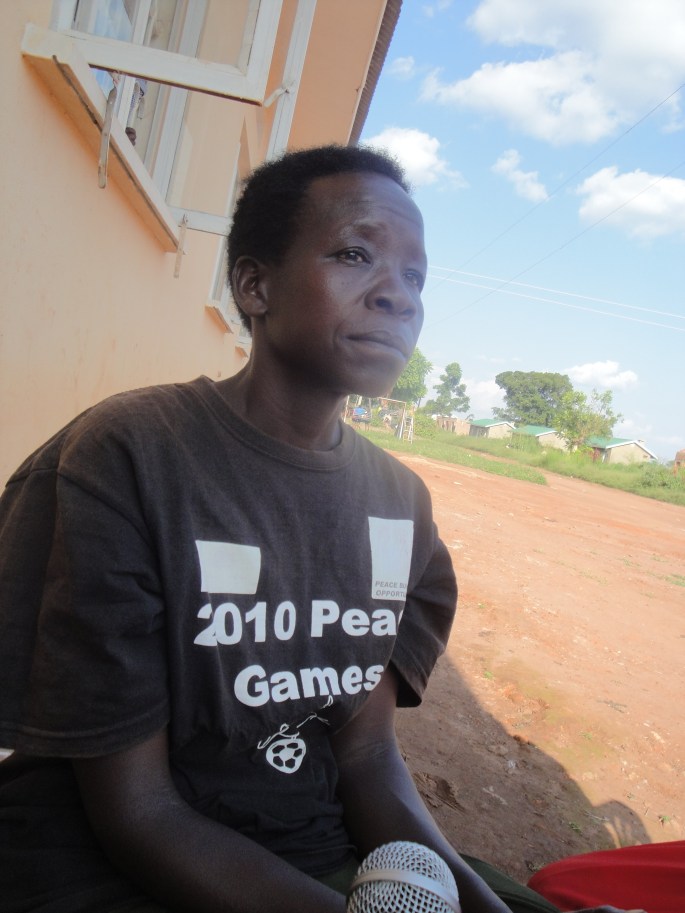
 Rosebell Kagumire