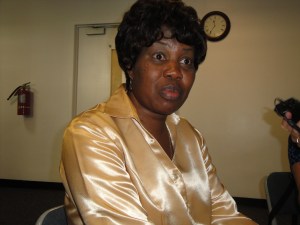
Lucy Chesire, a nutritionist from Eldoret Kenya is HIV positive and she had to have three surgeries and spend seven months in hospital due to TB.
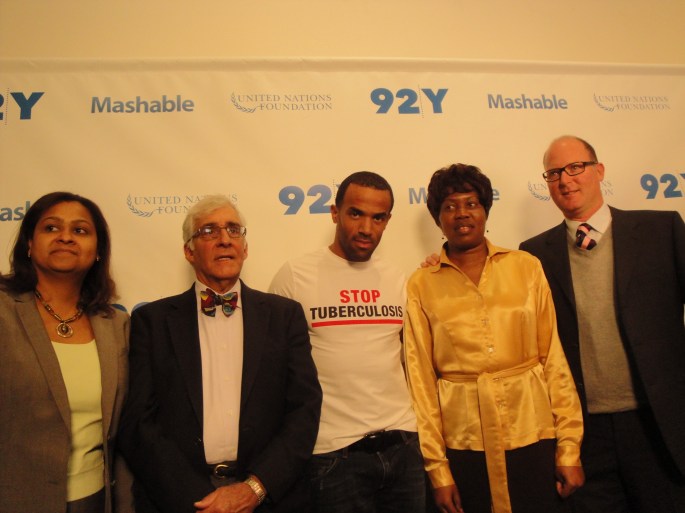
Craig David, Lucy Cherise and Lee Reichman, a leading academic on TB. Rosebell's photo
Only 4.1 percent of people living with HIV worldwide have been screened for Tuberculosis. TB is one of the most neglected diseases despite being in existence for the last 100 years.
Nearly 25 percent of people with HIV eventually die from TB because they are not tested. Also in Uganda most people learn of their HIV status when their TB has gone to late stages.
According to the WHO 2009 Global TB control report of the about one million Ugandans with HIV, only 16,110 had been screened for TB.
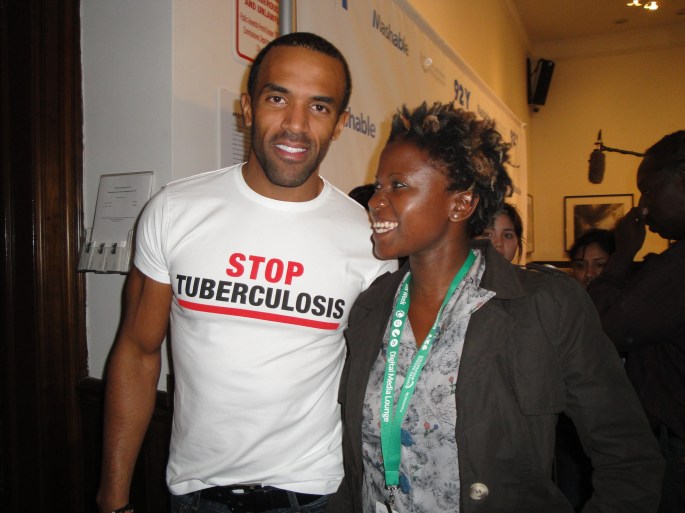
Singer Craig David is the UN ambassador for TB, today at the UN Week Digital
Craig David talking to bloggers
Media Lounge he called for increased funding for TB and promotion of educational programs to deal with stigma surrounding TB.
Cherise is a TB advocacy Consultant with Action
Cherise said most people with HIV end up developing drug resistant TB due to low awareness in communities about treatment. She said it takes about USD 25,000 to cure drug resistant TB which many patients can’t afford and they end up dying.
She said many TB patients in Africa must walk many miles a day to get TB injections and also endure over 40 pills a day. Many have lost their jobs because of the lengthy treatment.
According to a new report by Global Campaign for Education (GCE), a coalition of organizations in 100 countries in the world calling for increase in provision of education for children, achieving basic education for many African countries remains far from reality. The report titled; Back to School? The worst places in the world to be a school child in 2010, looked at population without access to universal basic education, political will, quality and equal opportunities for education.
Of the sixty developing countries with education gaps, Uganda was in the 46th position, Rwanda 25, Kenya 11, Tanzania and Burundi both at 37.
In the East African community, Kenya and Rwanda are doing fairly better than Uganda, Burundi and Tanzania and the reason has been put as existence of political will to achieve basic education for all.
In Burundi 38 percent of children as of 2008 had not complete primary education while 93 percent had no secondary education.
For Uganda, 43 of children had not acquired primary education while for 78 percent secondary education remains an elusive dream.
Tanzania had better indicators for primary school having only 13 percent not completing primary education but its commitment to education is questioned with 92 of its children having not made it to post primary education.
The report shows that while there has been progress in primary education, only one country in Africa has more than 50 percent of its children in secondary school.
Uganda had the lowest public expenditure on education in the region.
Rwanda and Kenya were shown to have made tremendous progress. Rwanda commits about 20 percent of its annual budget to education.
The report looked at political will in terms of how much of the total government expenditure between 2007-8 was spent on education and also supplementary but essential interventions like free school meals for children.
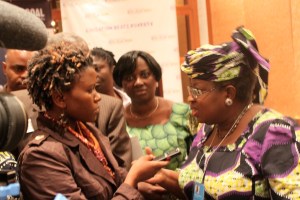
Talking to Ngozi Okonjo-Iweala World Bank Director about education funding.
In Uganda, in June, the country was shocked to learn that about Ushs.16 billion allocated to the education ministry had been untouched for a year due to lack of systems in districts and bureaucracy.
Even though the budget allocation for education has increased over the last four years sh633.43b in 2005/2006 financial year to sh1.1trillion this year, there is still lack of support for children especially the girl child which has led to high school dropout rate.
Government in Uganda passed the Education Act in 2008 which makes primary education compulsory but enforcement remains a challenge.
The report puts Somalia as the worst place in the world to be school child further highlighting the impact of conflict on education.
In most of Northern Uganda where the communities are emerging out of conflict, children do not stay at school for long due to hunger and many girls are pulled out of school to carry out farming to support families at worst they are married off.
The report was released at a meeting on the sidelines of the UN Millennium Development Goals Summit in New York
Former British Prime Minister Gordon Brown:
“We should work to fast track education initiatives so that in places with conflicts education is available to the young at the frontiers in the same way as medicine is available. We have to make sure that the two million teachers that are missing are actually educated and trained for the task that lies ahead.”
Although development aid has more than doubled since 2000 when the MDG goals were endorsed, aid levels especially to support basic education in sub Saharan Africa are still far below the estimated needs.
Much as the activist this week will mount pressure on developed countries to honour their aid pledges, the report calls recommends that developing countries must also commit 20 percent of their annual budget to education in order to achieve basic education for all.
And for Africa where the campaign found to have most troubling education in indicators, the education for all target will be one hard to beat.
The report also notes progress in countries like Tanzania, Mozambique and Rwanda.
Yvonne Chaka Chaka, South African singer and activist has a new film out about her work as UN Millennium Development Goals Africa envoy. The Motherland Tour- A journey of African Women features lives of four African women. The first screening was in London last week. The film has also been featured on French Television.
I had a chance to meet up with Yvonne and her advisor Louis da Gama ahead of the event. Check it out.
On Saturday July 31, 2010, a 30 year-old woman was brutally murdered by a brother in-law in Ogan village, Pajule, Pader district northern Uganda. Susan Adong–who had three children, was seven months pregnant.
According to the police report, Adong was murdered because the family held her responsible for her husband’s death. Adong’s husband died in a prison after he was remanded over several cases of physical abuse against Adong.
After her husband’s death, Adong was chased away from her marital home and sought refuge at her parents’ home. On the fateful day Adong had gone to collect a few of her belongings, she was brutally axed several times to death.
Adong is just one of hundreds of women in Uganda who lose their lives in domestic violence.
Domestic violence has been steadily increasing over the last five years that finally the Ugandan parliament has enacted a law this year. The new law brings tough penalties for offenders, and grants power to low level authorities to tackle domestic violence while re-emphasizing women’s rights to resources. Read more here.
On Friday, newspaper headlines in Uganda featured the story of Judith Koriang, a 20 year-old woman was sentenced to death by the Court Martial in Soroti over the murder of her soldier husband, Nelson Okello. According to the story, Koriang shot her husband with 30 bullets.
I intended to write something on this story, something I found a mess by the reporting of this story but I was in transit. A few hours later I see a story by Ultimate Media, which suggested that women activists in Uganda want to protect the murder. I find such reportage and conclusions abhorrent. It’s an easy way out on reporting a story. Just like the court that sentenced the woman, the failure to look at the condition of this woman is something we need to revisit.
It is not only Ultimate Media that has failed to critically report this story but it’s their shallow look at the concerns of women activists that rather shocked me.
The media in Uganda led with this story but failed to ask important questions regarding justice. As usual we are caught in the hotness of the story and we only realize we are not asking the important questions later. Why was the woman tried under the military court? How was the trial carried out? A civil court would look at this case differently no doubt.
This was Ultimate Media’s intro:
As long as murder cases have been committed by a woman, there is no problem at least in Uganda. The women rights activists in Kampala have today shocked the whole world when they pledged to assist a woman who was sentenced to death for killing her husband.
Beyond what transpired in the court, the media don’t want to look at the events in the lead up to the murder which could have a big impact on how this woman is tried. There’s a lot of violence against women who are HIV positive and there’s general lack of knowledge about discordance.
Even when women activists turned up and gave them an opportunity to revisits their coverage and the trial we are eager to jump to conclusions.
There was no connection of this kind of murder to the bigger picture. Of course joining the condemnation is easier than critically analyzing such a case and the concerns of the women activists and the media often looks for the fast easy of interpreting events.
True Koriang killed her husband but under what circumstances? The soldier had accused this woman of bringing HIV to herself, an issue that is a sticky one for women in Uganda. Many women are isolated by families, kicked out of their home with no property and at worst if they stay they endure eternal suffering. How we deal with such injustices will determine the occurrence of crimes like the one Koriang did.
Many men in Uganda continue to refuse to go for HIV tests and when women do find out about their status, they are blamed, battered and killed. There seems to be no distinction between who infected and who found out about the infection.
HIV is behind many domestic violence related deaths and therefore a mention such a factor in the case should make one think of the conditions of the woman before she committed murder.
This is not to suggest that Koriang was innocent but there seems to be more condemnation reports in the media than inquiries.
Ultimate Media quotes the Executive officer of FIDA Uganda, Maria Nassali who suggested that Koriang could have killed her husband out of “anger and provocation.” And this was enough for Ultimate Media to conclude that FIDA was protecting a murderer. What these reporters refuse to look at is the right of anyone murder or not, to a fair trial.
I need to know why this woman was tried by the military court when it is only her husband who was in the military. Why is the military taking over domestic violence cases? And why won’t the media question the ability of the military court to deliver this woman justice. I do support the efforts of the women activists in trying to make sure this case is re-visited. Not because I want to see Koriang absolved of the murder but that she gets fair trial and all conditions be factored in the trial. Her situation before she killed her husband matters a lot especially to many Ugandan women being battered every day.
Political participation of women has changed since 2005 when Uganda, under donor pressure, opened political space to allow political parties in a country that had been largely a one-party state. With these new political changes, more women found space to engage in politics.
Uganda’s President Yoweri Museveni took power in 1986 after a five-year guerilla war. His rule has been marked by steady economic growth and relative stability in the southern part of the country, but Northern Uganda has seen persistent conflict since he came to power. Thousands have lost their lives in the fight against the Lord’s Resistance Army rebels. Read more at WIP
When you google Uganda and gold you will for sure get a lot about how our very own army robbed the Democratic Republic of Congo of its precious minerals in a five-year war that ended in 2002. Little is known about people and companies behind the minerals industry in Uganda. Even with an airborne geophysical survey that was released last year that talked about our mineral deposits, few Ugandans or even in the media quite understand how our mineral industry works.
As of last year Uganda had only two gold mines, in Busia and Mubende established.There’s still untapped potential for investors to venture into mineral development and production. The Tira Gold Mine has been operating in Busia since 1994, producing about 3kg of gold a month. The second mine is being developed in Kamulenge in Mubende by AUC Mines.
This year Uganda saw the opening of the first gold refinery. The $1.5m (£990,000) refinery is operated by the Russian-owned firm Victoria Gold Star and has the capacity to produce at least 10kg of gold a day.
Looking at the level of development of the gold mining in Uganda, you wouldn’t expect Uganda to have huge gold exports but we do. And the origin of that gold we have been exporting is detailed in a series of UN reports on the bloody Congo minerals.
Last year a UN official said about 40 tonnes of gold is smuggled annually out of the Democratic Republic of Congo, most of it shipped to Dubai via Uganda most of it from the rebel controlled provinces of DRC.
The minerals trade runs together with arms trade with some companies set up in Kampala which are registered as arms dealers but they do what I can call barter trade with middlemen in Congo’s minerals.
According to the Uganda Export Promotion Board, the country exported a total of $342m worth of gold between 2003 and 2008. A record $122.6m worth of gold and gold compounds was exported in 2006 way higher than what Uganda can produce.
Uganda being a country where business survival is about patronage, I would want to think that most of these companies trading in Congo gold and other minerals have godfathers in our government.
At the weekend, President Joseph Kabila issued a ban on the mining in three provinces of eastern DRC where decades of fighting between government troops, militias and rebel groups have left millions killed, turning the region into one raping field, leaving thousands displaced and others as refugees.
Kabila ordered an indefinite suspension on mining in North Kivu, South Kivu and Maniema but it’s not clear how such a suspension will work.
The major problems stem from the fact that Kabila’s government is not in control of a good part of these provinces. But my concern is that regional governments benefit a lot of the situation in the Congo and will be adamant in helping such a ban to succeed. Many generals in governments have been named among the looters but many high up in government continue to trade in conflict minerals through some fronted fake companies.
The move is good step but who will ensure that Uganda does not harbour companies and international dealers in minerals who will continue to assure the rebels an interrupted trade route. And Uganda is not alone, Burundi and Rwanda have also been in the spotlight.
I believe for this ban succeed, we must deny the rebels the market and you can’t do this unless regional governments are pressured to stop supporting the illegal trade.
From 18-24 I will be in New York as part of a group of Bloggers on an Oxfam GB VOICE blogging fellowship also supported by Wateraid and One.org. I will be blogging live on the Millennium Development Goals review Summit during the UN week.
I will cover all MDGs but with a special focus on women empowerment and maternal and child health.
Here are some of the bloggers and journalists,part of the 400 that will take part.
The first War Crimes court set up in Uganda will soon start its first trial in Kampala after a lower court committed a former LRA commander. The court set up in 2008 after the failure of peace talks between government and LRA will have the Lord’s Resistance Army commander Thomas Kwoyelo as the first suspect to be arraigned. Kwoyelo is not one of the commanders indicted by the International Criminal Court.
The creation of the court was contained in the reconciliation and accountability annex to the peace agreement negotiated between 2006 and 2008 in Juba before the talks crumbled. The War Crimes court is just a division of the High Court.
You can say this is one of the few achievements that came out of the two year negotiations.
Kwoyelo is facing 12 counts of willful killing, taking hostages, extensive destruction of property and causing serious injury to people. Kwoyelo was captured by the Ugandan army last year in Garamba forest DRC and LRA continue to kill, kidnap and displace many in South Sudan, DRC and Central African Republic.
Despite President Museveni signing the ICC bill into law a few months ago but news reports indicate Kwoyelo was being tried under the Geneva Convention.
The court is supposed to address serious crimes and human rights violations of the past two decades in northern Uganda. This includes crimes allegedly committed by the Ugandan army as well as the LRA.
This trial could bring support to the court that has not been able to take off due to lack of funding and skilled investigators in war crimes but still the sticking point remains whether this court will ever be allowed to try Uganda Peoples Defense (UPDF) soldiers for crimes committed in the north.
Last year Amnesty International released a report that criticized the exclusion of Ugandan soldiers from the court’s jurisdiction. “The international crimes committed by armed forces shouldn’t be tried by the military courts since they took place during the conflict,” said the report. “You can’t try crimes committed parties in the conflict in different courts.”
Ugandan soldiers have been accused of rape, forced displacement, murder and use of child soldiers. I spent most of the last three weeks moving across northern Uganda and specifically talking to women about their reproductive health needs. Many women tell of horror stories of rape by both soldiers and rebels. They are still living with fistula which the government healthcare system is unable to address. Many require about $200 to get reconstruction surgeries. Few organizations have been able to bring medical teams in the area to avail free surgeries to these women. Most of these crimes were never investigated. There are many stories of gang rapes involving soldiers but the army and government still insist that the military justice system has always disciplined the soldiers who commit any crimes including those during the war. But this is in total denial of the state in which crimes committed in the war are carriedout. The crimes happen at a time when the most important job is finish the enemy. So as much as the War Crimes court is in place, for it to earn the respect and to successfully address crimes against humanity committed in the north, it must look at both sides in the war.
I haven’t written much because I have been on the road most of the last three weeks. A few weeks a go government of Uganda paid supplements to major newspapers publicising their achievements in the recovery plan for Northern Uganda. I took a trip to the north and east with Isis-WICCE an organisation am currently working with to finish my masters.
These peoples stories tell a different reality. The case is simple not much on the ground yet to cause celebrations and wastage of money to put news ads. That money invested in supplements could have well changed the situation of these people I spoke to and many many others.
But since it is election time here ‘you have to blow the trumpet’ even in situations that are dire. These people’s lives show not much has been done for communities that have faced over a decade of conflict especially those people whose bodies were the battle ground of the war – the women!
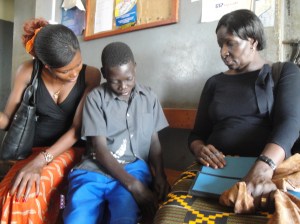
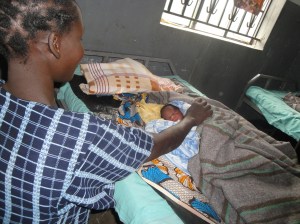
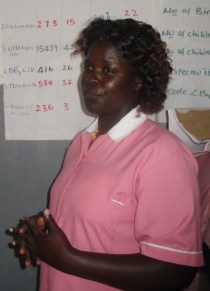
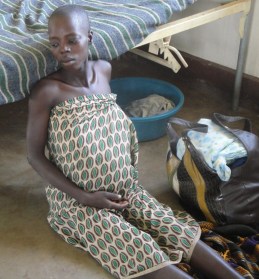
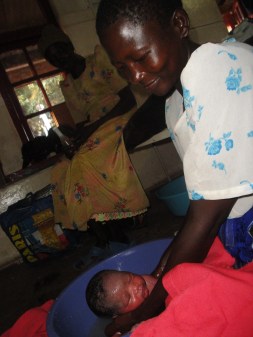
Domestic Violence is still a big problem. Everyday the police in the north record high numbers of assault and murders. Women are the worst victims and the whole population has remained traumatised. The recovery plan has not covered immediate problems like trauma and as long as people are traumatised not much can progress. Rosebell's photo.Ruth Ochieng of Isis-WICCE (Right) and Barbra Otuku talking to a 13 year old boy at a police station in Pader. He was arrested, for the 4th time this year, for defilement. He is in primary four, I was in Senior one when I was his age. The Police have no capacity to counsel him so they keep him in cells. He has a single mother who has enough burdens. The community wants nothing to do with him. Where is the future of such children, the sheer victims of circumstances and where is the government plan. Rosebell's photo.Just a few hours after delivery at Lira Palwo health center. This is a health center that serves about 30,000 people but it had just one nurse on duty, one bed for delivery, no gloves, no medicine. And this is not an isolated incident most health centers I saw nurses have to improvise exposing themselves to HIV in order to help a woman give life. But some admitted sometimes they have to turn away women.Susan Adongo is a Mid Wife, she was in charge of Palwo health center II alone. The women she helps to deliver often walk more than 20km to reach her. She had only painkillers left the day we visited. Susan risks her life to deliver women in absence of gloves. She had not received her salary for two months. She says the issue of maternal health has not been put as a priority.The rate of girl child school dropout is high in the north. There are many teenage pregnancies. This young girl was at a health center in Lira after walking distance. There was one nurse on duty and the center has a theatre that is not operational. If she got a complication it would take another 40 km on bad road to get her to a crowded regional hospital.
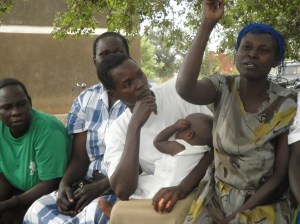
Some women we spoke to about problems they face after going back home from camps where they lived for about over a decade. Many women talked of reproductive health issues especially fistula which is widespread due to rapes during the war.
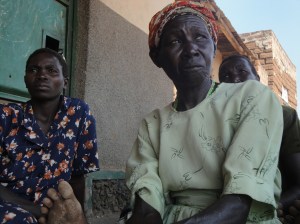
Women like this one have suffered the worst crimes during the war but post conflict rehabilitation often does not have their voices or their participation. Many women in N.Uganda are currently being denied land rights many widows have no rights and other older women have remained in camps with no help.A mother in Serere health center IV gives her baby a bath two hours after birth. The center has no mosquito nets yet this baby and the mother were staying at the hospital over night. Malaria is endemic in this area and most infant deaths in Uganda are from malaria.Soroti district health officer told me on average a health center II which serves about 5000 people mainly concetrating on primary health recieves about Shs 4 million (abt $2000) per year for drugs.
The issues addressing the welfare of ordinary people in the north are still not addressed. Maternal deaths are still high. Uganda loses about 6000 mothers per year due to pregnancy related complications. Recently at the All Africa Anglican Bishops conference in Uganda, the head of UNFPA Janet Jackson put the deaths in a way that I can’t forget. That for very 90 minutes, a time it takes for a football match, a mother dies in Uganda. And for those of us who love football so much it is a comparison that can’t leave our minds. Normalising the situation in northern Uganda will take more than just road constructions.
I heard stories of women getting snake bites as they cross bushes for kilometers in search of a health center. I also met Theatre Assistant in Serere who mans a well equiped theatre donated by AMREF and there’s supposed to be a medical doctor to operate but he does all the operations (minor) and he has to refer lots of patients to another regional hospital about 40 km away. He is on call 24/7 and 300 whatever days in a year. He earns $100 and the time I spoke to him he had not received his salary for two months.
How do you expect this man to survive and offer his skills to people who need them most?

 Rosebell Kagumire