Security remains top concern in South Sudan

On a recent trip to Juba I attended a conference of South Sudan Women leaders from six states hosted by Isis-Women’s International Cross Cultural Exchange. At the meeting women were discussing the way forward in the new country and they centered on how to help women get their rightful place in different sectors and governance of the new nation. I met Hannah Bona Nimaya, a representative in the Western Equatoria State Legislative Assembly where she chairs a committee on public service. Western Equatoria State borders DRC and Central African Republic.  Nimaya has been working with different women’s groups to ensure women participate in governance. She has also worked with a network of traditional birth attendants to give them more skills to handle deliveries in place where health centers are mostly just buildings with no medical staff or drugs.

Nimaya told me about what the different issues facing South Sudanese ahead of independence and what she expects from a new state.

You recently voted in the referendum where you decided to move away and have a new country of your own, what does this mean to you as Sudanese woman?

As a woman, a mother and a member of parliament in southern Sudan who was born and grew up during war, this is a historic point that we have longed for. During the referendum we had to move to access villages that have no roads. Due to my work in training women in maternal health I was voted to represent my people in the state parliament. So during the referendum I had to work hard to put the message of cessation across. We moved door to door to mobilize people and ensure that everybody has registered for voting and it happened and I appreciate them.
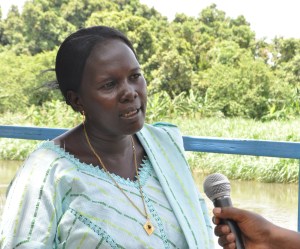
Hannah Lona Bona Nimaya, a representative in the Western Equatoria State Legislative Assembly . Rosebell Kagumire photo.

It’s less than two months to the Independence Day celebration on July 09, what do you think should be priorities of the government in the new country?

One of the priorities for women in southern Sudan is security. There’s still fighting in some parts and for us in Western Equatoria State we still have a problem of the Ugandan rebel group the Lord’s Resistance Army (LRA). Most of the people fear of moving because they think they will be killed.

We lack proper health facilities. Women are still suffering, women, the mortality rate and mobility rates are still high. We have many counties that do not have adequate health facilities, all centers were completely destroyed during the war and have never been renovated and the services there are completely poor. Some of the hospitals are empty so it’s one of the priorities that people have to be given good health services.

The education system has to be improved especially now that we are becoming a new country. The education system in Southern Sudan has to be upgraded and the standards have to be improved, so that education services are given to our children equally.

The other issue is women’s representation in governance. The number of women holding positions in decision making is not reasonable at all. We are more than 60 percent of the population but we don’t feature much is administration of this country and its resources. The 25% which was put in the Comprehensive Peace Agreement (CPA) is yet to be implemented at national and state levels. In many states the 25% is far from being achieved. I am not happy when the men say we were given that percentage. Who gave it to us?  It should be seen as our right because we are part and parcel of the story of the liberation of South Sudan. Our contribution to the liberation for the last 50 years was way greater than 25%  so we can’t just be given 25%. Women have to be appointed in key ministries that deliver services in key areas and government needs to ensure that a lot of resources are put in the service delivery ministries. Women should be heading such ministries because women have a heart to ensure that the services go to the people.

In Southern Sudan there is a high rate of illiteracy especially among women. And even when the women are well educated they are still marginalized. We want women supported to go back to school so women’s capacity is increased whether in business, politics or education. As a country we will have to devise means to tackle gender based violence. Women still face f rape and forced marriages. For poor families, a girl child is seen as only good for bringing wealth to family by being married. We need our government to address these issues.

What’s your dream of the new country?

I want to see the level of service delivery improved. Regardless of our positions I just want to see us as one people, dealing with tribalism, nepotism and corruption because if we don’t do this from the start our country will not progress.

I think that the opportunity we have is that we will own our country and we can decide for ourselves to discuss and address our own issues unlike before when we used to wait for resources and someone to help. Another opportunity is that people are ready to receive their new country and become participants we must take good advantage of this mood.

What do you want to see organizations involved in development do in your community?

We need to see health interventions especially reproductive health. This is often ignored yet people coming out of war like us have major complications to address. During war women were raped many never had any medical services before therefore I want to see reproductive health given as much attention as other areas. I have worked with Traditional birth attendants (TBAs) to train them with a grant by Isis-WICCE. We have no hospitals yet we have to address maternal health issues immediately.

Although the TBAs have no much education, they have been offering these services and if given help and offer good services especially since there very few midwives around. They have really helped our women because now women can receive counseling, they are tested for HIV to reduce mother to child transmission all because we used TBAs who they trust. So far we have trained 45 birth attendants and given then new skills and also increased referrals even thought the health centers we are referring them are not that equipped.

I also need to see our people trained in different peace building mechanisms. Of course we have local systems which have worked for centuries but we need to know in cases where they have failed we can borrow a leaf from neighbouring countries that have also suffered war in the past. People still have trauma, there have been clashes with different tribes so we must address these issues to make sure our country is stable. My rough estimate would be that 80% of the women I know in my area face some level of trauma. Many lost their husbands, they are not able to support their children in school, and they have land issues which affect their livelihoods. Any development must address people’s immediate needs.

I featured on AlJazeera The Stream program this week

I discussed with Digital Producer Ahmed Shihab, host Derrick Ashong and Azita Ardakani of Love Social the political situation in Uganda, Hoot4change and Walk to Work campaigns and what they mean for the country.

Follow the link if you missed it on Monday 23 May. http://stream.aljazeera.com/episode/4569

Below is the discussion i had with The Stream before it went live. http://www.youtube.com/user/AJstream?blend=13&ob=5#p/u/0/kZakyvIHA-s

Uganda gets its first female speaker of parliament; is it worth a celebration?

Ms Rebbeca Alitwala Kadaga was today sworn in as the Speaker for the 9th parliament in Uganda. Most of the parliamentarians are familiar faces and the National Resistance Movement (NRM), President Museveni’s party, has enough members to pass any laws they want.

In a world that cherishes women’s rights and empowerment (or pretends to), this should be seen as a historic moment and many will see it as that. However I don’t see much to celebrate about Kadaga’s election. Kadaga is not a fresh face in this parliament, she has been there, served as Deputy Speaker. She has seen it all.

She holds a Masters in Women’s Law from the University of Zimbabwe but this specialization in women’s rights law has not seen the NRM filled parliament show concern to issues affecting women.

Uganda’s health system is ailing, maternal mortality is high yet we have seen the NRM government which Kagada has served exonerate ministers who swindle health care monies.  I was discussing Kadaga’s election with some people in the women movement and one lady told me, “I am not interested in pushing to have a female speaker just because she wears a dress.” Then she told me it’s almost impossible for her to see Kadaga above the NRM male dominated politics of intrigue. Many questioned what exactly Kadaga had done to advance the women’s rights in the country.

And these questions could be answered once the Marriage and Divorce Bill comes to her parliament in a few days. The bill among others recognizes marital rape and also provides that women are entitled to a share of property upon divorce.

Kadaga participated in the infamous amendment of Uganda’s constitution to allow the lifting of presidential term limits and thanks to that move we have a possible life presidency. She comes at a time when the chair of her party President Museveni is calling the media ‘enemies of the state’.  The very day she became speaker, somewhere on the outskirts of Kampala, the leader of opposition Dr. Kizza Besigye was under house arrest. Kadaga will most likely preside over the NRM parliament that will pass laws to deny Ugandans bail for 6 months for being suspected protesters.

Kadaga  is one of the MPs that took the Shs. 20 million shillings bribe from the government shortly before the February 2011 elections. When asked by some women she said she had used the money to construct some boreholes in her constituency but has refused to go on record and in the media to declare that. The campaign by civil society organizations is still on to try and get back that money.

The region she comes from -Busoga is one of the poorest regions in Uganda. It has suffered most because of the death of industries that once flourished in Jinja before the current government took over. Of course wealth distribution is not her role but she has held different ministerial positions in this government before and therefore she could answer some of the questions.

To me Kadaga will be just another speaker doing anything at the whims of President Museveni. I wait for her to shock me, to stand up to that small group of corrupt men that are draining this country’s resources.  I see her becoming another statistic of how African countries are doing well with women political empowerment. She will be the talk in those various governance and women’s conferences. Am sure she will have millions of invites at her table to tell the story of how she made it.

But I will wait for you Madam Speaker to prove me wrong! That you will not only be known as the first female Speaker but as a woman who put her country above her party. I say this knowing that the party you serve has become too intolerant to anyone that questions their mismanagement of this country.

Time is on your side. You have got five years to do that.

WHICH TYPE OF UGANDAN ARE YOU?

April was a  month of turmoil in Uganda. We still don’t know if there’s more to come and what form these events will take. About ten people lost their lives and hundreds are still nursing bullet wounds sustained when the military and police descended on unarmed protests calling on government to do something about rising fuel and food prices. Yesterday we saw another statement from President Yoweri Museveni about opposition leader Dr.Kizza Besigye and the whole walk to work campaign. The president called thousands of Besigye supporters drug-users. He also called the media biased and “enemies of Uganda’s recovery”, a title many in the profession are  both happy and worried about.

Richard M Kavuma, a Ugandan journalist wrote this note on his facebook page categorising Ugandans. Reading it one will understand the social-economic factors that could lead to or stand in the way of change in Uganda.

There are four types of Ugandans: Category 1: There are those who have never had it better and who cannot imagine life without the present dispensation. For those, the government is a victim of oppression by the opposition and colonialists and their supporters in the media. In other words, these men, women and their children are having a sumptuous dinner do not want to be disturbed. Outside, askaris and Safety-First Guards or SFG are deployed to secure the peace of the party inside – while earning their family’s keep.

Category 2: This includes both those who just manage to get by in their professions and businesses and those who are hungry and starving. These taxpayers know that things can and should be better, but they are so scared of Category 1 that they are thankful for the air they breathe. These do not want to cross the path of those in category one who boast of their monopoly of legalised violence. They are not even sure that ‘change’ can actually bring about change. The main problem facing this category is lack of courage.

Category 3: There are those who are so detached from the state that they have not imagined that change is possible. For them the state matters to those who are in politics and they do not see a link between their survival and the nature of politics and the conduct of politicians. That is why it is much easier for KFM to host Besigye for free but not even his party’s money would get him on Kyamunungu FM without a fight. To Category 1, those in Category 3 must be protected from ‘evil’ ideas propagated by category 4.

Category 4: These believe heads of Category 1 are squandering the opportunity to build a future without violence (because the eventual, inevitable fruit of oppression is self-defence aggression). So they try to appeal to categories 1 & 2 to push for a change in the way Uganda is run. They want democratic freedoms underpinned by ability to hold the government accountable and, if it misbehaves, change it; they want no corruption and better use of public resources. Certainly 1&2 loathe and fear Category 4.

This note generated debate and you find more here

Museveni gets instruments of power; rival’s supporters get the cane, teargas and bullets

“I am not going to a theater of death but if it takes my life to bring equity to Ugandans, I’d regard that as a privilege,” that’s what one young Ugandan told his friends before he set off  yesterday morning to welcome home opposition leader Dr.Kizza Besigye who had been receiving treatment in Nairobi Kenya.

After being blocked by what many believe were Ugandan authorities to get into the country on May 11, Besigye decided his return would conincide with President Yoweri Museveni’s 5th swearing in ceremony at Kololo Independence grounds.

Museveni’s swearing in ceremony was not that well attended by even African leaders  save for DRC, Kenya, Tanzania, Ethiopia, South Sudan, Somalia, Nigeria and Zimbabwe. As President Museveni’s ceremony was ending with dances, on the otherside of the town crowds had already gathered, not to catch a glimpse of their revolutionary president but to welcome a man that has taken the brutality of this regime to international limelight.

Besigye left Uganda for treatment in Kenya after his brutal arrest that left him almost blind. His support has suddenly increased as the government has deployed thousands of police and military in different parts of the country to quell the walk to work protests, a campaign by the opposition against the rising fuel and food prices.

In April, 9 people were killed and hundreds were left with gunshot wounds. So when Brian Bwesigye set out yesterday determined to walk to meet Besigye’s convoy from Entebbe, it was an act that could only come from a young Ugandan who is unable to make sense of his president’s speeches that seem to only point to the past.

The road Besigye and his supporters occupied for 8 hrs was the same to be used by President Museveni and his guests as they make their way to the lavish State House that the president put up in Entebbe.

Military and Police forces were seen beating up Besigye supporters to get them off the road. This must have been an embarrassing moment for the president and his regime sympathizers. A day that was meant to be for the president to boast of his 68 percent win in the February election became the day when thousands sacrificed, waited in the sun, faced with canes, teargas and bullets to catch a glimpse of Besigye.

President Museveni was forced to go through these crowds that waited for his arch rival on his day. The government’s account was that one motorcyclist was shot dead as he insisted on crossing Nigerian President Goodluck Jonathan’s convoy. Reports show that Jonathan’s convoy got stoned and one government spokesperson said this on TV but the Nigerian president’s office has denied the story. Fred Opolot from Uganda government Media Center told the story of the shooting of a rowdy boda boda man, he looked unremorseful even knowing that there could have been other ways to get this man out of the way but not killing him. I guess that hows cheap life has become here.

So far that’s the only death the news media have reported. But Bwesigye who was part of the Besigye supporters posted a note on his Facebook saying:

Then as we approached Kibuye, TEAR GAS started rocking! Then bullets! Then helicopter gunships flying over us! Then poisoned water! Then dead bodies! Three of them, I saw with my naked eyes! Tension. I hid in a residential apartment nearby and from the third floor in someone’s house, I was watching Besigye atop his car in the face of the shooting.

I honestly did not know that I would later see dead bodies of civilians after being shot by the, military, I used the theater of death expression as a hyperbole, I was wrong, it was real.

It’s not yet clear how many people lost their lives just because they went out to welcome an opposition leader an like all past deaths from live ammunition we don’t expect to see any investigation or arrest of those responsible for they probably were following ‘orders from above’.

The numbers wont be clear also because of the way the government has pushed the media into a tight corner. For the State TV which covers most of the country it is almost abominable to show Besigye and his supporters, we have seen the New Vision coverage dwindle and last night it was clear the whip had well reached the private TV stations.

On the night when many Ugandans were injured and thousands gathered to see an opposition leader, NTV Uganda showed about 30 minutes of Museveni’s swearing in. One wd mistaken their coverage as a paid advert by the regime. One by one the reports followed about Museveni’s achievements and the beatings, teargas and bullets at Entebbe raod took 3 minutes with no mention of the injured.

The pressure is on but WBS TV offered Ugandans best coverage of the different events. If media is ready to give in to government threats at the earliest God knows what sort of news we will be watching by the end of the next five years.

The security forces went farther to assault journalists, steal their cameras and destroy other equipment in what seems like a well orchestrated move to curtail press freedom. And all this didn’t appear much on our TVs.

If the Swearing in day is anything to go by, one can only see that the next five years will be a tough period for Ugandans. Especially looking at the president’s speech which didn’t offer concrete ideas on how his government will deal with increasing unemployment and corruption.

Uganda women hold vigil for justice and peace over recent shootings

Today about 150 women marched in Kampala to protest police brutality that has characterised th Walk to Work  demonstrations which has taken five lives including a two year old girl in the last month.

Ugandan youth march along in Vigil for Justice and Peace in Kampala. May 9 2011.

The Walk to Work campaign to raise issues of high fuel and food prices currently facing most Ugandan households had been organised by Activists for Change, a group of Ugandans from different opposition parties. The campaign which started on April 11 was met with bullets which left many on hospital beds with serious bullet wounds and the top opposition leader Dr. Kizza Besigye was hospitalised in Nairobi.

Today women from different civil society organisations marched to add their voice to many Ugandans who have said brutality wont the country anywhere.

In attempting to fulfill its obligations in the last few weeks, the State has instead used excessive force resulting in the infringement of some of the fundamental rights enshrined in Chapter 4 of the Constitution including the right to life, the freedom of assembly, freedom of expression, freedom of movement, right to access prompt, fair and timely justice and freedom from inhuman and degrading treatment….We also wish to express our profound disappointment with government’s indifference, exhibited by the lack of urgent action to curb the situation and apparent disregard of pressing priorities in allocation of government expenditure.

We as Women in Civil Society are hereby convening to register ourdeep concern and condemnation on the use of excessive force by the Police and other security agencies and subsequent escalating violence and to call upon the State to take critical measures to address the key issues/ concernsraised by the publicso as to avert a national crisis. In particular, we wish to register our deep concern of:

The use of excessive force and especially the use of live ammunition to quell demonstrations,indiscriminate physical assaults on civilians, spraying of vast amounts of tear gas in closed spaces including cars, schools, dispensaries and homes occasioning loss of life and property, severe injuries and pain among innocent children, by standers, those at work and urban dwellers.We are greatly concerned that rather than enjoy state protection, citizens are preoccupied with defending themselves against its wrath;

Thelma Awori,a womens rights activist during the walk.

The brutality of officers of the Uganda Police Force and other security operatives in handling the “Walk to Work”      campaign which amounted to cruel, inhuman and degrading treatment for those that were arrested.

The intimidation of human rights defenders who have spoken out on various issues of concern including the declining space for engagement;

Censorship of the media and a curtailing of press freedom and freedom of expression, including intimidation and security threats to journalists and media houses carrying out their duty as a watchdog of the state and provider of information to the public

The increased erosion of the independence of the three arms of government  and lack of .The actions and decisions of some judicial officers which cast doubt in the minds of the public on whether justice is being done. We are equally concerned that contrary to the public appeal for the perpetrators of violence to be brought to justice, the Minister for Internal Affairs has instead defended the use of brutal force. Such responses from government risk promoting impunity.

The increased militarization of the State and use of armed forces to enforce law and order and quell peaceful protests which heightens risks of violent conflict and will affect the entire population of Uganda including men, women and children.

We are calling upon Government to take proactive measures to address broader social justice issues, and ensure that key concerns voiced by various sections of the public are addressed. We demand for strong policy measures to address issues food security, unemployment, health and education.

The march through Kampala was granted by police on condition that women wouldn’t utter political statements. And it happened!

The women handed over a statement calling for proper investigations into the incidents to the United Nations Special Rapporteur on the situation of Human Rights defenders Margaret Sekagya.

Although the police gave the women’s march a location far away from the city center, there was enough coverage of their issues. One Ugandan told me:

“Such good images of white clad ladies with their pans could do wonders at getting the reluctant middle class off their backsides. White clad Mothers, on the other hand, emphasize peaceful nature of the campaign and also are re-assuring to those who are still hiding.”

The march was well placed on Mothers Day to point out specifically horrifying images we saw in the last weeks of a pregnant woman Ms.Nalwendo shot right in her stomach leaving her intestines hanging out in Kampala during the demos and another incident where a two year old Juliana Nalwanga was shot dead in Masaka. In all deaths we are yet to see any arrest of the perpetrators in the security forces.

Stella Mukasa, a lawyer and women's rights activist reads the statement as the UN Special Rapporteur on Human Rights Defenders Margaret Sekagya (c) and the Head of Uganda office- UN Human Rights listen.

Is it ‘World anti Press Freedom’ day in Uganda?

Mr. President you know how you told us a few weeks ago that these are hard times of high inflation, which this month rose to 14 percent, and that we should to cut back on expenses especially for those of us who drink alcohol. Well I have taken your advice seriously and I launched my no-drink-till-the prices-drop protest. I have turned to drinking only milk just like you Mr.President. I thought the milk would be cheaper but that’s another day’s discussion. I have cut back on my expenditure significantly but at a high price.

Am sure you have now seen the video of that good cadre, that skinny-glass wearing one who showed how patriotic he was by smashing Besigye’s car. It was a good message for those who don’t take your advice. Again am getting derailed but the point is when the next day someone started to incite your people to protest such reasonable use of force to capture the most wanted opposition guy who wants to topple your government, there was nothing on TV. We watched KiNigeria movies and listened to Rihanna-I hope you know the gal’s tunes. Remember you later went to Kenya where Besigye had flown ahead of you to dispel any rumours he was to put in the media. You told them the truth, plain truth that Besigye had the hammer and wanted to finish the entire police force in order to stop them from keeping law and order.

After such heroic acts by one Gilbert Arinaitwe I didn’t know why some members of parliament were crying.  The Broadcasting Council has done a tremendous job of ensuring that TV stations and radios don’t give live wrong updates to your people. So I was surprised to see MPs crying in the house. I am assured those are not revolutionaries, revolutionaries can’t be devastated neither can they cry like that in public.

The TVs and Radios have so far been subdued. Remember how you assured us that these people causing chaos and those promoting the violence on TVs will be defeated like Kony, ADF and the “unruly Karimojong”? We have got the broadcast media down and it won’t come back easily, your men have made sure that it goes into hiding just like Kony went to the jungles of Congo where he does things your people can’t hear about.

I need to alert you however Mr. President that there are still unruly media people. Even after one of your soldiers, who was trying to keep law during the so called Walk to work (call it walk to jail since those who participate are well hunted and taken to the beach), told them that killing a journalist by accident in a riot is not a crime, they insist and go along with Besigye. Today they published false images of your operatives holding a hammer, the very hammer that Besigye brought from his car. But you know there are programs that one can use to superimpose photos on others and I guess you remember the photos of you dressed like 50Cent after you sang Another Rap.  They used that exact tactic. You need to find medicine for those people in print media who don’t take matters of national security seriously. And there’s need for you to open Another Rap fans facebook page since these young girls and boys have been misled to put up groups against you. That way we will get young Ugandans like me who are part of the Uganda Waragi Appreciation Society group on facebook to your group. If they don’t come you can simply pass the khaki envelopes, they worked for you in the elections remember! And if the envelopes won’t work, just shut down facebook. Remember how they all shivered when they saw the Uganda Communications Commission directive to the internet service providers  on April 14?

Now I remember that Runyankole saying that loosely translates “Even the one that tills a soft ground comes  a time when they have to stop”, put their hoe on their shoulder and go home to rest. Isn’t it Mr. President? But don’t confuse this to mean am suggesting Besigye is right. In your case you killed your animal (Uganda) and those of us who didn’t join you in the hunt have no right whatsoever to tell you what to do. I  just meant it’s time for me to put my request across. I need your permission to break off my no-drink protest to take some pints of Uganda Waragi. I have a walking permit; I only need a drinking permit for tonight. I know you don’t approve of alcohol consumers especially in these hard times. I do understand where you are coming from , the taxes on these drinks don’t go to farmers like my relatives. But I assume, a good Christian like you would remember the bible somewhere says a little alcohol to forget is not bad.

I heard today is World anti Press Freedom Day here in Uganda, I will take some to forget those false images in media that we have been subjected to for the last three weeks. I mean how can they claim that a 2 year old was killed by a bullet?  Then they show man lying in Kiseka market, then all that footage about pepper in the eyes of Besigye, I mean this falsehood, if you are not yet a revolutionary like me, you need a little bit of UgandaWa to forget. Uganda Waragi drinking is also patriotic in a way, remember it’s a war gin I am talking about.

Those who said you would never see war were wrong

Today, the day when the world was glued to TVs watching a royal wedding in Britain, Uganda went up in flames. Uganda has been in the flames for three weeks now but today the protests/riots  spread across the capital Kampala. The news of the protests found me in office before finally the protest reaching the neighbourhood. I hadn’t dressed right to venture out to see all the mayhem but the bullet fire was well loud in my office and we had to duck under tables a couple of times for only stray bullets kill people here according to our government. The protests started Kiseka market after it was rumoured that Uganda’s opposition leader Dr.Kiiza Besigye had died. Like wildfire the rumour spread and many youth walked into Kampala streets.  Dr. Kiiza Besigye was in his home after he was discharged from hospital last night. Few people now have access to him as his aides were arrested and remanded yesterday in manner that left many in Uganda totally numb.

A friend told me she had watched the TV images of the violent arrest of Besigye and the police forcing him under a pickup like a criminal with her kids who are between 5 and 8. Half way through the report her kids burst into tears. She asked them why and they wondered why the police was trying to kill a man like Besigye. They asked her what exactly was going and she went into explanations. Another person told me he had watched the news last night in bar surrounded with some soldiers who couldn’t comprehend. “one told me he had taken many beers but he couldn’t get drunk because the horrific images can’t let him,” he told me.

Today as different parts of Kampala were engulfed with lots of military vehicles and fires lit in the main roads, I called someone close to Besigye’s case to figure out what Besigye’s health was like. Half way through the discussion his daughter who I believe is no more than 7 years entered his office. I stayed on the line as they greeted. He asked how the day had gone and young girl said, “Daddy, there was teargas and bombs near our school.” The father asked what she had done when she heard the loud noise. The girl said, “Our teacher told us to lie down and hold our bags close.” The last question was, were you scared? and the girl replied no daddy, I wasn’t.

Going by what the city was like for 5 hours as residents battled military and police, one can say that many are not that scared. One man told me, “If they can treat Besigye like that, then who am I to go home and sleep in peace? The country is going back to Idi Amin days.”

Call that too far-fetched or not but brutality with which Besigye was arrested, car smashed using pistol butt and pepper sprayed to blind him right before the cameras, many Ugandans believe the regime has crossed the line and they worry they will never see tolerance again.

In today’s protests the police used live bullets again leaving horrific pictures for the media. One of man was lying down with a bullet hole right through his eye. Reports say about four people died today, over 100 were injured and over 300 were arrested. Since the election campaigns and the North Africa protests, the government here has grown intolerant to criticism. President Museveni last night called on the clergy to apologize to him for accusing him and his cronies of corruption which many Ugandans decry. Today the government heaped the blame on Besigye after the riots over his health. No explanation on the continued used force no nothing.

Most youth who are suffering with current high cost of living amidst high unemployment levels have never seen war. But following today’s events MissAloikin on twitter said:  “My grandparents always used to say we the children of 86 regime will never see any war..how wrong (they were)!”

While Ugandans in north, north-eastern and a few parts of western Uganda have seen the devastation of war for decades, many of us have been shielded from violence. With the kind of brutality portrayed by police and military in the last two weeks, many young people see that the future ahead will be all about struggle. The armed forces have so far killed about 8 people including a 2 year old girl. The time when Ugandans expect concrete answers to their problems and an assurance that their rights to demonstrate peacefully will be protected, President Museveni appears to be out of tune. He appears on our TVs pilling blame of opposition leader, defiant that he won’t cut fuel prices and many at times visibly angry. His ministers continue to claim opposition are using protests to remove a legitimate government which is a total lie.

In today’s riots we saw Museveni’s  son Lt Col. Muhoozi Kainerugaba, the commander of Special Forces brought in Kampala to command and journalists were barred from taking his photos. The past times we have seen the first son has been in futile missions like the Operation Lightening Thunder that was supposed to take out Joseph Kony and end the LRA rebellion in DRC then he re-emerged immediately after the July 11 2010 Kampala bombing where investigations have not produced much other than have several Kenyan Human Rights defenders hoarded in our jails. For many the engagement of the first son in the riots when we should be hearing from the father was reminiscent of the first days of protests in Libya.

In many areas there were reports of abuses against journalists mainly by forces. TVs and Radios have been threatened over live broadcasts and today they obliged. At one point I tuned into three TV stations which were showing Nigeria (Nollywood) movies, others had BBC feed of the royal wedding when the city was on fire. Newspapers like Daily monitor did a great job of keeping live feeds till late in the evening. Besigye’s health is still not good but whatever happens, Ugandans are becoming more and more defiant in the face of brutality and his homecoming will probably see us go into another protest. The young who have seen no war are hoping and praying that there was a grain of truth in what their grandparents told them.

Besigye arrested again, US issues warning on protest crackdown, Uganda Civil Society wakes up

After spending Easter in a jail, Uganda’s opposition leader Dr.Kizza Besigye was granted bail with ridiculous conditions that he would not participate in walking to work for seven months. The abuse of judicial power was at display as the magistrate put a price tag on Besigye’s freedom. As it would turn out Besigye’s freedom was short-lived as the military and police blocked his car this morning, not even 48 hours had passed after he was granted bail. The military blocked Besigye’s car at the roundabout in the city near Uganda’s national referral hospital Mulago, smashed his window screens, pulled him out and loaded him into a van. This is the fourth time this month that Besigye has been violently arrested amidst protests of  high fuel prices that have tested President Museveni’s democracy rhetoric. Unlike in the past three instances, today Besigye was simply driving to the bank and the police told he was not allowed.

Shortly before his bail application hearing the U.S government had issued a warning to Ugandan government over the clamping down on people who are seeking to protest peacefully.

Freedom of expression and peaceful assembly are fundamental human rights and a critical component of democracy. We renew our call for the Ugandan government to respect the opposition’s right to express its viewpoints and citizens’ rights to demonstrate peacefully and without fear of intimidation.

This warning came as the police paraded hired, jobless Ugandan youth before cameras claiming they were getting money from the opposition to take part in the walk to work campaign. The infamous head of police Maj. Gen. Kale Kayihura personally brought these youth who were visibly confused uttering inconsistent statements about the Walk to Work campaign. Instead of moving to address the issue that the opposition has capitalized on to rally Ugandans, government has concentrated on using force and violence targeting opposition leaders.

In the North western part of the country, the army issued statements claiming that a group of people had gathered arrows and bows to attack a military camp in a bid to portray the Walk to Work campaign as a ploy by opposition to topple government. It has even been rumoured that the opposition leaders are likely to face treason charges.

The government has gone as far to accuse the religious leaders of being partisan after they called for sanity to prevail. The government in Uganda seems not ready to listen to anybody, its eager to crash anyone giving a divergent view.

Today the civil society organizations under the NGO Forum have come out, after three weeks of silence, to condemn government response to Walk to Work, called for concrete actions to address high fuel prices, food insecurity and allow freedom of expression.

The organizations called on government to put an end to the “ increasingly burdensome political bureaucracy and instead redirect those resources to fulfill the promise of improved service delivery as stated in the NRM Manifesto for 2011-2016 and articulated in the National Development Plan.”

Among others they say:

Government must release all political leaders arrested for participating in the ‘walk to walk’ protests as they have not violated any provision in our Constitution, but have been victims of a number of unconstitutional provisions in some of our laws.

Government must have its priorities right. Given the dire situation, government must stay its lavish expenditure on consumption such as the Ushs 3 Billion budget for the Swearing in Ceremony and halt payment of Ushs 1.8 trillion on the 8 Fighter Jets till such a time when it is affordable to spend on them, and instead direct those finances to respond to the immediate food and fuel crisis.

Government must increase its budget and leadership in the agriculture sector in order to increase agricultural output and productivity, through, inter alia, investing in modern agricultural production methods, rain water harvesting technologies and alternative methods such as irrigation to save the country from being overly dependent on the vagaries of natural weather. This will also go along way in creating employment.

The Government must review, update and implement a food security policy that will ensure that commercial export objectives are not promoted at the expense of domestic food security needs.

The government must transparently expedite oil production, meaningfully inform the public and ensure that value addition is carried out in Uganda to reduce on dependency on oil imports.

The Government must stop its present attitude in dismissing or suppressing dissenting views and recommit to creating a space for genuine dialogue amongst key stakeholders in political and civil society, as well as the private sector on historical and contemporary challenges facing the country; political, economic, social and others.

Above all, the President must take stern action against corruption, which is increasingly becoming Uganda’s number one development challenge.

Organisations also called on the opposition parties behind walk to work campaign to work within constitutional means and inform police of their activities to prevent any possible loss of lives.

South Sudan women seek 30 percent representation in a new state.

South Sudanese women constitute over 60 percent of the population in Africa’s newest state. This has not been an act of nature but the reminder of the devastating effects of the 50 years of independence struggles where thousands and thousands of South Sudanese men were killed on different front lines.

In the lead up to the signing of the 2005 Comprehensive Peace Agreement, a donors conference was held in Oslo where South Sudanese women came out to put their priorities, concerns and challenges. The women highlighted the impact of war on their lives and erosion of their capabilites.  Among others they called for:

Recognizing the principle of 50% equal representation for women and men as enshrined in the Solemn Declaration on Gender Equality and the IGAD Gender Policy, but cognizant of the context, situation and issues at stake, we recommend 30% as a minimum threshold for women’s representation at all levels and in all sectors. This includes:

Immediate inclusion of at least 30% representation by women in the Constitutionmaking and review processes.

A minimum representation of 30% for women in decision-making positions at all levels, including transitional institutions and all commissions established under the Comprehensive Peace Agreement (CPA).

Support urgent programmes for addressing negative customs and practices which continue to foster women’s marginalization and exclusion in all spheres of life.

• Support and enhance women’s effective political participation and leadership at all levels, including within political parties with a strong and urgent support to capacity building for women’s leadership.

Finally in the CPA it was put that women would have a minimum of 25 percent representation in all leadership positions. In the National Assembly (parliament), the women representatives have passed this threshold but in many different State Assemblies the representation of women remains low. Also issues like lack of education hinder women from participation.

South Sudan women leader lists down priorities of women in the new state. Many women in South Sudan cannot write or read.

Coming from a country where the last twenty years have revolved around “those who fought” i can identify with the uphill task that women of South Sudan face on the eve of Independence. In a week-long meeting that I attended in Juba organised by Isis-WICCE for women leaders from five states, most women said that while women had fought alongside men in the battles, few women were being recognized. In a land where war heros rule, it’s important to see women who sacrificed a lot be given due respect. The women talked of different women’s brigades that fought in the liberation wars who  are no where to be seen after the agreement and the referendum that have led to the creation of the new country.

Of course its not only women who fought that should be recognised, most women kept the families together, looked after children amidst famine brought by the northern government’s scorched earth policy that was intended to make South Sudanese surrender.Women faced it all and ensured families and fighters had the food, many were tortured physically and sexually by both fighters and Khartoum government troops. This suffering and contributions should not be in vain. All these issues should be adequately addressed in the new state and women’s participation is paramount. The participation of 65 percent of the population in shaping the destiny of the new republic is vital and it must be ensured from the start. You can’t claim to work for women without them and President Salva Kiir Mayardit’s government should make this a priority in order to build a stable South Sudan.

One woman member of the State Legislative Assembly told the meeting that she was scared for women of South Sudan becoming like Eritrea  “where women fought alongside their men and once the country was created they were pushed back to the kitchen.”

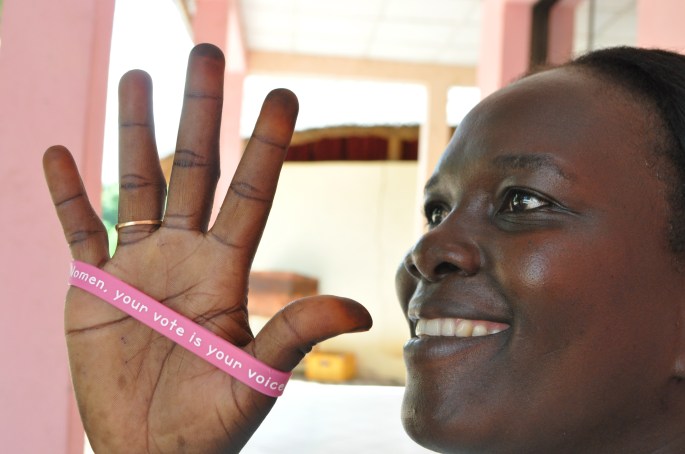
Hanna Lona Bona, Member of Western Equatorial State Legislative Assembly recounts the referendum stories with a symbol for separation.

The women issued a communique which they took to the ministry of Gender, Child Affairs and Social Welfare listing top priorities ahead of the independence day celebrations. The Communique is also to inform those interested inn the development of the new nation.  Top of the list is to ensure the new constitution puts the minimum percent of women affirmative action at 30 percent. They also want to see major policies on girl child education and they even looked at a Uganda-like system where girls were given some additional points to increase their entry into high institutions of learning after years of war. Many said that most scholarships had not benefited women but had been used by those high up in the Sudan Peoples Liberation Movement (SPL), the ruling party to take their children to good schools outside the country. One woman leader said: “To women, independence from the north is half independence, we must be able to remove other forms of oppression and marginalization from our own communities. ”

Below is the communique.

Women Communiqué to Government of Southern Sudan,

13th April 2011, Juba.

We, women from Central Equatorial, Western Equatorial, Eastern Equatorial, Upper Nile and Western Bahr el Ghazal states at a conference in Juba under the theme “Positioning Women’s Needs and Priorities in South Sudan” take this opportunity to congratulate all Southern Sudanese People for a successful exercise of a free, fair and peaceful referendum at this historic moment in the history of the Sudan.

AWARE that we gather here as a body of women and not divided by any party or tribal line, for the promotion of equality, peace, good governance and development for the people ofSouthern Sudan, 

APPRECIATING the affirmative action for promotion of women’s participation in politics and governance as enshrined in the Interim Constitution of Southern Sudan, Section 20 (1 to 4),

REALIZING however that this affirmative action has not been fully implemented,

RECALLING the promise of the President of the Government of Southern Sudan H.E. Salva Kiir Mayardit to increase the representation of women in politics and governance to 30% in conformity with the global minimum of a critical mass of women representation,

RECOGNIZING the worldwide interest and support which the Referendum has generated and the existence of the International Conventions and Security Council Resolutions, in particicular UNSCRs 1325, 1820, 1888 and 1889 in reference to Women, Peace and Security,

DISTURBED that high maternal and infant mortality and HIV/AIDS continue to be a danger and a threat to the lives of the people ofSouthern Sudan,

DEEPLY CONCERNED that although women constitute more than 60 per cent of the population they remain largely an untapped resource thereby denying the nation their potential, talents and wisdom for its development. 

TROUBLED that despite the fact that there has been some improvement in the lives of the women in the last five years the bulk of their concerns, interests and needs are still relegated to the periphery in the development process of the nation. 

NOTING that the majority of the votes in the referendum came from the women,

MINDFUL that the Referendum  to the women meant not only freedom from the North but freedom from any form of oppression, exploitation, marginalization, discrimination and any other constraints affecting women, 

EMPHASIZING that secession to the women means unity, peace, security and development forSouth Sudan.

NOW WE THEREFORE,

URGE the government and all the political parties to implement the minimum 25% Affirmative Action at all levels of leadership within their parties;

WE CALL upon the President and the Government of Southern Sudan to translate his promise into reality by providing for the 30% women representation at all levels in the interim constitution which is currently being reviewed;

WE DEMAND Peace and Security for all the people ofSouthern Sudan, in particular women and vulnerable groups;

WE CALL for creation of the special basket funding for women to uplift the economic status of women;

WE URGE the Government of Southern Sudan to effectively utilize the large untapped potential of women in all sectors;

In line with the above demands we have identified key areas of concern which must be given priority within the governance and development process ofSouthern Sudan.  The key areas are:

  1. Democracy and Good Governance
  2. Peace and Security
  3. Basic social services
  • Education
  • Health
  • HIV/AIDS
  1. Economic Empowerment and Poverty Reduction
  2. Elimination of Gender-based violence
  3. Capacity building and institutional mechanisms for the achievement of Gender equality and Women’s Empowerment.

It is only when these concerns are fully integrated within the development plans ofSouth Sudanthat the potential of women would be fully tapped for the development of this Nation.  Remember development without women is not sustainable development. 

We women gathered here today, have resolved that these issues of concerns be transformed into a concrete vision of the women of the Republic of South Sudan