This song by Gambian artists made it online mid December 2012 . It’s worth listening to and admiring the work on African artists who produce for us music to face the current realities!
Happy first friday of 2013!

This song by Gambian artists made it online mid December 2012 . It’s worth listening to and admiring the work on African artists who produce for us music to face the current realities!
Happy first friday of 2013!
Shortly before Christmas, a young woman was killed in our republic. At only 24, she had already made a small mark on our democracy that many have struggled to make over 3 decades rule. Cerinah Nebanda was a parliamentarian. Her death was sudden, multi-organ failure. Rumours spread about who could have done this cruelty in a land where a fundamental change was delivered 27 years ago ensuring all Ugandans could finally sleep peacefully in their homes- something that was unheard of since our independence.
This death came as a shock in a year when we commemorated our 50 years of independence in a way that looked more like 27 years of independence. Many people scrambled for the microphone, some to with outrage, sorrow, fear and others to defend themselves. To wash themselves clean- even if it meant using words mixed with anger and threats. Some Ugandans left their thoughts online.
You couldn’t escape from the name Nebanda. In my small village in Kibona, Bushenyi, an older man came to my home to ask me about what could have killed this young woman – with a kind of worrisome voice I rarely get from him. In a country where every night a district is born, many local people are mostly pre-occupied with local politics. But name of Nebanda who hails from a village, more than 500kms from my own, found its way to my Christmas day. A government autopsy report told the citizens that the young woman’s death had to with narcotic drugs and everybody else trying to get a second expert opinion was apprehended.
Continue reading “One country tries to defy death, another flirts with death”
It is that time of the year when we dedicate 16 days to remind the world of the endless need to eliminate violence against women.
November 25 is the International Day for the elimination of violence against women. In Uganda various organisations have done a good job using different media to pass the message that ought to be the everyday message to the population.
Tweetups, SMS campaigns, radio talkshows are all on to get Ugandans to understand that violence against a woman is violence against humanity too! That you can judge a society by the way it treats its women.
A week before November 25th, I read a thread on Facebook group that I am part of. It was about a female journalist from Bukedde who had died during childbirth.
We didn’t discuss much. It was just condolence messages although I felt this was time for us to reflect how close issues we cover are to our own lives. In Uganda everyday 16 mothers die due to childbirth. This is due to complications that could be prevented. In many ways maternal health is a social justice issue.
Just as this news was sinking in, another disturbing post came up. A female journalist had committed suicide. Moreen Ndagire, whom I didn’t know personally, was a Sub-editor at a Red Pepper, a leading tabloid in Uganda. At the age of 24, she had achieved quite a lot that not many youth can do in this country with a high unemployment rate.

Continue reading “#I6Days: No justice as Uganda female journalist commits suicide after gangrape”
On Friday, Uganda’s Premier announced Uganda would pull its troops out of all peacekeeping mission over accusations that Uganda and some generals were backing M23 in Eastern DRC.
But like most people said, the threat was politicking which Uganda seems to gain an upper hand since the UNSC president has already said the report doesn’t necessarily reflect the views of the UN.
Could the views of UN be far from the contents of the report or could they be closer but UNSC will play safe in light of Uganda’s threats?
The UN Group of experts report will be out in about two weeks and seems by that time, Uganda and Rwanda and UN will have reached a settlement. This leaves the people of Congo in watching the same of old games.
Mineral looting vs security concerns
Uganda called the allegations in UN report baseless and complained that the UN wasn’t giving them credit where they have done well but this isn’t convincing. Our history in Congo shows that for every warlord that comes out strong, there’s a godfather in the neighbouring country.
This is done either by top generals in the armies with a blind eye of the presidents or big companies and agents who are trading in guns for minerals. And many times the companies have a link to the top leadership in east African countries. However this is not to ignore role of western and Chinese companies in this conflict.
When UN report on Congo was first leaked in July 2012, Uganda’s support for M23 was largely ignored. So it appeared like Kampala had gotten away with as the world attention was drawn to Rwanda’s involvement and support for M23. Neither did we hear of the role of Kabila in this conflict.
Following the leak, US Secretary of State Hillary Clinton in August came to Uganda and met president Museveni.
In the wake of the M23 military advances, the AU summit tasked the International Conference on the Great Lakes Region (ICGLR) to look at the renewed Congo conflict. President Museveni offered to broker the talks between government and M23 rebels, the offer which President Kabila’s government was against. Nonetheless Uganda hosted three summits.
Three months down the road, it was revealed that Uganda has not been a spectator as M23, a group of former fighters from CNDP- an ethnic Tutsi rebel movement, marched taking over territory with much more advanced arms.
Who are M23?
The report says Bosco Ntaganda, a former Congolese general nicknamed the Terminator, who is wanted by the international criminal court, controls the rebellion on the ground while Sultani Makenga is in charge of operations.
M23 fighters had been folded into the army three years ago but they walked out and started the fresh fighting “to force the government to honor its agreement.”
Continue reading “Uganda withdraw from peacekeeping missions would threaten regional peace”
By Reem Abbas
When Fatima (not real name) escaped Sawa, a military camp in Eritrea, she had already been there for two long years doing the compulsory military training that is supposed to end after 18 months.
For many young Eritreans, the service never quit ends. The months become years and many youth, men and women, find themselves stuck in the military service for over a decade.
Fatima and five of her friends escaped one night from the camp without any sense of direction. They walked for three days until they reached the border with Sudan, digging up mud to drink water and having nothing to eat.
There, they found themselves face-to-face with Sudanese soldiers who detained them for two days. The rest escaped except Fatima. She was left behind and remains in Sudan, ten years later.
Fatima was then taken to a military outpost and not long after, late at night, she was rapped by one of the soldiers.
I met Fatima through a friend who found out about her story through another Eritrean in Khartoum. I didn’t even hesitate for a minute when I read my friend’s email and agreed to meet her the next day. My friend thought her story was worth telling, I felt humbled by the opportunity to tell her story.
I opened the door to find an Eritrean man David (not real name) who is probably in his 50s. And inside there was Fatima. Although I’ve read a guideline to interviewing victims of violence online at the Dart Center’s website, all of a sudden, I didn’t feel like I could do this. How could I remain composed through all of this? This was a huge challenge, but I felt a responsibility to tell this story and look for other women who have suffered a similar ordeal.
First, I chatted with Fatima and David about Sudan. In fact we talked about if they liked tea sugary or not too sweet. The conversation flowed smoothly and Fatima began telling her story and answering my questions without hesitation.
As Fatima spoke, her thin body drowned in her Sudanese toub (a cloth worn by Sudanese women) and her face testified to years of suffering endured. At 24, Fatima entered Sudan in 2000 and until now, in her 34th year she’s still stuck in Sudan.
At the military outpost, after her brutal rape, the soldier took Fatima to live with him in his tent.
“I later became very sick and I found out that I was pregnant,” said Fatima. She said she tried to escape at least three times, but was always caught and returned to the soldier, a man she had two children with.
After she had her first child, she says she halfheartedly accepted her reality and realized it is very difficult to escape. She stayed there, raising her two children with a man who verbally abused her and sometimes, beat her.
Their house was a tent inside the military camp with no access to electricity or the basics. She cooked with coal or wood and never left the tent.
“He worried that I would get to know people if I left the tent, so I never left, I never went to the market, I know I was in Kassala, but never saw it,” said Fatima.
For 10 years, Fatima was forcibly living with a Sudanese soldier. As time passed by, she learned Arabic, a language she did not speak a word of when she came from her homeland.
“When I was alone, I cried until my eyesight was almost gone,” said Fatima who was holding her glasses.
Continue reading “Escaping military service and kidnap, one Eritrean woman’s Ordeal”
Ten days ago I took a trip to Kalangala, one of the Ssese islands on Lake Victoria. The last time I had visited the beautiful island was four years ago. The island is three hours ferry ride from Entebbe. On board we had three vehicles from the ministry of tourism and I was curious what function was going take place just a few days before our 50-year independence anniversary.
We later found out that the next day the minister of tourism was launching a ‘tourism master plan for Ssese Islands’, which am told, do not receive that many tourists these days. More than the logistical issues like access to these islands, what left me speechless was the destruction of the rain forests in Kalangala Island.
As you approach the islands you cannot miss the bare hills that were once covered with green dense forests.

The destruction of these forests and biodiversity has been fully backed by government as top regime officials make money off Palm Oil production.
Continue reading “#PowerofWe Uganda: What will it take to conserve the environment?”
Today Ugandans marked 50 years since colonial rule ended. On October 9th 1962, Uganda joined a list of African countries that were set to govern their own affairs after decades, in some cases centuries, of colonization.
I left Kampala a few hours to the Independence Day but even if I were home, I wouldn’t have joined the national event at Kololo to celebrate. I think we have a lot more to reflect on than an all out celebration.
It is important that every person should take part in deciding the affairs of their family, community and nation. So the end of colonialism didn’t mean the end of the quest for Ugandans to have a say on how they want to be governed.
Uganda like many African countries was a nation formed by colonialists through breaking nations (others call them kingdoms) and forcing them under one boundary as they saw fit- for their administrative and colonial interests. So to convince these nations to come to recognize and really be part of the new nation Uganda was a tall order!
Continue reading “Uganda’s independence Jubilee and why all can’t jubilate.”
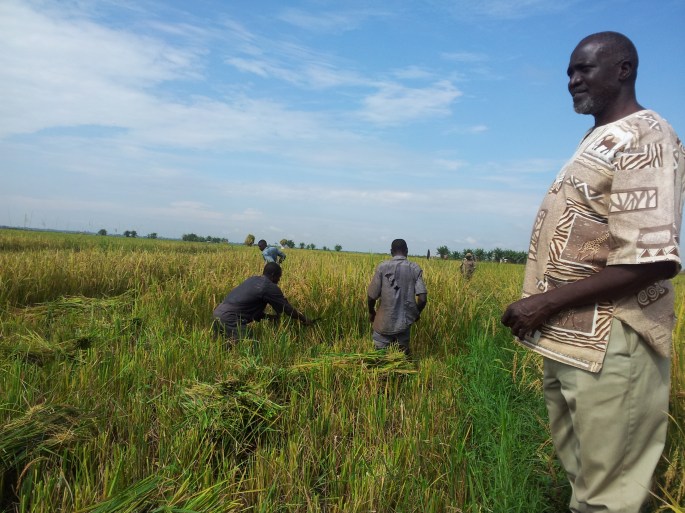
The last couple of weeks I have been working on a few documentaries one on trade and another on women empowerment. All these are around our 50 years independence anniversary due October 9. I went to the eastern district of Butaleja. It was my first time there and also first time to see rice in the field! These were the sites in this beautiful land.
I thought Charles’ post raise most questions i have had over the past week. And why would you claim freedom of expression and can’t stand a photo of a breastfeeding mother? Well where i come from women are free to breastfeed in public and not feel ashamed and Google and Facebook ought to know better.
Google, owners of the video broadcast website YouTube, refused to remove “Innocence of Muslims”, the video that has outraged Muslims all over the world and led to violent protests in Libya, Egypt, Tunisia, Sudan, Yemen, Afghanistan, Bangladesh and Pakistan. The American ambassador and three other diplomats in Libya, were killed when protestors attacked the US consulate in Benghazi. Google, however, agreed to temporarily block access to the video from selected Muslim countries. “Innocence of Muslims”, according to its critics, mocks Islam and blasphemes the Prophet Mohammad. Videos of “Innocence of Muslims” have also been posted on the social media site Facebook. Indeed in Egypt, a Coptic Christian who posted the film on his Facebook page is currently under 15 days detention on charges of insulting religion. The storm over “Innocence of Muslims” is already passing. What interests me though is something different. While, for example, Facebook allows videos of “Innocence of… |
View original post 578 more words

 Rosebell Kagumire