Museveni’s presidential campaign lies about healthcare woes; attacks health workers

“‘How can any patient value a doctor, value a nurse when they say such things about us?” – a medical worker in Uganda.

This is part of a new report done by HEPSUganda a Health Consumers’ Organisation advocating for health rights and responsibilities on the plight of Uganda’s health workers.

President Museveni has for the last one year, and this has intensified with election campaign, put the blame of Uganda’s dysfunctional health system on medical workers. That they steal drugs and that’s why we have no proper access to good health services. Daily Monitor on December 2010 had a story where the president told a rally in Tororo that the health workers steal drugs and that they will “pay with their backs”
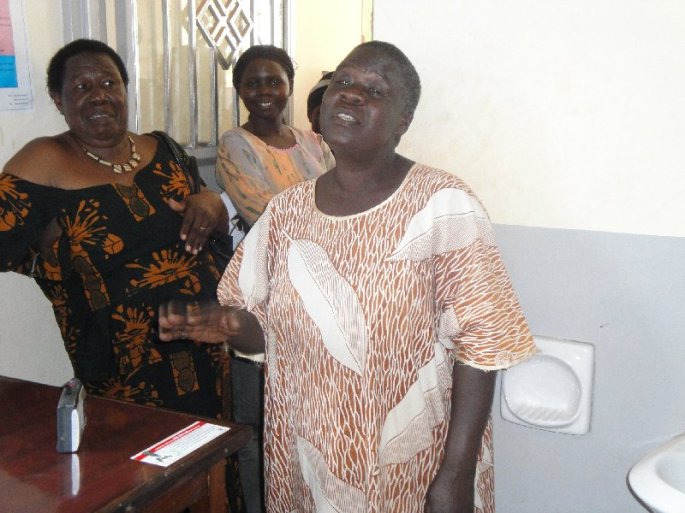
A nurse I met at a HCIII in Serere. There are only 2 professionals manning the center that has no electricity. She uses a lamp during deliveries. She uses her own charcoal stove to boil water to sterilize the little equipment. At the time of the visit the center had not hand gloves for months and when I asked her about the risk of getting HIV she said she can't do anything. "you can't walk away from a woman in labour because you have no gloves." And I am supposed to hear my President blame such a woman for no health services?

I say they have already paid with their backs almost 60 percent of the positions in Uganda’s health center IIIs are vacant.

One health rights activist Patricia Mutambi told me that “we have demonised health workers in Uganda that they have almost ceased to be human in our eyes and people don’t even have an understanding of the difficult conditions they work in.”

The whole blaming of health workers will not solve problems. One of the quotes I found online.

“The army used to be indisciplined, but now it is very disciplined. If we can tame the army, who are these medical workers? We are going to tame them. It will not be long before we sort this problem out once and for all,”–President Museveni while on campaign in Bugweri

I think it’s time for President Museveni to tell Ugandans how he will fix the endless problems facing the health system and not mount an almost hate campaign against health workers who are poorly paid.


South Sudanese women expect expanded rights from new state

John Garang, the revered late leader of the Sudan Peoples’ Liberation Movement, once said that women are the “the poorest of the poor and the marginalised of the marginalised”. As the reality of an independent South Sudan approaches, the region’s women have vowed they will not remain second class citizens.

Margaret Michael Modi, the head of women’s affairs in Central Equatoria State, cast her vote on the first day.

“The first day (of the vote) we did not sleep. I went to the polling station and women were crying as they cast their vote,” she told IPS over the phone from the southern capital, Juba.

“For us the separation will be liberation. For so long, we were subjected to Islamic laws which limited our freedom in most ways, and coupled with the traditional values of the south, [women] remained at the bottom of society.”

South Sudanese women living in Uganda approach a polling station in Kampala on Sunday 9 January. Photo by Jimmy Siya.

Like many others, Modi expects that in an independent South Sudan, women will be in a better position to challenge limits on their freedom rights.

Mary Nawai Martin, a member of south Sudan’s Legislative Assembly from Ibba County, in Western Equatoria State, is optimistic that separation will bring in a new era of respect for women’s rights.

“Women are eager for separation. There’s no woman I have met who didn’t say they voted for the separation. During the rule by the north, women had the least rights, they were the worst victims of the war,” she said.

For more go to IPSAfrica

Uganda general elections; who’s courting who?

A signpost at the Busega roundabout.

Confusion over post conflict funding between the government and development partners persists in Northern Uganda

In September I wrote about my findings during a trip through five districts of northern Uganda on post conflict development and recovery programs. This was after government ran supplements in news papers celebrating achievements in the recovery programmes in the north. My findings were that people were not prepared for the new environment after living for years in the camps.

Now a new report released by the Internal Displacement Monitoring Center (IDMC) and the Norwegian Refugee Council shows that most returned IDPs lack basic services and that the vulnerability has increased.

In Acholi and Teso sub-regions, 92 per cent of the 1.8 million people displaced into camps had returned home or resettled in other areas by December 2010.

Below are excerpts out of the reports that I thought were important to note.

The sustainability of returns is in doubt . Despite lasting peace in the region, since 2006, returns have outpaced recovery planning and implementation. Most IDPs have returned to areas offering few basic services such as water, health care and education facilities. Current and planned efforts notwithstanding, there is general agreement that it will take many years to rehabilitate northern Uganda.

The government and its international partners did not start to implement recovery programmes until 2008, and their impact is yet to be felt. By December 2010, the Consolidated Appeal for humanitarian support in 2010 was 49 per cent funded; this Appeal is expected to be the last.

Large recovery and development programmes in northern Uganda have been delayed for long periods; confusion about funding between the government and development partners has persisted, and there has been a lack of coordination between the government, the donors and the UN.

Vulnerability continues

OCHA notes that access to basic services has remained elusive for the majority of people in return areas. Inadequate health care infrastructure has left populations susceptible to epidemics, as demonstrated by the persistence of the Hepatitis E outbreak in Kitgum and the re-emergence of polio in Amuru. A higher than average HIV prevalence, second only to rates in Kampala, could lead to a pandemic in the absence or insufficiency of testing, treatment or counselling services.

Other issues include food security and land issues.

New Year with new neighbour? Peace calls ahead of South Sudan referendum

As the year draws to an end, the East African region is packed action and high on the events to watch will the Sudan referendum where South Sudanese will determine their independence from the Khartoum-based northern Sudan government.

Many hope the results from the referendum vote slated for a week from January 9, 2011 will be accepted. Many leading voices including Omar al Bashir, the president of Sudan have already sort of shown a tilt to accepting that Africa’s largest country will finally be split. This means we in Uganda will be having new neighbours who aren’t so new. The support for a new nation is high in the region.

For those watched those gruesome pictures of millions of south Sudanese starving, dying and displaced during the long civil war and those who survived in IDP camps in Uganda, Ethiopia and Kenya, the independence is only a small step. The split will not be an end in itself it should give south Sudanese power to closely watch their government. The SPLM which has been in power will finally have to be more accountable and it must check the internal tribal conflicts that have taken many other lives. Provide better social services to the population where nothing has existed in many decades. This is not a simple task.

Internationally we have seen the US President call on both parties – north and south to respect the outcome of the referendum.

The campaign for a peaceful referendum has been taken to the music world. And there could never be a better singer to lead the crusade. Emmanuel Jal’s who was a child soldier in the long war against the north who survived and became a recording artist is leading the war to call for support of the decision of millions in the south.

Jal is returning to East Africa in a few days to promote his international hit single, ‘We Want Peace’ (featuring Alicia Keys, George Clooney, Kofi Annan and more). He will be in Nairobi where he will hold listening sessions before and after referendum.

Part of the song, a good reminder tohe world: “Rwanda, never again, and after Rwanda, what’s happening? Not far from the …

Jal who has been campaigned for increased attention to issues of child soldiers and refugees ensured that the music video was shot on the streets and slums of Nairobi. The song ‘We Want Peace’ is part of a world-wide campaign calling on young people, regional and international leaders to actively support a peaceful process and Sudan’s upcoming referendum.

Emmanuel has Released 3 Studio albums: Gua, Ceasefire and Warchild. He has featured in the National Geographic documentary God Grew Tired of Us, a touching story of surviving war, camp life and escape of three of the Sudan lost boys.

He featured in the film Blood Diamond. Jal was also involved in the ‘Amnesty International Campaign to Save Darfur’ and je runs a charity Gua Africa.

“I believe I survived for a reason…to tell my story…to touch lives.”

That’s an intro to his song Warchild which is my favorite. It tells Jal’s story. He tells of his father being a police officer in government and later joining a rebel movement. Jal talks of how he was forced to be a child soldier. He lost his parents in the war.

For all they lost, for all they suffered, the people of South Sudan deserve a new beginning.

Covering Africa at climate change

It’s been hectic two weeks here in Cancun, haven’t had much time to write personal thoughts but I have been covering the climate change talks as part of the UNESCO fellowship. Here is a link to an Interview I did with UNESCO on how the talks have been going and what’s priority for Africa.

The talks close in a few hours from now but not much is yet known about likely outcomes.

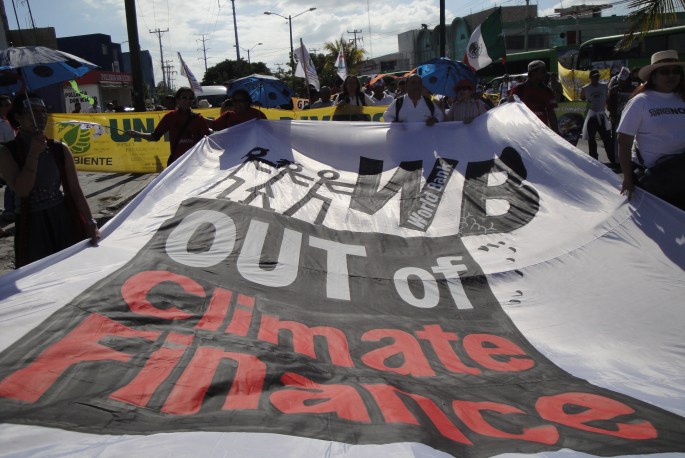
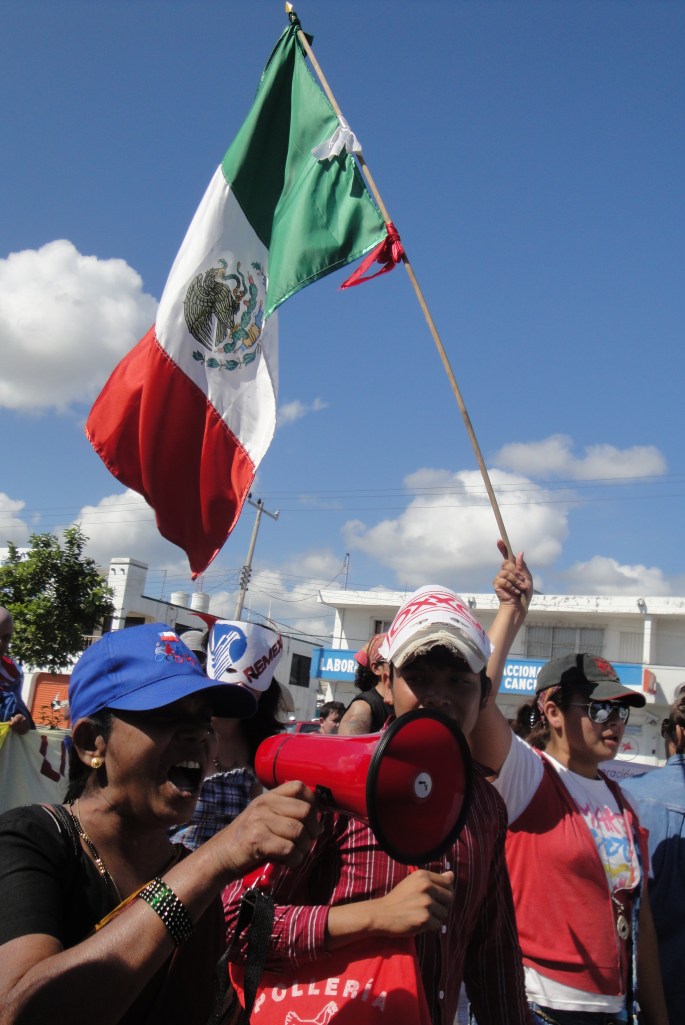
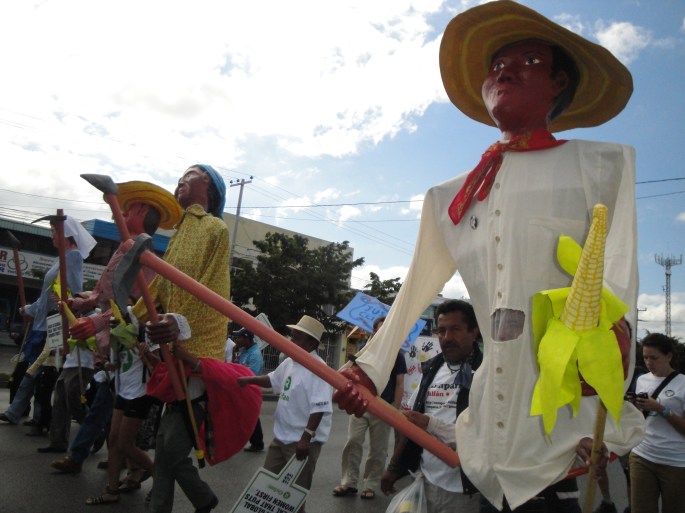
Protests at the COP16 in pictures

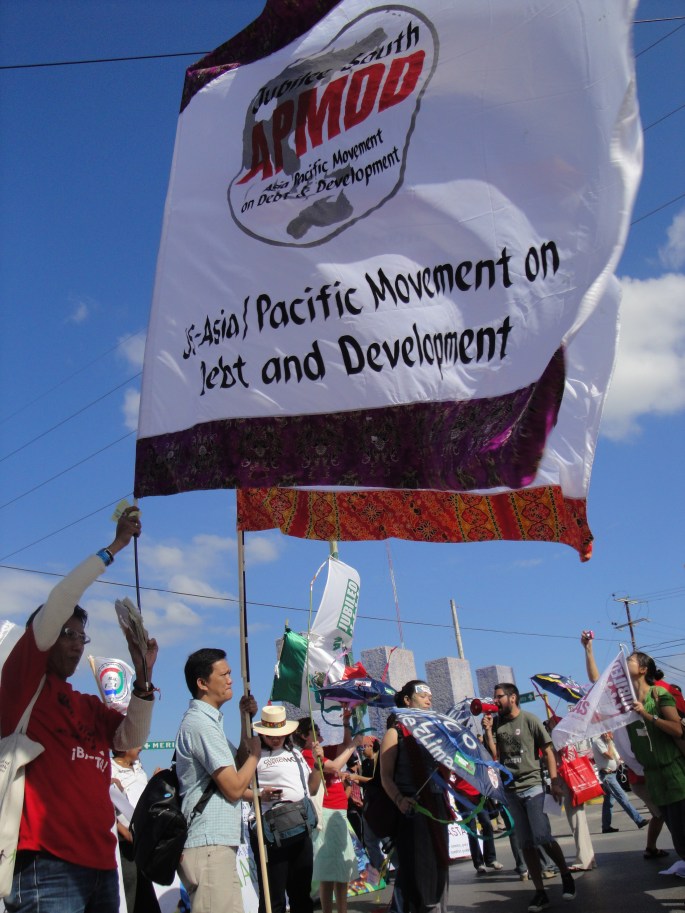
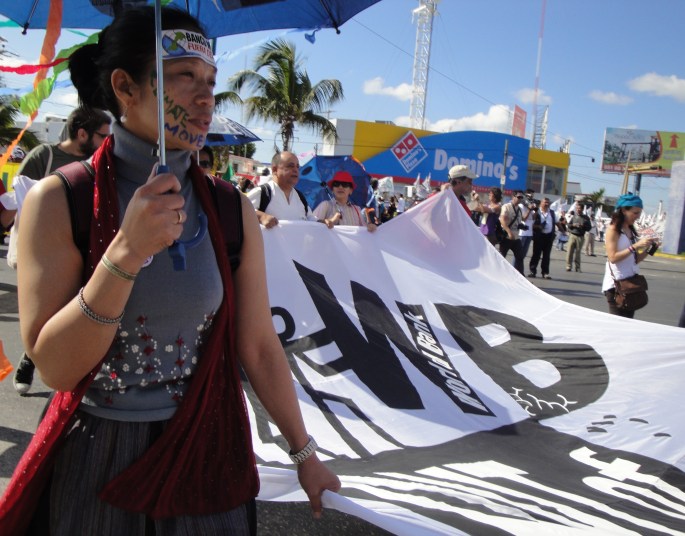
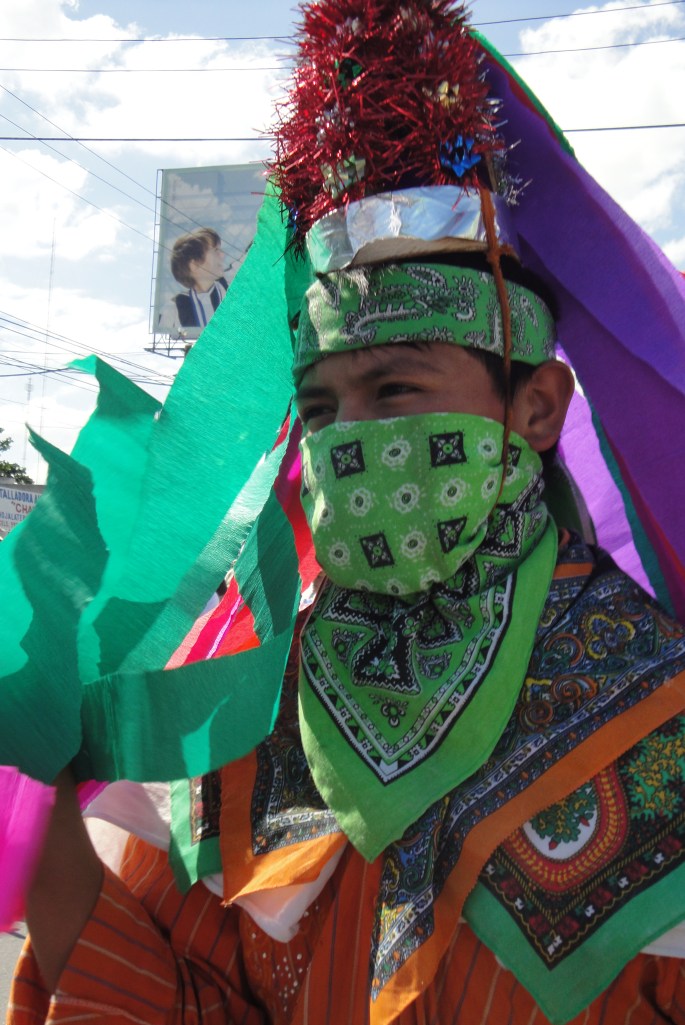
I was covering the protests today Dec 07 2010 in Cancun. Here is what I captured as different people fronted different calls to their ministers gathered here for climate change talks.

Banner protest note on World Bank involvement in climate change funds.
Protesters
Vergil from the Philippines movement for climate justice protests against the World Bank

A man from one Mexico's indigenous communities taking part in the protest.

A woman from India during the march. she is one of the waste pickers I met during the protest.
And the farmers.

COP16

For the last four days I have been in Cancun following the climate change negotiations and civil society positions.

I will be keeping a diary as and when i find interesting stuff. Here is one: http://www.ips.org/TV/cop16/cancun-diary-2-rosebell-kagumire/

ICC tells Ivory Coast leaders you are under watch!

Ivory Coast’s electoral commission has said opposition candidate Alassane Ouattara has won the presidential run-off but the Constitutional Council has contested the announcement.

In the last few days there have been reported clashes and attacks on civilians and some have died. But as the tag of war continues between two bodies over the election results, the Deputy Prosecutor of the International Criminal Court (ICC) has issued a statment that he’s watching the events closely.

Supporters of President Laurent Gbagbo had tried to block the result, saying there had been fraud in the north.

Former rebels control this area. It is also where Mr Ouattara is most popular.

Côte d’Ivoire accepted the jurisdiction of the International Criminal Court (ICC) for crimes committed on its territory in October 2003.

SO far there’s been little efforts from presidential candidates to calm their supporters and ICC has asked the political figures to do more.

I invite the Ivorian authorities to investigate criminal incidents that have already occurred and to do everything possible to deter future ones. All reported acts of violence will be closely scrutinized by the Office.” – Fatou Bensouda, Deputy Prosecutor of the ICC

The ICC has already taken on the case of post election violence in Kenya and many look up to it to fully bring those that were behind the 2007 violence to book. Elections on the African soil have increasingly become a way down to violence rather than liberty.

And we can only watch to see where the events in Ivory Coast will head.


16 days of activism

The 16 Days of Activism Against Gender Violence is an international campaign originating from the first Women’s Global Leadership Institute sponsored by the Center for Women’s Global Leadership in 1991. Participants chose the dates, November 25, International Day Against Violence Against Women and December 10, International Human Rights Day, in order to symbolically link violence against women and human rights and to emphasize that such violence is a violation of human rights.

Many have looked at the increase in ICTs as a good sign for Africa development because we don’t have to go through decades of  waiting for technology advancement like most of the developed world did. We can easily use a mobile phone to report a crime and  the same phone is being used for some projects targeting safe motherhood and many other things that weren’t possible before.

But little  attention has been paid to the impact ICTs have had on women’s freedom and the increase in domestic violence. Here is a piece I worked on for IPS on the theme ahead of the 16 days of activism.