Faces from Lake Victoria shores

Last weekend I paid a visit to Lwangosia village in new formed district of Namaigo. There Isis-WICCE supports a group of grassroots women who carry out paralegal services often intervening in cases of land rights of widows and orphans, rights of people living with HIV to live in a stigma free community. It was a day’s meeting and I visited the near by Mutumba sub-county. From the shore I could see the islands, that lie in Kenya. This is a place where crocodiles are one of the top killers. It’s a place well placed for a fishing industry but the no infrastructure exists. Fishermen here have to transport their catch to Busia.

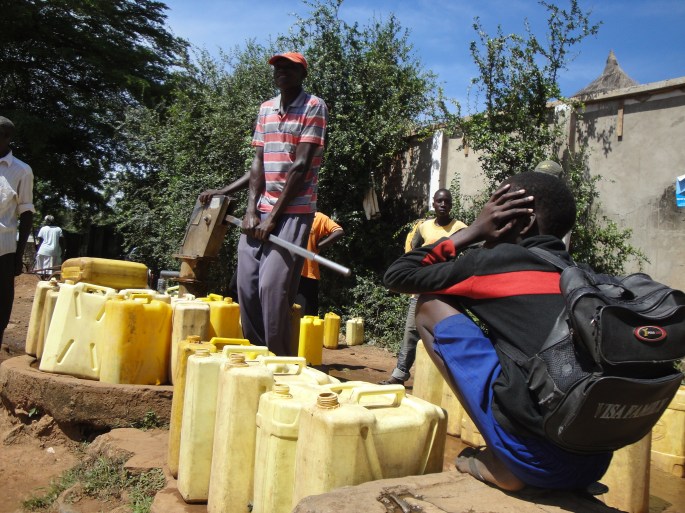
HIV/AIDS is high in fishing communities and Lwangosia is no exception. Access to clean water is a problem too. I captured some faces I found in about 12 hrs I spent.

Girls carry water jerrycans on a bicycle. Access to water is big challenge in Lwangosia
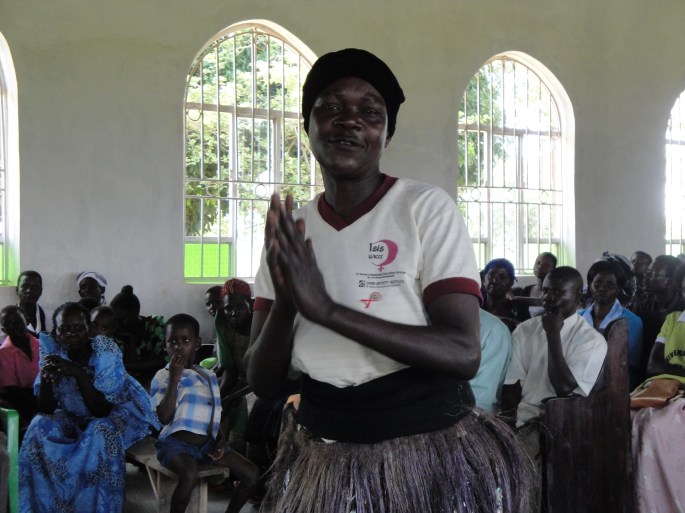
Scovia, from Lwangosia women's group. She's a widow. Her husband died of HIV and her in-laws took over her land soon after her husband's death. For years she lived on a small piece of land struggling to raise her children. She never considered the actions of her in-laws as a violation until she got a training in the rights of women, she went back and claimed the land. Now she has access and she farms to get money for her children's school fees.
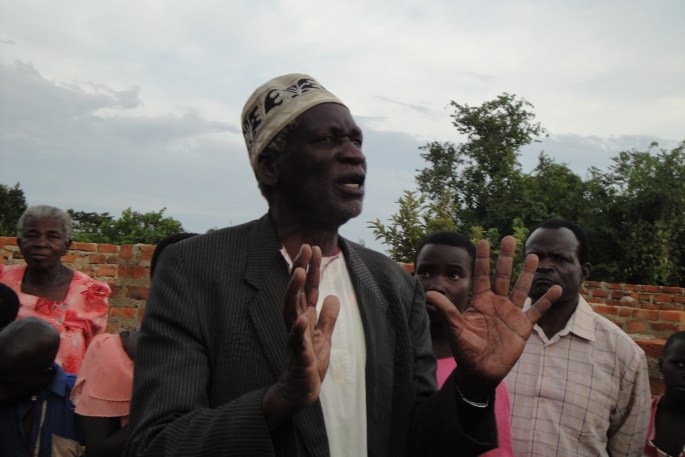
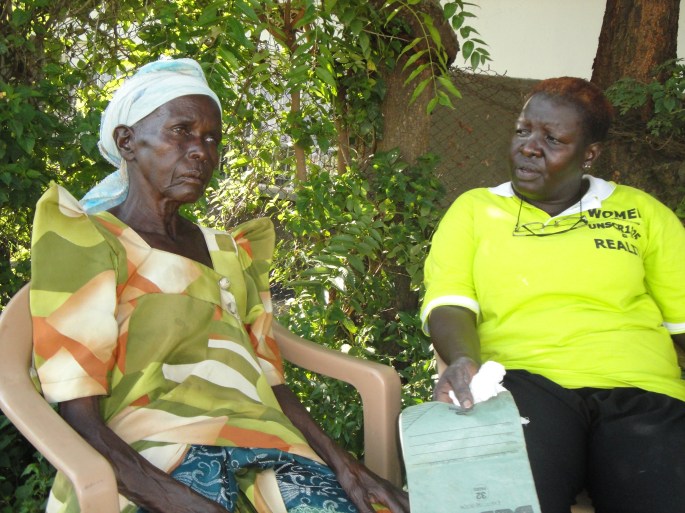
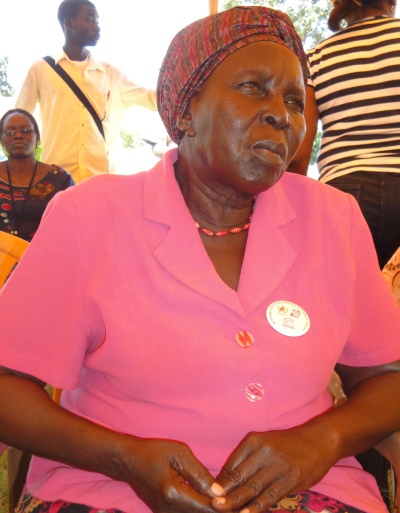
I met this Mzee in Mutumba. He owned a huge chunk of land like a big hill. He gave big part of it to different faiths to construct their places of worship with enough excess to build on development projects. In a world consumed by increasing religious intolerance, such acts are rare and finding such an understanding soul lifts ma spirits.
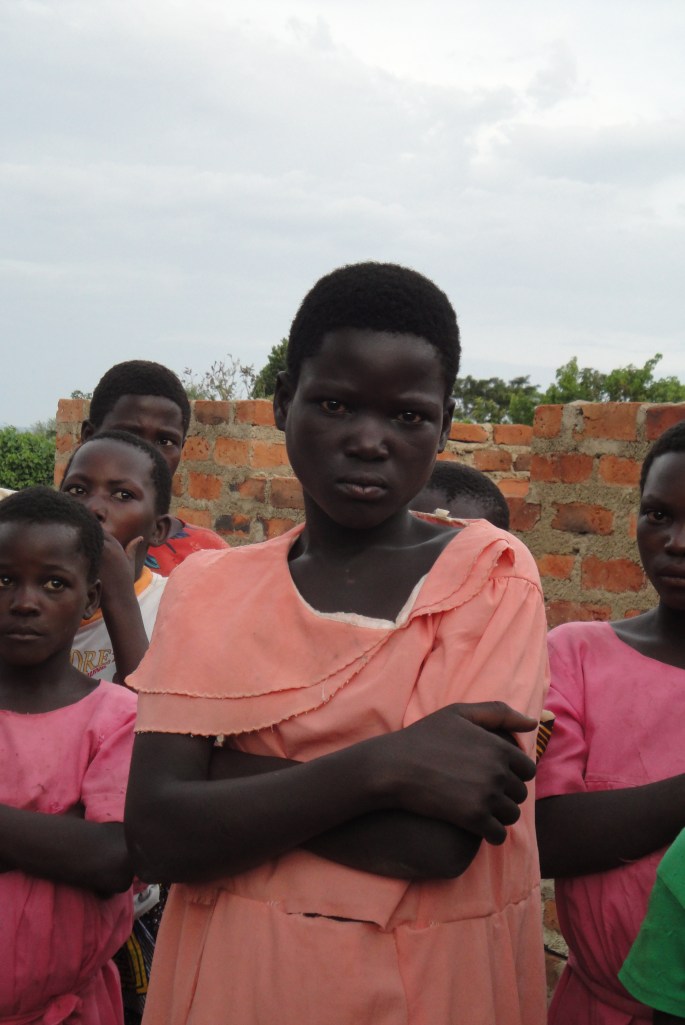
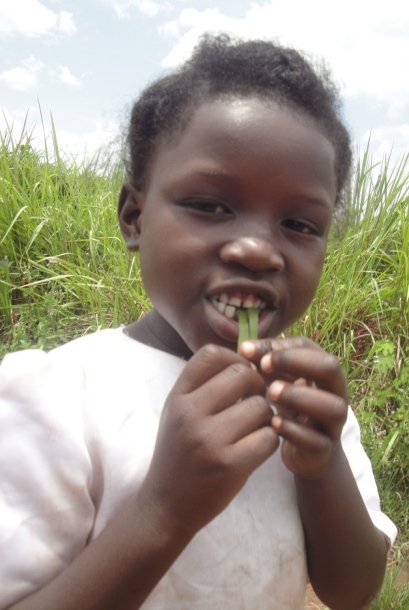
Beautiful girl in Mutumba
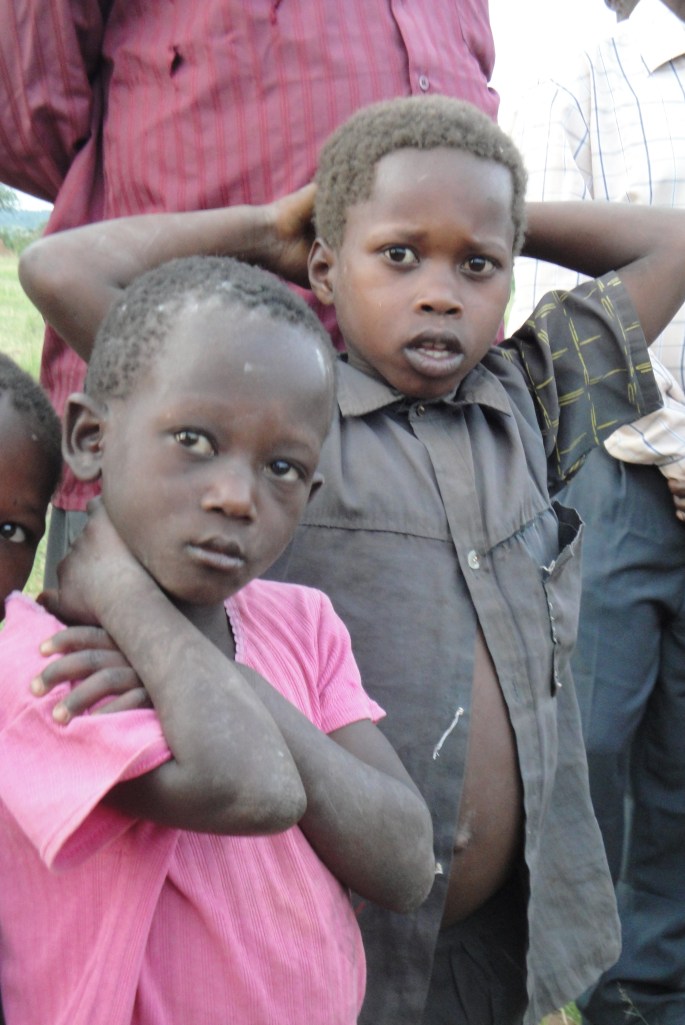
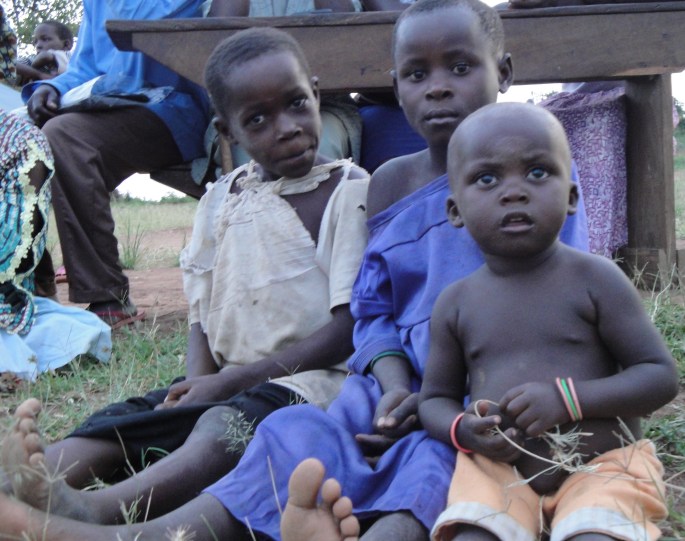
These kids go to St. Paul Lubango primary school. The school has 7 classrooms but has only 5 teachers. That's Uganda's free education.
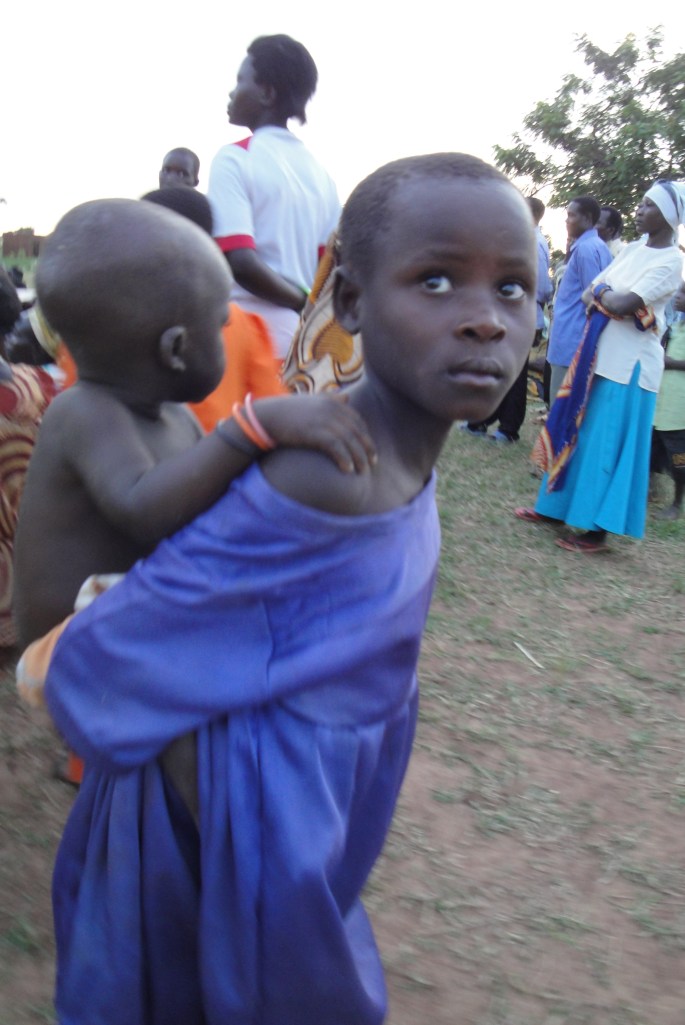
A girl carries her brother at the meeting.
Beauties.
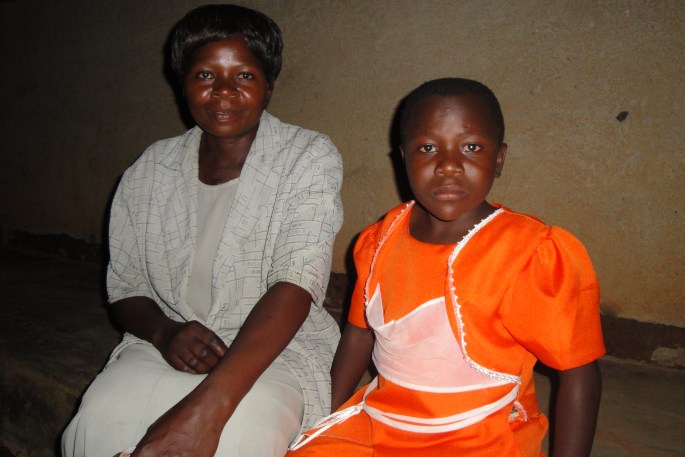
This was my last picture out of Lubango. A teacher at Lubango and her 10 year old daughter who has a speech impairment. She could speak then until she was 4 years. Then she had malaria was hospitalised, she lost her speech, the mother doesn't know why this happened. She's a twin and her twin sister is doing well in school. It's difficult to be a teacher and you can't teach your own child. Education for children with disabilities is rare. You have to take a child hundreds of miles away from family. There's a school far away but she has to pay for a sack of beans and maize flour for child to be admitted. This is because some parents would go and dump such children at the school and never come back. She can't find all that money.

Uganda elections 2011:things I can’t reconcile; President Museveni and health services

It’s election time here. I planned start some commentary, my assessment of candidates real soon but somethings can’t wait. On my way work every morning , I am subjected to this huge billboard from President Museveni’s campaign (will bring the picture soon). It’s the president all dressed up visiting a hospital-probably at the opening of some health facility but then the message he is sending is that he is been in good charge of our health care system.

And then I’ve  got a story of one woman Josephine Adongo.

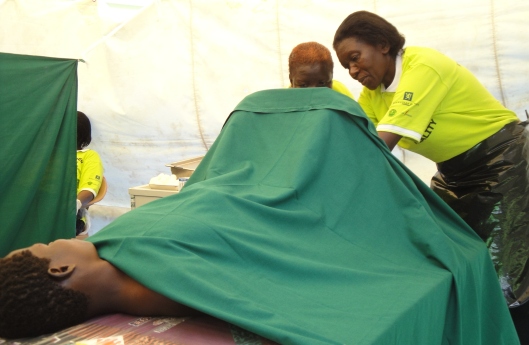
Josephine Adongo with Helen Angura, a Midwife who confirmed Adongo's advanced cervical cancer in Soroti, Eastern Uganda. Rosebell's Photo.

Josephine Adongo’s heart leapt when she heard that two doctors from Kampala were offering free medical exams in Soroti. She was diagnosed with cervical cancer at a regional hospital more than a year previously, but unable to afford to travel to the capital for treatment.
Adongo, a 68-year-old farmer who lost everything during Uganda’s long conflict against the insurgent Lords Resistance Army, was diagnosed with cancer at the local hospital in May 2009. But the only cancer treatment centre in Uganda was 300 kilometres away.

She was disappointed to find that the visiting doctors had only come to screen women and refer anyone with dangerous signs to Kampala. Read the rest at IPS Africa for whom I wrote this heartbreaking story.

So this picture of worried Adongo and that of the president in his campaign are two things  I can’t reconcile, not yet, may be will never!


Activists call on AU to act on Khartoum’s Public Order Police treatment of women

Statement from the Strategic Initiative for Women in the Horn of Africa (SIHA )

From tomorrow November 10th until November 24th, 2010 the African Commission on Human and People’s Rights will hold their 46th ordinary session in Banjul, the Gambia. The Strategic Initiative for Women in the Horn of Africa (SIHA) , a women rights network active in the Horn of Africa will submit for the second time a paper titled “Beyond Trousers” on the Public Order Regime in North Sudan to the Commission. One SIHA representative, one Sudanese lawyer and one victim of the repressive Public Order Regime (POR) in North Sudan will address the commission.

She ran vastly and they chased her brutally until she fell on a harmful piece of iron and gave up her soul.” This is the case of Nadia Saboon the tea lady of Khartoum while she was escaping arrest by the Khartoum Public Order Police.

This is the second year that the delegation of Sudanese human and women rights activists are bringing their submission paper to the 48th session of the African Commission on Human and People’s rights to call for an urgent reform of the Public Order Regime in Sudan.

Sudan Public Order Regime enforces a set of laws that are particularly infused with a conception of women as problematic actors whose movements and presence in public and private life are “dangerous” to those around them. “Offences such as sharing a public or private space including waking on the road with a man, “indecent dress, dancing ” and many more are interpreted with great latitude and enforced by a special police and court system (The Public Order Police and the Public Order Court). As a result, even where provisions of the POR are not expressed in gender specific terms, women are the core targets for the application of ill-defined moral standards. This was said by one of the POR victims who was held with her husband while having tea in a public park:

“They snatched me all of sudden and told my husband to leave because they were not interested in him and that they will deal with me and my revealing outfit.” (She was wearing jeans, a long t-shirt and scarf) “My husband started to object, and on finding out that he was my husband they held us both; him for assaulting aPublic Order Officer and me for indecent clothing.”

The Public Order Regime employs oppressive tools that have a deep damaging impact on women, girls, families and societies. “It alienates Sudanese values and hinders their development, said Hala Alkarib, the Regional director of SIHA Network. Furthermore, the practice of the POR is undermining the capacity of Sudan to realize its obligation to ensure the rights of its citizens to “economic, social and cultural development with regard to their freedom and identity and in the equal enjoyment of the common heritage of mankind.” (Article 22, African Charter). One of the characteristics of the Public Order Regime is its general and vaguely worded final penalty provision which provides that “in the case of any contravention of this act” a person may be punished by a variety of criminal penalties including imprisonment, fine, confiscation and lashing (Section 26).

The time is approaching for the upcoming South Sudan referendum, as the political tension in the country is rising, Khartoum and other areas in North Sudan are witnessing an increase in the activity of Public Order Police raids on women. In August 2010, the Sudan Parliament called for the enforcement of Zina punishment, which means the stoning of women who are accused of having extra marital affairs, and called for the promotion of early marriage and polygamy hereby clearly breaching the African Protocol to the African charter on human and people’s rights to which Sudan is signatory.

SIHA calls on Sudan to implement the African charter and the recommendations of the African Commission to Sudan to both abolish the penalty of lashing and immediately amend the Criminal Law of 1991, in conformity with its obligations under the African Charter.

We call on the Sudan government to review and lift all the gender discriminatory codes in Sudan Public Order Acts, then, we call upon the Special Rapporteur on the Rights of Women to offer assistance to the Government of Sudan in the processes of law reform and to call attention to the impact of the POR in Sudan on the human rights of girls and women.

Women in the Uganda military; no family planning services, no promotions

Since independence, tribalism in the Ugandan military has always been a sticking issue. Whether it was regimes of Apollo Milton Obote, Idi Amin or even the current government, getting an army that is of national representation in all ways has been a challenge. It’s not a Ugandan problem, this can be found in many African countries where most leaders have a military background or came to power by the power of the gun.

To ensure loyalty, you must somehow surround yourself with you clan members first, then your tribe, the people from regions closer to your home next and then lastly just recruit foot soldiers from elsewhere in the country.

The Independent Magazine ran a stories showing that the top army leadership in Uganda came from one region-western Uganda or at least spoke the same language. This story was not received well by the army and with a law on inciting violence, the mention of such can easily get you arrested and charged.

Today I am not looking at the distribution of posts in the army according to tribe but rather how unjust, unequal the environment in Uganda’s military is to women.

The Uganda Peoples Defense Forces (UPDF) has a total number of 1,566 female soldiers. This is data gathered by a Center Women in Governance (CEWIGO) in their monitoring report of UNSCR 1325 in Uganda to be launched tomorrow.

Even though the UPDF administrators couldn’t reveal what percentage the women in army represent due to security reasons (mentioning that would automatically tell the actual size of the force), they could never even come to a 10 percent.

CEWIGO researchers spoke to Chief of Personnel and Administration for the UPDF said that there are no family planning services availed to soldiers in the barracks. This leads to many unintended pregnancies among female officers who are never supported by the male officers responsible.

Women in the military are often forced to cohabit to avoid sexual harassment from their male colleagues and because there are no family planning services in the barracks unplanned pregnancies are very common.

The denial of female soldiers family planning services has huge effect on whether you are promoted or not. The statement of the Administrator sort of admits that there’s a high level of harassment of women soldiers from their male colleagues and it seems not much rules apply. To even matters worse, when a male officer has a child he is allowed to go for training and get more expertise while the women soldiers who have his children remain.

According to statistics gathered by CEWIGO Uganda has only 1 woman at the rank of a Colonel compared to 99 men; two women are Lt. Colonel and 98 men are at the same rank. We have three women for the Major to 97 men, six women Captains compared to 94 men, 2 women and 98 men for Leiutenant rank and 11 women at Sec. Leiutenant compared to 89 men.

Even if there are other constraints behind low recruitment and promotion of women in the Ugandan military like low levels of education, family commitments, it is appalling to find that even the few that choose to join are subjected to such an environment.

Uganda is well known to have a low family planning, with a 41% unmet need for family planning; Uganda has the third-highest rate in the world. And the failure of government to provide female soldiers free family planning services could not portray the attitude to women’s reproductive health any better.

The UN in several resolutions had called for increment of women in army ranks and Uganda has signed major international instruments like the Convention on the Elimination of all Forms of Discrimination Against Women (CEDAW). These resolution partly argue that if more women were in charge of areas under conflict, issues like mass sexual violations against women in war time would be reduce. Many women in conflicts from Kasese, Bundibugyo, to north and eastern Uganda have been subjected to gangrape both from rebels and government troops.

Just last week, Minister Eriya Kategaya told the UNSC that Uganda was doing enough to address specific needs of women in conflict areas. If a government can’t provide a much needed service for a woman it employs to defend the country then how would it provide it for an ordinary woman?

Pre-independence female lawmaker says current debates in Uganda disappointing

Frances Akello was one of the first women representatives in parliament shortly before Uganda got its independence from 1960-62.

A teacher by profession Akello was only 24 when she stepped into the Legislative Council commonly known as Legico. She served until independence and went back into teaching after.

I caught up with her in Soroti where she works for the Teso cultural institution after retirement.

Frances Akello.

Akello told me she was disappointed at the level of debate in the current parliament.

“Our debates were nationalist in nature. We wanted independence and good services for all Ugandans, it didn’t matter where you were from,” she said. “Comparing that time with today the house has found itself debating personalities and few times do they debate issues with a national interest.”

Akello said her disappointment has been “since independence we haven’t identified ourselves as Ugandans and this is reflected in parliament how people only discuss what benefits ‘their people’.”

“It’s all about what are you, whether you are from the west or north or central. I am disheartened.”

She said that lack of national identity was also seen in service delivery.

“We are becoming more selfish, unfocused on the nation, shortsighted and more corrupt every day.”

However Akello still believes there’s still room for the country to put itself back on the road and achieve what the pre-independence leaders fought for.

Akello also said she was happy with the increase in women representation in parliament from about 5 percent in her time to now about 31 percent.

Collections from Soroti, eastern Uganda

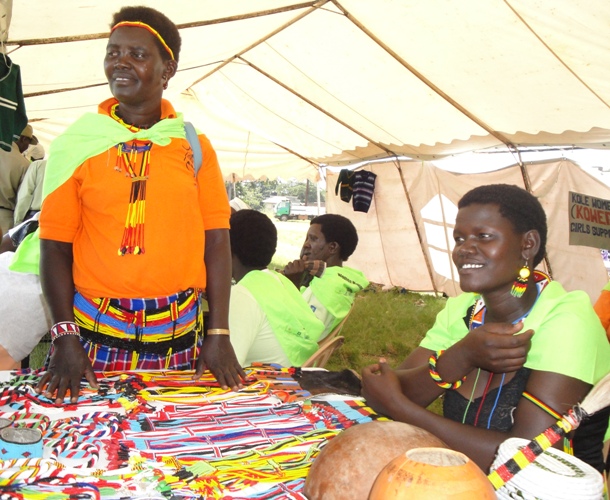
Two Karimojong women activists from Kotido disply their work at an exhibition in Soroti 30/10/10. Rosebell's photo


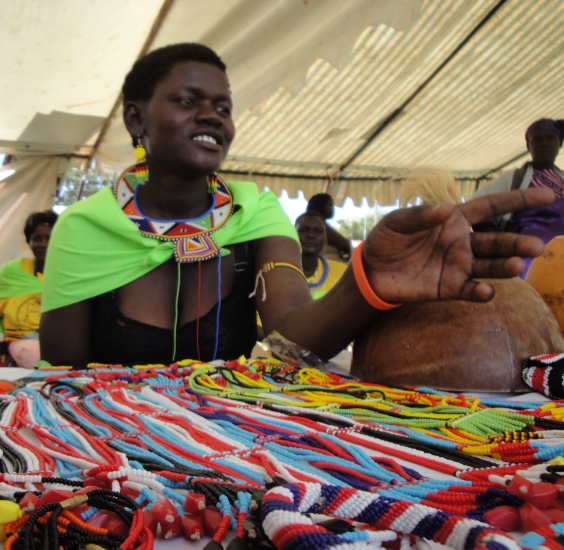
Karimojong beauty. Rosebell's photo.
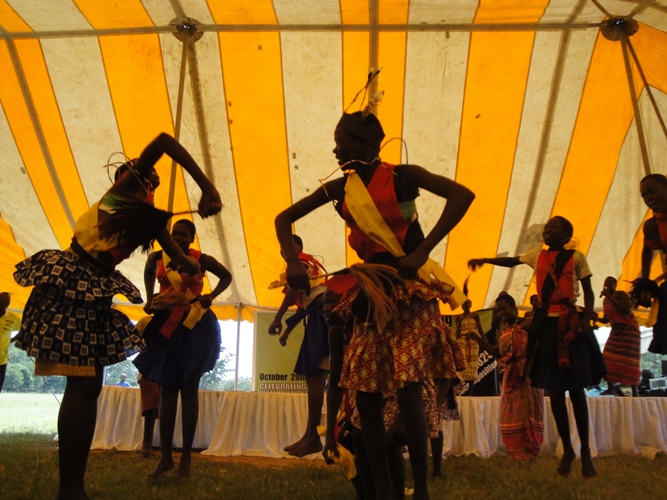
Beauty in everything: Karimojong girls dancing during the commemoration of UNSCR 1325 in Soroti. Rosebell's photo
Doctors carry on with cervical cancer testing. 200 women were screened. Screening can oly be done at regional hospitals which are usually over 40 km from farthest village.
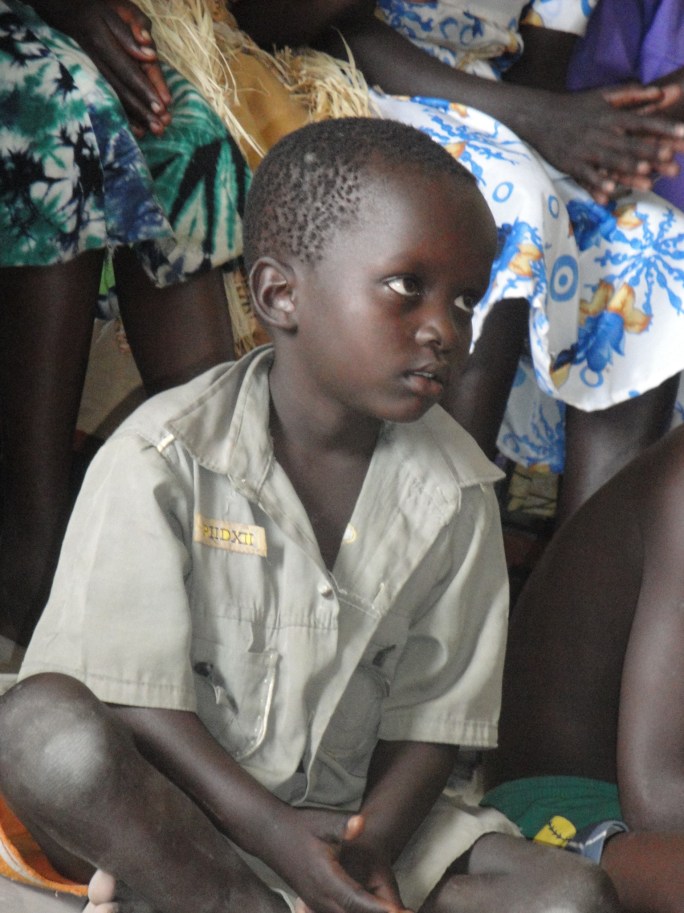
A boy very attentive while someone gave a speech.
The beauty I found in Tubur, about 30 kms from Soroti town
A boy listening to one of the meetings we had in Tubur sub-county. Rosebell's photo.
A school boy sits by a borehole waiting to fetch water. Access to water in many areas in Uganda is a problem. Rosebell's photo.
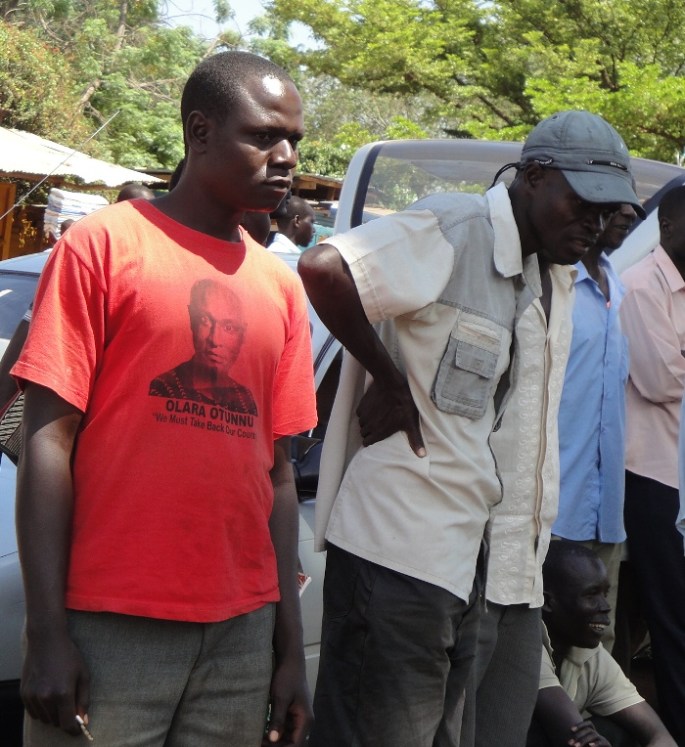
Man clad in one of the T-shirts with a picture of UPC candidate. There was some Otunnu love. The election fever is everywhere. Rosebell's photo
Women selling oranges by the roadside in Soroti. Economic empowerment of women in post conflict Uganda is key to recovery.

Is Ushs 300,000 worth a life? Story of a woman in Pader, northern Uganda

In August while conducting a research in northern Uganda on the inclusion or exclusion of women in the implementation of the Peace Recovery and Development Plan, I came a across Barbra Otuku, a very brilliant, hard-working young lady in Pader. She has a university degree and she could work in a better place but she’s passionate about her work  working with women in post conflict areas. Pader district was one of the last places that Lord’s Resistance Army rebels stayed before they forced into Sudan and DRC. In terms of development Pader is still far and most of the the areas are hard to reach. Otuku rides a bike and traverses Pader district documenting problems and concerns of women in resettled areas most of which have no hospitals, no roads, schools and water sources. She sent me this story which I just did a few edits. Pader has high rate of domestic violence and many women have lost their lives. The police is very ill-equipped. The last I visited the district didn’t have a functional vehicle so the police have to walk for miles to investigate cases. For many women in Pader, the Recovery plan is yet to address their issues and with such insecurity one can conclude we are far from implementing UNSCR 1325.

By Barbra Otuku.

Grace Akidi, a market vendor in Pader was brutally murdered by her husband Nyeko on the 22/10/2010 Friday night. David, Omony the Land lord of the deceased last saw her before she went to her the market where she worked.

Her husband Nyeko appeared at Akdi’s kiosk at 9:30 pm and walked with Akidi. Akidi’s body was later found. She had been stabbed twice in the stomach. Akidi first husband died and she was inherited by a brother-inlaw before she married Nyeko but the marriage was not going well. Grace could not persevere all the pain and burden the husband had put on her.  According to her fellow market vendors, she hoped to return back to her second husband, but when Nyeko got to know, he became very aggressive and began demanding his 350,000 shillings which he used for opening the business for her. However, Grace did not have that sum of money which might have led to her death.

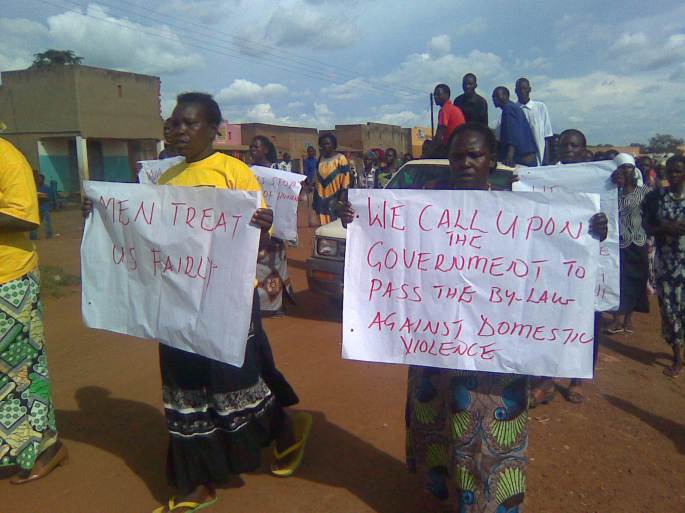
Women market vendors demonstrate in Pader against the murder. Photo by Barbara Otuku

“Grace is just one of the hundreds of women in northern Uganda who lost their lives as a result of misunderstanding with spouses” says Doreen, a market vender

Despite the existence of the laws in Uganda, the death toll of murder among women is increasingly becoming very common in Pader district. This week alone, two people were murdered not on very clear reasons. This is alarming especially for women who are so much scared of their lives, they believe any time their spouses can kill them at the least quarrel and no justice served. The murderer many times walk free.

When Barbra Otuku, social worker from WORUDET interviewed the women who are vendors in Pader market about the death of their colleague said.

“The women demand that the murderer be prosecuted.”

“They demand that the market should be fenced and guards should be put in place to patrol the market area in the night. They stated that wrong dowers used the market as their hiding place in the night.”

“They strongly stated that murderers should not walk freely from prison unpunished. Justice must be done in a fair manner.” The women also want domestic violence addressed.

Uganda commemorates 1325

I am in Soroti at a Peace Exposition at the commemoration of UNSCR 1325 on women, peace and security hosted by Isis-Women’s International Cross Cultural Exchange.

These are pictures from the yesterday’s event and I will be writing on what has been done or not done in Uganda on UNSCR 1325 in a few days

Minister Eriya Kategaya addressed a UN Security Council debate on 26/10/10 on the implementation of the resolution and statement simply stated gender policies that were passed about a decade ago like the 1.5 points awarded to female university entrants, the affirmative action on women political representation which in no way show how issues of women and girls in post conflict Uganda are specifically being addressed.

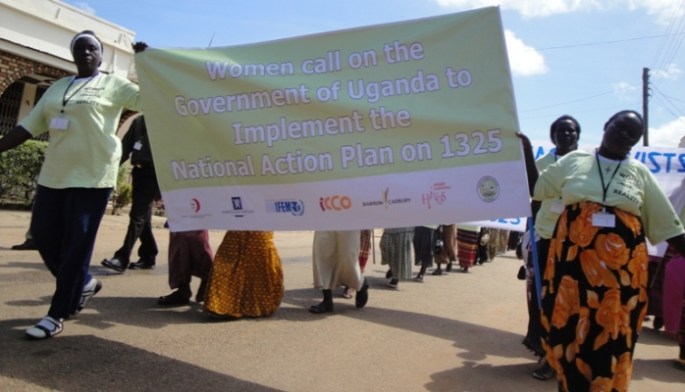
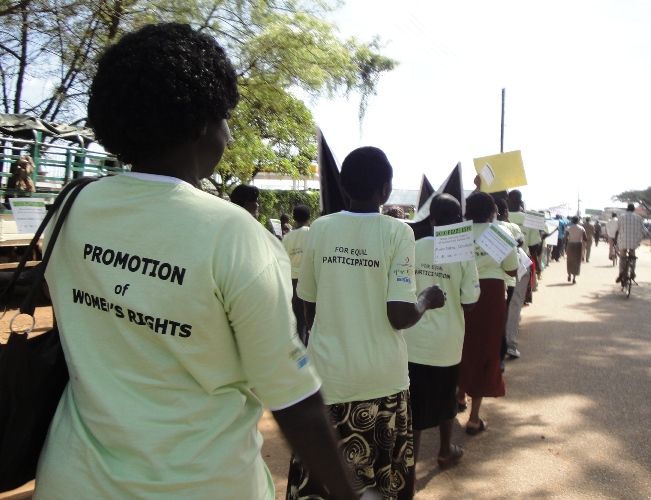
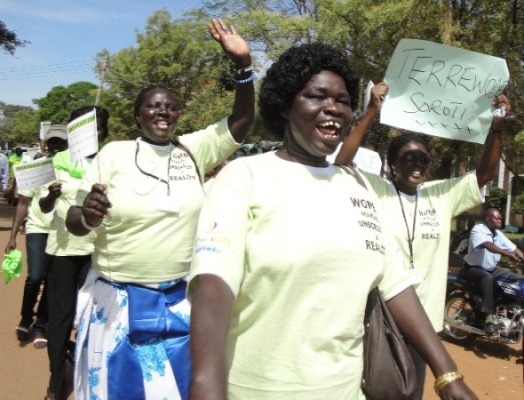
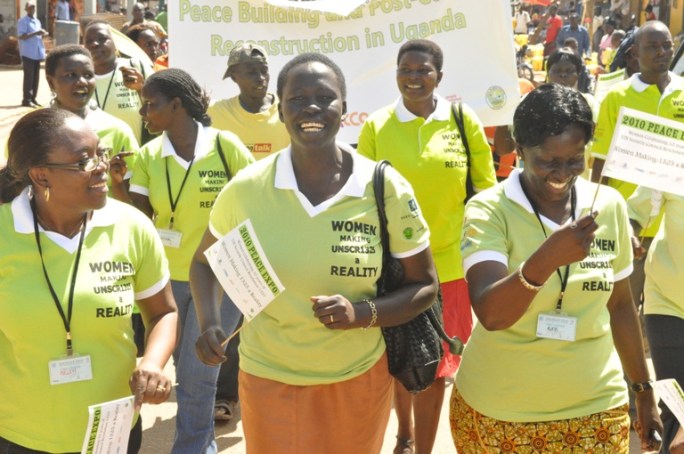
Women call on govt during a peace march in Soroti town on the anniversary of 10 years of UNSCR. Rosebell's photo
Women during a peace march in Soroti. 29/10/10. Rosebell's photo
Women from conflict affected areas of Uganda marched in Soroti to celebrate achievements and also call on government to implement 1325. Rosebell's photo.
Soroti Woman MP Alice Alaso (C) Helen Kezie-Nwoha (L) and Ruth Ochieng of Isis-WICCE at a peace march to mark 10 years of UNSCR 1325 IN Soroti Friday 29/10/10. Photo by GK

UNSCR 1325 What has Uganda done?

UNSCR 1325 was adopted unanimously on October 31, 2000 as the first formal and legal document from the United Nations Security Council to address the unique impact of armed conflict on women.

The Resolution also moved to recognize women’s contributions to conflict prevention, peacekeeping, conflict resolution and post conflict reconstruction. UNSCR 1325 sought to increase the number of women in decision making positions especially in areas affected by conflict.

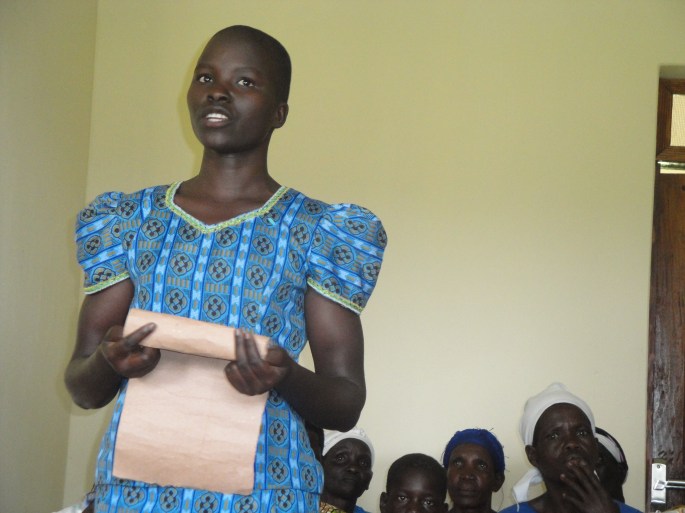
A senior four student I met in Tibur Soroti reading out the needs of women in the post conflict area.

Uganda adopted the resolution and has gone ahead to put in place a National Action Plan in 2008 to address gender-based inequalities and violence against women.

Isis-Women International Cross Cultural Exchange (Isis-WICCE) and its partners will hold a Peace Exposition in Soroti town from Friday 29th to Sunday 31st to commemorate 10 years of the United Nations Security Council Resolution 1325 on Women, Peace and Security.

The Peace Recovery and Development Plan for the conflict affected districts in North and North Eastern Uganda launched last year is one way the country could address the challenges of women ranging from access to health services, justice for victims of sexual violence, promotion of women’s economic empowerment and participation in peace and recovery.

However the National Action Plan on UNSCR 1325 remains largely unimplemented.

Special needs of women and girls during resettlement and post-conflict reconstruction have largely been ignored. The school dropout rate of the girl-child in most conflict torn areas remain a challenge, land rights of women continued to be denied and many women remain on the fringes of decision making process in the reconstruction programme.

Women have, with little, made strides in making progress from victims of war to community and national leaders.

This 10th anniversary comes at a time when Uganda is chairing the United Nations Security Council, and Uganda peace activists will be gathered in Soroti on the eve of the anniversary to deliberate on the achievements and challenges faced in implementing the Resolution.

The Peace Exposition in Soroti is an opportunity to involve and enable the grassroots women in Uganda to celebrate and express themselves together with their colleagues around the world on implementing Resolution 1325.

These valiant women will be able to recognise that they have contributed to a global framework and that they have the potential and resilience to continue to make change through their tireless efforts on the ground.

Isis-WICCE and its partners will hold a peace march, debates and exhibitions of stories, challenges and achievements of Ugandan women in conflict affected areas at Soroti sports grounds for three days.

Get in touch if you need details or women’s voices from the grassroots.

UPDF Soldiers Killed in Mogadishu (via Mogadishu Man)

We in Uganda have for sometime been shielded from the human cost of the Uganda mission in Somalia. We have no reporter in Mogadishu, Ugandan media houses would never afford that but today I was brought to the attention of events from Mogadishu by Mogadishu man. The Ugandan population are detached from the war because we don’t see the cost save for 7/11. I find myself at crossroads and wondering whether we should be shielded from such images of dead soldiers and if we are not  will the publication of these images spark debate in Uganda especially during this elections time on our almost one man mission in Somalia? Ugandans are always left in the dark when it comes to military ventures right from when the mission started and what exactly goes on in Somalia.

UPDF Soldiers Killed in Mogadishu Mogadishu’s streets never seem to be without a corpse or two. Whether it is the African Union peacekeepers’ bodies being dragged by children on the dusty roads of Mogadishu or bodies of insurgents or the heap of civilian corpses piled on top of one another after being struck by mortars in the Bakara market, the streets in … Read More

via Mogadishu Man