Last week I wrote about my feeling about the manner in which the debate on the Marriage and Divorce Bill was handled. I couldn’t’ write any better than Jacqueline Asiimwe, a lawyer who has been, for more than a decade, at the centre of the struggle for women’s rights in Uganda. Here is her personal note on the bill. We all can’t run or hide from realities and horrors in our homes. We all have similar stories like those of Jackie’s clients and her clients don’t come from outside our country. They are the silenced victims of our unfair laws and cultural practices. I am hearing that some MPs who have something left of their morals are returning the 5 million they were given for sham the consultations on a proposed law which Ugandan taxpayers had already spent over years. These stories are not just stories of poor, rural people, they are stories that we dont have to look far! They are our family’s stories, they are our stories. Hope Jackie’s note makes you realise how urgent this law reform is needed!
Were they just an ignorant lot or was there a deliberate plan to stifle the debate and probable passing of Marriage and Divorce Bill by Members of Parliament?
Why were they asked to carry out sham communities when consultations had already been done?
What about the promised 5 million shillings for the consultations?
Why did MPs persistently spread misinformation and lies about the Bill?
Why would almost all women members of parliament agree with the Bill?
Why did Museveni call them radical feminists when we all know that our female MPs are far away from the word feminist?
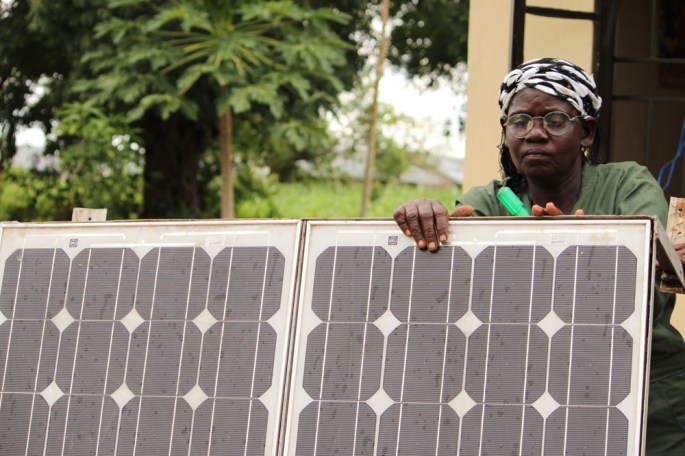
Last week i was travelling through Eastern Uganda, Tororo and Mbale in particular. In Tororo i found three women supported by MIFUMI who assemble solar lamps.
Rhoda Oketcho, Auma Odio and Magaret Opio took a six months course in Solar engineering in India in 2008. They are rural women without much education but with skills from India they are able to assemble lamps and make a decent living. I visited their small workshop and they said they earn atleast 60,000 shillings (USD 23 ) per month. In most of rural Uganda families use kerosene lamps for lighting, some homes cannot afford it and it pauses health risks.
Looking at these women’s work reminded me of the death of technical institutes in this country on the government’s watch. It is difficult to find places that impart skills for Ugandans who cannot afford a university education. Even for university graduates, many employers are struggling to find skilled ones.
As i think of an article about the Marriage and Divorce bill which is currently being miscommunicated in media and by our male MPs with backing of churches, my Zimbabwean inspirational sister Delta penned down a good one. These experiences from Zimbabwe are not any different from those of us who have grown up in Uganda.
Nargis Shirazi, a young public health specialist in Uganda was working with the UN millennium villages project when she met a 13-year-old Agasha* in Isingiro, a southwestern district. Shirazi who had come to participate in the role model day asked Agasha what she needed in order to realize her dreams.
Agasha had been great netball player and had been going to school until two years before. The 13-year-old girl told Nargis that for her getting sanitary pads would mean getting her dream back. She went on to narrate a story of how she had been a great player at school. During one of the competitions, Agasha was in her menses but she went ahead to play. In the middle of the game she had to go off the court.
In rural Uganda, girls have to improvise, use old cloth or underwear during their period. It was during that game that the cloth she was using dropped right on the court. She was embarrassed as other students cheered and laughed at her. Agasha stopped playing netball and didn’t go back to school for next 2 years.
“When she recounted this story to me and said getting sanitary pads meant she can be confident again and get her dream back, that was an inspiring moment for me, says Shirazi.
Shirazi that day phoned Dr. William Lubega, a colleague to ask what they could do.
In August last year, Shirazi together with Dr William Lubega and Amos Zikusooka, a consultant brought Woman to Woman Foundation into force. WWF enables girls in rural areas to stay in school by ensuring they have access to reusable sanitary pads and panties.
“Part of our model is to involve the community in these re-useable sanitary pads project so we can create employment for women in the community at the same time as they play a role in keeping their girls in school,” said Dr. Lubega.
Nargis Shirazi
Woman to Woman Foundation (WWF) was announced among the ten most inspiring start-up enterprises working for the well-being of women and girls by Women Deliver, a global advocacy organization to mark International Women’s day last week.
More than 13,500 votes were cast online to select these winners. Each finalist will receive a scholarship to the Women Deliver 2013 conference in Kuala Lumpur, Malaysia (May 28-30, 2013), where they will compete in the first-ever Women Deliver Social Enterprise Challenge.
WWF also relies on volunteers to do their work. They run 3 projects, which rely on partnerships that the young professionals who co-found it have cultivated.
The Promise:
The sanitary pads and panties are distributed under what they call The Promise, a program aimed at addressing sexual and reproductive health issues and rights. Currently WWF is working with 200 girls in Isingiro district at Nyakamuri School.
“We called it the promise project because we believe that the way we can bring about change is to empower girls. We cannot do it only by giving them pads, we also back that up with education in sexual and reproductive health rights,” Shirazi. The have so far partnered with AfriPads to offer free sanitary pads and underwear to girls.
Dr. William Lubega
Any project to keep girls in schools in Uganda is very important, looking at the current school drop out statistics.
Over one million pupils who enrolled for Primary One under the Universal Primary Education (UPE) in 2006 did not reach Primary Seven indicating a 71% dropout rate. In East Africa, Uganda has the lowest proportion of children staying in school up to P7, according to a 2010 report by the UN Educational, Scientific and Cultural Organisation (UNESCO). In Kenya, the completion rate is 84%, Tanzania 81% and Rwanda 74%.
When it comes to girls dropping out of school the rate is higher than that of boys. And what may appear as simple needs like sanitary pads can keep a Ugandan girl out of schools on average three weeks out of three months term.
Although the education ministry says the net enrollment for girls at primary level increased from 82.3% in 2000 to 97.2%, keeping these girls in school is a challenge mostly because of cultural attitudes towards girl child education, poverty and teen pregnancies.
WWF founders are moving to use social media to engage and also expand their reach as more young Ugandans are joining social media channels. Also through social media they have got partners. For instance a top fashion designer in Uganda learnt about the foundation through Facebook and offered to hold the Kampala Fashion for Compassion show due in May. Part of the proceeds will be for community benefit and delivering more sanitary pads to schools.
“We don’t just supply pads, we engage mothers to make sure they are helping girls make the right choices as far as sexual and reproductive health is concerned.”
Nargis was born and raised in Mombasa, Kenya and she’s a Ugandan of Iranian origin. She has a degree in community psychology and masters degree in public health. Dr. Lubega is an mHealth specialist contractor with a keen interest in the intersection of Public HealthCare, Information Technology and Economics
WWF also uses bracelets with three colors to keep the message alive. Yellow represents ABC (abstinence, Be faithful, Condom use), a model that Uganda used to bring down HIV/AIDS rate. WWF bracelet has lime green, which signifies staying in school and Orange for a brighter future.
The sanitary pads project is not limited to schools. In past WFF also worked with Xfoundation to bring sanitary pads to women in prisons, another neglected group.
“In Uganda when one is convicted it is like losing your humanity, there are no good sanitary conditions in prisons and for women this is dire.” Said Lubega, “so we go to the prisons to distribute re-useable pads”
Other projects being run by WWF are Creative Arts Targeting Community Health where they are using plays and participatory photography to share messages on sexual and reproductive health. The arts project is supported by International Health Sciences University.
Later this year in June, WWF will have a play called The Twist at the National Theatre, which Shirazi wrote to put some comedy on reproductive health issues.
The founders of WWF so far see resources as their big constraint. They started with money out of their pockets but as young professional, they cannot sustain funding the activities by themselves.
“We are young people with no money, we are just young people with great ideas to help communities,” says Shirazi, “We need to invest in young peoples’ ideas because they have the zeal and the power to change not only themselves but also communities. An idea with out backup cannot easily take off.”
In the next one year WWF founders hope to expand to 8 districts and as a start-up enterprises there’s still so much room for expansion to keep girls in school.
I am honored to have been selected as a 2013 Young Global Leader (YGL). This honour is bestowed by the World Economic Forum each year to recognize the most distinguished leaders under the age of 40, nominated from around the world.
photo via Dritte
The Forum of Young Global Leaders is a “dynamic, diverse, global community of the world’s most outstanding, next-generation leaders, who commit a portion of their time to jointly share a better future and thereby improve the state of the world.”
“Young Global Leaders represent the future of leadership, coming from all regions of the world and representing business, government, civil society, arts and culture, academia and media, as well as social entrepreneurs.”
Set up as an independent, not-for-profit foundation under the supervision of the Swiss government, The Forum of Young Global Leaders works as an integral part of the World Economic Forum platform to engage young leaders into deep interaction with other stakeholders of global society. YGLs are fully involved in virtually all meetings, research and initiatives of the World Economic Forum, representing the views and interests of their generation
Among many roles of the Young Global leaders program is to catalyse the next generation of leaders through personal experiences that enable YGLs to build knowledge and engender a better understanding of global challenges and trends, risks and opportunities.
Also happy to see Ola Orekunrin, Founder The Flying Doctors Nigeria, Marieme Jamme Founder SpotOne Global Solutions Senegal on the list.
Congo is also like a little child, everybody thinks that they can bring us a solution without even properly reflecting on it, everybody on the outside.
Last week I was in Congo to train a group of journalists and activists in social media and activism. During this trip I interviewed 2 Goma-based journalists and a youth activist on the challenges of working in an area with conflicts that have no permanent front lines Conflicts, in which often civilians pay the highest price as different armed groups fight over ever-changing political interests. Late last year, Oxfam released a report that showed there were more than 25 armed groups in North and South Kivu provinces.
The latest conflict to hit Goma, the capital of natural resource rich North Kivu province in Eastern Congo, was last year when M23 rebels temporarily occupied the capital over disputes with government regarding their integration into the national army.
Often in these times, we mostly feed on reports from international media, written by journalists who fly in and out and can be fairly protected. In the case of Uganda we had most reporters covering the conflict from M23 frontline at the rebels invitation.
For Congolese journalists who are part of these communities who have suffered the wars for over a decade, the conditions are different. They often don’t have the protection of a large media house and they can make enemies with any groups no matter how ‘objective’ their reporting can be. Also in a country where the government troops commit crimes just like the militias do, the work of a local journalist or activist is tougher in Congo.
While in Addis Ababa, I met an amazing women and leader from Sierra Leon. She is also the UN Special Representative of Secretary General on Sexual Violence. Zainab Hawa Bangura opened my eyes on what I usually read in both studies and media reports – they call it culture of rape. I suspect i could have regurgitated such words before.
Listening to Bangura, her zeal, passion and dedication caught me. I am finishing this post coincidentally in Goma, Eastern DR Congo a place which one the high UN ranking officials dared to call the “rape capital of the world.”
And the words of the Bangura were directed at the continued description of African regions where there’s sexual violence in conflict as having “rape culture.” Often a description slapped on Eastern Congo where more than 5 million lives have been lost in wars since 1990s.
This week Ugandans saw and participated in different dramas that can only give you a glimpse into a nation in a moral dilemma.
Businessman Hassan Basajjabalaba was arrested at Entebbe International Airport as he attempted to leave the country after a four nights of a cat-and-mouse chase and several police summonses. For a week our intelligence couldn’t ascertain whether Basajjabalaba was in the country as his lawyer and also my shameless Member of Parliament Michael Mawanda lied to courts!
Basajjabalaba is wanted over fraud in connection with alleged forgery of a consent document, which led to payment of Shs142 billion by the government. This arose from the reversing of the then Kampala City Council decision to sell Nakasero, Shauriyako, and St. Balikuddembe (Owino) markets, and the Constitution Square to Mr Basajjabalaba.
The WordPress.com stats helper monkeys prepared a 2012 annual report for this blog.
Here’s an excerpt:
19,000 people fit into the new Barclays Center to see Jay-Z perform. This blog was viewed about 120,000 times in 2012. If it were a concert at the Barclays Center, it would take about 6 sold-out performances for that many people to see it.



 Rosebell Kagumire