Is Ushs 300,000 worth a life? Story of a woman in Pader, northern Uganda

In August while conducting a research in northern Uganda on the inclusion or exclusion of women in the implementation of the Peace Recovery and Development Plan, I came a across Barbra Otuku, a very brilliant, hard-working young lady in Pader. She has a university degree and she could work in a better place but she’s passionate about her work  working with women in post conflict areas. Pader district was one of the last places that Lord’s Resistance Army rebels stayed before they forced into Sudan and DRC. In terms of development Pader is still far and most of the the areas are hard to reach. Otuku rides a bike and traverses Pader district documenting problems and concerns of women in resettled areas most of which have no hospitals, no roads, schools and water sources. She sent me this story which I just did a few edits. Pader has high rate of domestic violence and many women have lost their lives. The police is very ill-equipped. The last I visited the district didn’t have a functional vehicle so the police have to walk for miles to investigate cases. For many women in Pader, the Recovery plan is yet to address their issues and with such insecurity one can conclude we are far from implementing UNSCR 1325.

By Barbra Otuku.

Grace Akidi, a market vendor in Pader was brutally murdered by her husband Nyeko on the 22/10/2010 Friday night. David, Omony the Land lord of the deceased last saw her before she went to her the market where she worked.

Her husband Nyeko appeared at Akdi’s kiosk at 9:30 pm and walked with Akidi. Akidi’s body was later found. She had been stabbed twice in the stomach. Akidi first husband died and she was inherited by a brother-inlaw before she married Nyeko but the marriage was not going well. Grace could not persevere all the pain and burden the husband had put on her.  According to her fellow market vendors, she hoped to return back to her second husband, but when Nyeko got to know, he became very aggressive and began demanding his 350,000 shillings which he used for opening the business for her. However, Grace did not have that sum of money which might have led to her death.

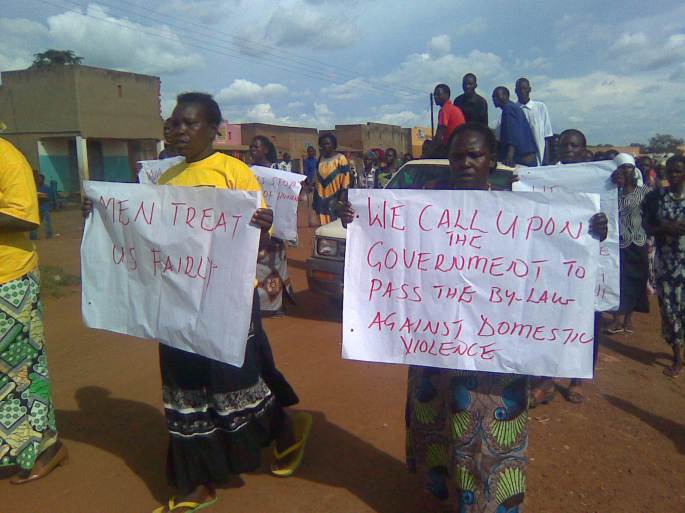
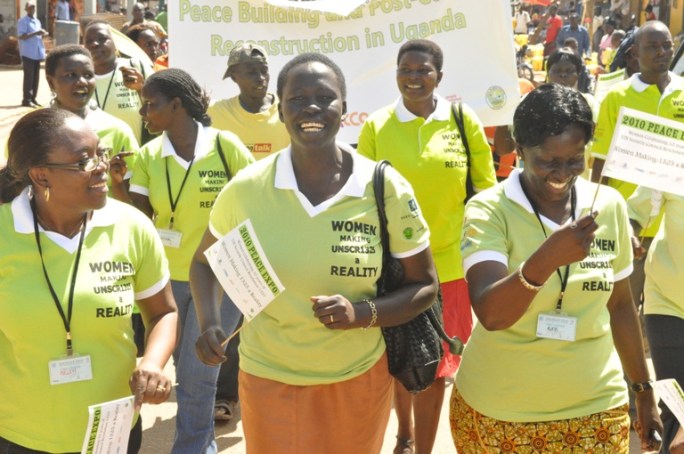
Women market vendors demonstrate in Pader against the murder. Photo by Barbara Otuku

“Grace is just one of the hundreds of women in northern Uganda who lost their lives as a result of misunderstanding with spouses” says Doreen, a market vender

Despite the existence of the laws in Uganda, the death toll of murder among women is increasingly becoming very common in Pader district. This week alone, two people were murdered not on very clear reasons. This is alarming especially for women who are so much scared of their lives, they believe any time their spouses can kill them at the least quarrel and no justice served. The murderer many times walk free.

When Barbra Otuku, social worker from WORUDET interviewed the women who are vendors in Pader market about the death of their colleague said.

“The women demand that the murderer be prosecuted.”

“They demand that the market should be fenced and guards should be put in place to patrol the market area in the night. They stated that wrong dowers used the market as their hiding place in the night.”

“They strongly stated that murderers should not walk freely from prison unpunished. Justice must be done in a fair manner.” The women also want domestic violence addressed.

Uganda commemorates 1325

I am in Soroti at a Peace Exposition at the commemoration of UNSCR 1325 on women, peace and security hosted by Isis-Women’s International Cross Cultural Exchange.

These are pictures from the yesterday’s event and I will be writing on what has been done or not done in Uganda on UNSCR 1325 in a few days

Minister Eriya Kategaya addressed a UN Security Council debate on 26/10/10 on the implementation of the resolution and statement simply stated gender policies that were passed about a decade ago like the 1.5 points awarded to female university entrants, the affirmative action on women political representation which in no way show how issues of women and girls in post conflict Uganda are specifically being addressed.

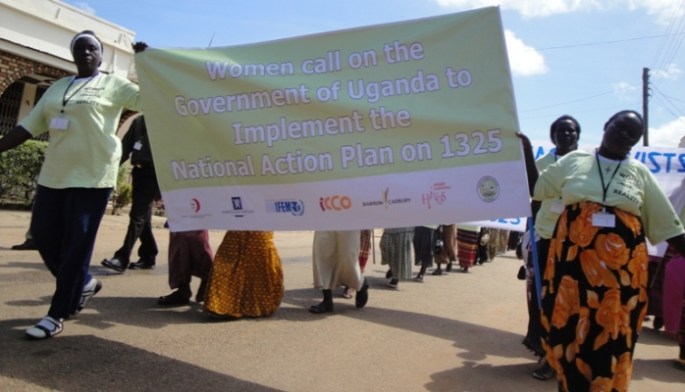
Women call on govt during a peace march in Soroti town on the anniversary of 10 years of UNSCR. Rosebell's photo
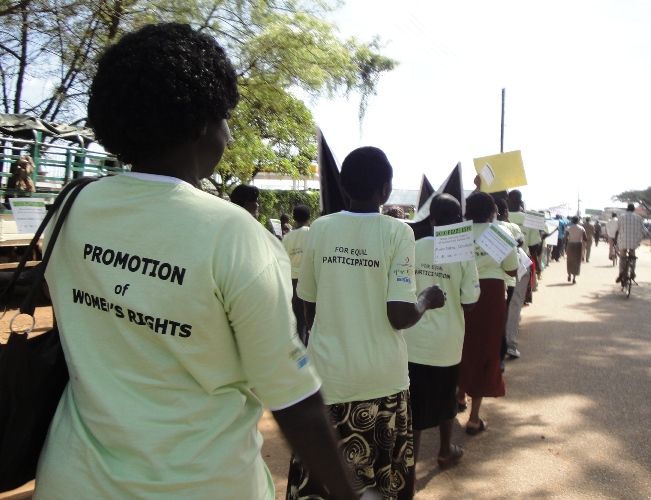
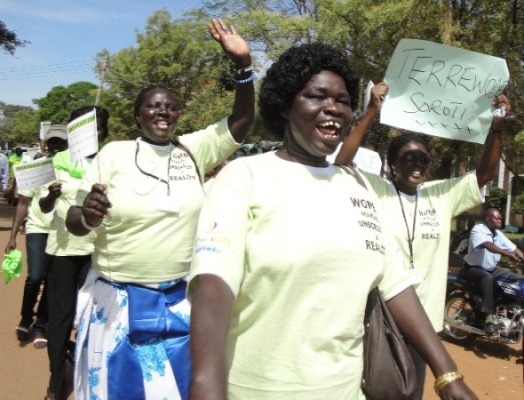
Women during a peace march in Soroti. 29/10/10. Rosebell's photo
Women from conflict affected areas of Uganda marched in Soroti to celebrate achievements and also call on government to implement 1325. Rosebell's photo.
Soroti Woman MP Alice Alaso (C) Helen Kezie-Nwoha (L) and Ruth Ochieng of Isis-WICCE at a peace march to mark 10 years of UNSCR 1325 IN Soroti Friday 29/10/10. Photo by GK

UNSCR 1325 What has Uganda done?

UNSCR 1325 was adopted unanimously on October 31, 2000 as the first formal and legal document from the United Nations Security Council to address the unique impact of armed conflict on women.

The Resolution also moved to recognize women’s contributions to conflict prevention, peacekeeping, conflict resolution and post conflict reconstruction. UNSCR 1325 sought to increase the number of women in decision making positions especially in areas affected by conflict.

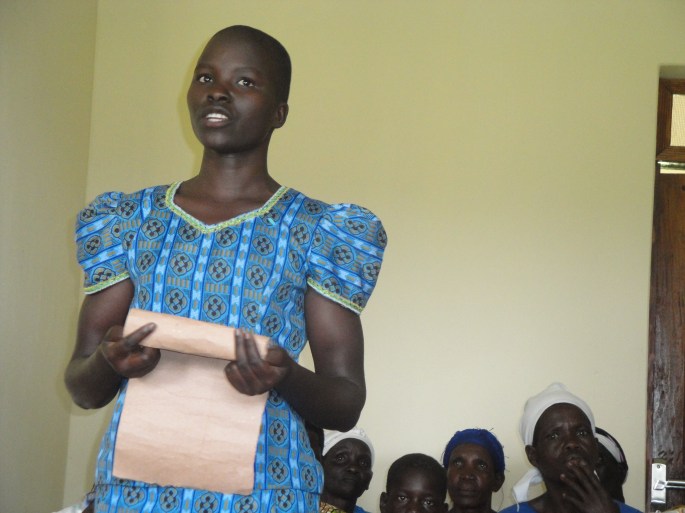
A senior four student I met in Tibur Soroti reading out the needs of women in the post conflict area.

Uganda adopted the resolution and has gone ahead to put in place a National Action Plan in 2008 to address gender-based inequalities and violence against women.

Isis-Women International Cross Cultural Exchange (Isis-WICCE) and its partners will hold a Peace Exposition in Soroti town from Friday 29th to Sunday 31st to commemorate 10 years of the United Nations Security Council Resolution 1325 on Women, Peace and Security.

The Peace Recovery and Development Plan for the conflict affected districts in North and North Eastern Uganda launched last year is one way the country could address the challenges of women ranging from access to health services, justice for victims of sexual violence, promotion of women’s economic empowerment and participation in peace and recovery.

However the National Action Plan on UNSCR 1325 remains largely unimplemented.

Special needs of women and girls during resettlement and post-conflict reconstruction have largely been ignored. The school dropout rate of the girl-child in most conflict torn areas remain a challenge, land rights of women continued to be denied and many women remain on the fringes of decision making process in the reconstruction programme.

Women have, with little, made strides in making progress from victims of war to community and national leaders.

This 10th anniversary comes at a time when Uganda is chairing the United Nations Security Council, and Uganda peace activists will be gathered in Soroti on the eve of the anniversary to deliberate on the achievements and challenges faced in implementing the Resolution.

The Peace Exposition in Soroti is an opportunity to involve and enable the grassroots women in Uganda to celebrate and express themselves together with their colleagues around the world on implementing Resolution 1325.

These valiant women will be able to recognise that they have contributed to a global framework and that they have the potential and resilience to continue to make change through their tireless efforts on the ground.

Isis-WICCE and its partners will hold a peace march, debates and exhibitions of stories, challenges and achievements of Ugandan women in conflict affected areas at Soroti sports grounds for three days.

Get in touch if you need details or women’s voices from the grassroots.

UPDF Soldiers Killed in Mogadishu (via Mogadishu Man)

We in Uganda have for sometime been shielded from the human cost of the Uganda mission in Somalia. We have no reporter in Mogadishu, Ugandan media houses would never afford that but today I was brought to the attention of events from Mogadishu by Mogadishu man. The Ugandan population are detached from the war because we don’t see the cost save for 7/11. I find myself at crossroads and wondering whether we should be shielded from such images of dead soldiers and if we are not  will the publication of these images spark debate in Uganda especially during this elections time on our almost one man mission in Somalia? Ugandans are always left in the dark when it comes to military ventures right from when the mission started and what exactly goes on in Somalia.

UPDF Soldiers Killed in Mogadishu Mogadishu’s streets never seem to be without a corpse or two. Whether it is the African Union peacekeepers’ bodies being dragged by children on the dusty roads of Mogadishu or bodies of insurgents or the heap of civilian corpses piled on top of one another after being struck by mortars in the Bakara market, the streets in … Read More

via Mogadishu Man

Museveni endorsed to seek re-election and what does the national broadcaster ask him in the first interview

It was this morning  between 10-11 am East African time, Uganda Broadcasting Corporation (UBC) TV had a live coverage of candidate Yoweri Kaguta Museveni (not sure of the order yet as it usually changes every election to serve whatever interests I got no clue about) as he was being endorsed by the Electoral Commission to stand for the 2011 Presidential elections.

Museveni is the flag bearer for the National Resistance Movement which he has been for the last 24 years.

I watched his first interview after his endorsement on the national broadcaster. The Presenter, Jane Kasumba.

The questions (some paraphrased):

1- How do you feel about this momentous day?

2- Uganda’s economy grew at … percent last year, what to do you hope for in future?

3- What do you think of the Multiparty dispensation?

4- Do you think the Electoral Commission will do much better than in the past?

5- NRM primaries were marred with irregularities and out of that came out people who will stand as independents. What do you think?

6- Next months will be hectic viewers want to know how you will relax.

I know that its UBC and for the last election a media coverage review showed it way favored the incumbent but they can do better than this.

For a man who has led the country for the last 24 years, he’s been nominated three times before; do you still think his nomination is momentous?

And then you get to ask a presidential candidate what he hopes for our economy? Just hope? Couldn’t there be any question on what exactly he’s vision or lack of thereof is different sectors?

This general question gave Candidate Museveni a leeway to talk to a presenter that we want to get jobs for the Kasumbas. Also the president went ahead to call the presenter whom I believe was never born in the 80s, an NRM child.

Then finally Museveni went on the say once Bujagali and other dams are finished we will have double digit economic growth.

What a question about multiparty system for man whom for over a decade claimed all Ugandans belonged to the same political school of thought- the National Resistance Movement- even when he had opposition.

What would he say about multipartyism. Perhaps a question related to parties was relevant but not surely what the president thinks of Multipartyism.

On his NRM party sham of elections, the TV presenter choose to concern herself with people standing as independents rather than seek for an explanation for such massive rigging and bribery and whether the party will not bring this to the general elections.

And the explanation the president gave for the independents was that they can go back and recount the votes in their constituency and that the mess was because NRM is not as rich as the Electoral Commission.

I do understand that in the midst of political questions one is somehow supposed to bring a lighter question to the candidate but the question about viewers being concerned if he will have time to rest was the weakest.

I didn’t watch more to see if other candidates will be given the same live coverage and interview on the state broadcaster but this is how we  begin the 2011 election campaigns. And candidate Museveni recieved two cars, Ushs 20 million and four body guards for his campaigns.

Uganda threat to pull out of peace missions over DRC report; why are we in Somalia?

Since July 11 when Al shabaab killed 74 people in twin bomb attacks in Kampala, President Yoweri Museveni has been writing about the need for Uganda and other African countries to stay in Somalia. In fact Uganda has increased its troops in Mogadishu.

Today an embedded Daily Monitor journalist quoted one of the commanders  Maj. David Matua, who is based at the Somali parliament, saying

If we had enough troops, it would not take us weeks to flush them out of those positions because to render them useless, we must secure places under our control

Generally there has been propaganda that more troops will bring peace in Somalia.

But today Uganda finds itself backtracking on the mission in the face of a UN report due to be published about the crimes committed by our forces in DRC.

The UN report – into conflicts in the DR Congo between 1993 and 2003 – is expected to be published on Friday and is said to detail crimes never previously documented.

The draft version alleges that the Ugandan army committed war crimes and crimes against humanity when it backed Congolese rebels who overthrew President Mobuto Sese Seko in 1997 and went on to occupy parts of the east of the country.

The BBC quoted Ugandan Foreign Minister Sam Kutesa

Such sinister tactics undermine Uganda’s resolve to continue contributing to, and participating in, various regional and international peacekeeping operations.

This is the same tactic earlier deployed by Rwanda which is also implicated in the report. Rwanda’s threats saw the UN Secretary General Ban Ki moon visit Rwanda a few days ago.

What calls for more questioning in Uganda’s case , which has said the report is a pack of lies, is that they have always argued that their involvement in the mission is for the safety of Uganda, at least when addressing Ugandan.

They have been drumming up support from the international community saying ‘our’ presence in Mogadishu is the most important for regional safety. And for a country which saw terror attacks and whose commanders have been saying staying in Somalia is the only option of keeping Uganda safe, such Kutesa’s threats can only be theatrical.

Kutesa’s comments show that either Uganda can pull out of Somalia and not be threatened or the government is willing to sacrifice Uganda’s safety to save themselves from scrutiny of their actions in the Congo.

This is not the first time Uganda has been implicated in the  Congo case.  Uganda lost so many soldiers in their clashes with Rwandan troops in Kisangani over control of areas. So one must ask, did those areas have no Congolese civilians?  Not forgetting that we backed some militia groups who committed their a good deal of crimes. Of course other things like the stealing of the timber is general knowledge in Uganda and our share of the bloody minerals is well documented in our export figures.

For now we can only watch how this performance of the East African governments ends. And what’s the price to pay once our government is implicated? Will the UN dare come after another African president? Well, I don’t see much the UN will do beyond mentioning that these crimes were committed but really what intrigues me is this open performance of our governments.

Tell your clan I will allow your coverage of 2011 election campaigns.

Just this month two Ugandan journalists were killed in two different incidents. Paul Kiggundu working for Top TV was killed by Boda Boda cyclists as he was covering their demonstration; the other Dickson Ssentongo was killed by unknown assailants on his way to work at Prime Radio in Mukono. Boda cyclists accused Kiggundu of spying for the police while much is yet to be known about who was behind Ssentongo’s murder. These are not only worrying trends but also show that the price of being a journalist in Uganda is once again going higher.

So when I read on a friend’s facebook wall last week about a new form issued by the National Resistance Movement (NRM), President Yoweri Museveni’s party to journalists who want to cover their presidential election campaign I was appalled. The status read:

“To cover the president’s 2011 campaigns I have to tell them who my grandparents are, my children, spouse, my village of origin.”

I may be too young not to know of the 1970s hunt down of people’s relatives that government deemed enemies but for something this message sent a chill down my spine.

On facebook, I tried to highlight this to understand from journalists and other friends what they thought of it and the comments ranged from this being a measure to protect the president in the face of increased terrorism threats to trying to ensure journalists do their job well.

The NRM recently held their primaries and they were largely marred by violence, bribery and mudslinging. There were reports of journalists being paid about Shs 50,000 for the coverage of different NRM cmaps. One of the comments I saw indicated that the NRM could be using these forms as a plot to exclude journalists who could be critical in their reporting of the coming campaigns. They have excluded such journalists in the past.

That would be bad but worse still I am concerned about the safety of journalists. A party collecting vital information that is not even kept by government departments worries me a lot. So I went ahead and looked for the form.

I was told this form has been circulated to all newsrooms by the Uganda Media Center, which should be doing government work but also largely benefits the ruling party in the spread of information. The center said whoever is going to cover President Museveni’s 2011 elections must fill it.

I was told New Vision “made it a MUST” for all journalists to put their particulars down whether they cover politics or not. And there was no room for rejecting the idea. I am also told that other private media houses have rejected the form. In what seems to be a tactical move may be to avoid foreign media outrage, foreign journalists have not been asked to fill in this form.

If reporters indeed hand in this information to the NRM party which is not right at all, it could be used by anyone for anything not excluding blackmailing journalists or hunting down your relatives if someone, even without the knowledge of the party heads, doesn’t agree with the reporter’s coverage.

The request of these details about reporters’ parents, home addresses, spouses and the parents of their spouses, their occupation, village, children and journalists’ close associates/ friends cannot be for any good.

This is not an issue that reporters should take in lightly.  For all of these details have nothing to do with how a journalist covers the country’s most important political process. This information can also be used way beyond the election period so therefore we cannot take the journalists safety for granted especially at time a when political events are becoming more polarized than before in the last 20 years.

Below is the form that I strongly believe puts a journalist at the mercy of the ruling party.

Below is the form that journalists are dreading.

PERSONAL PARTICULARS

Surname…………………………………………First name……………………………………………

Other names……………………………………………………………………………………………

Sex………………………………………………Marital status………………………………………..

Nationality………………………………………Permit No……………………………………………

Date of Birth…………………………………………………………………………………………….

a. Place of birth.Zone……………………………………………………………………………………

b.LC 1 Village…………………………………………………Chairman……………………………

c.LC 11……………………………………………………… …Chairman…………………………..

d.LC111…………………………………………………………Chairman…………………………

e.District…………………………………………………………LC V Chairman………………….

Present physical address

a. Zone………………………………………………………………………………………………

b.LC1 village……………………………………………………..Chairman…………………………

c.LC 11……………………………………………………………Chairman………………………..

d.LC111……………………………………………………………Chairman………………………

e.District………………………………………………………….LC V Chairman…………………..

f.Personal Tel.No………………………………………………………………………………………

B.FAMILY PARTICULARS

Father’s Name…………………………………………………………………………………………

Occupation…………………………………………………………………………………………….

Nationality……………………………………………………………………………………………

Place of birth…………………………………………………………………………………………

Village………………………………………………………………….Parish………………………

Sub county……………………………………………………………County………………………

District………………………………………………………………………………………………….

Mother’s Name…………………………………………………………………………………………

Occupation………………………………………………………………………………………………

Nationality ………………………………………………………………………………………………

Place of birth……………………………………………………………………………………………

Village…………………………………………………………… Parish……………………………..

Sub county…………………………………………………………County……………………………

District………………………………………………………………………………………………….

Respondents Signature…………………………………………….Date………………………………

C.SPOUSES (Wife/Husband)

Spouses Name…………………………………………………………………………………………

Occupation ………………………………………………………………………………………………

Nationality………………………………………………………………………………………………

Place of birth……………………………………………………………………………………………

Village…………………………………………………………………..Parish………………………

Sub county……………………………………………………………County…………………………

District………………………………………………………………………………………………….

Father’s Name…………………………………………………………………………………………

Occupation………………………………………………………Nationality………………………….

Village……………………………………………………………Parish……………………………….

Sub county………………………………………………………County………………………………

District…………………………………………………………………………………………………

Mothers Name…………………………………………………………………………………………

Occupation………………………………………………………………………………………………

Village…………………………………………………………Parish………………………………….

Sub county ……………………………………………………County………………………………. ..

District………………………………………………………………………………………………….

D.CLOSE ASSOCIATES/FRIENDS

a. Name…………………………………………………………………………………………………

LC1………………………………………………………….Chairman………………………………

LC11…………………………………………………………Chairman………………………………

LC111………………………………………………………..Chairman……………………………….

District…………………………………………………………………………………………………..

b.Name…………………………………………………………………………………………………

LC1…………………………………………………………Chairman……………………………….

LC11………………………………………………………..Chairman……………………………….

LC111………………………………………………………Chairman……………………………….

District…………………………………………………………………………………………………

Respondents signature………………………………………Date…………………………………….

E.EMPLOYMENT RECORD.

Employers                                      location                         Date            Appointment   held

………………………………………………………………………………………………………………………………………………………………………………………………………………………………………………………………………………………………………………………………………………………………………………………………………………………………………………………………………………………………………………………………………………………………………………………………………………………………………………………………

Are you or have you ever been a staff of any security-intelligence organization in Uganda

Answer Yes or No……………………………………………………………………………………

Name of Organization…………………………………………………………………………………

Date of joining…………………………………………………………………………………………

Title/Appointment………………………………………………………………………………………

Period served and dates…………………………………………………………………………………

Respondents signature………………………………………………….Date………………………….

Supervised by…………………………………………………………Date………………………….

You can’t achieve MDGs without Indigenous Peoples

Developing countries cannot achieve the target of Millennium Development Goals unless they address discrimination of indigenous peoples. In a paper presented at the high level plenary meeting of the General Assembly Millennium Development Goals Summit, representative of indigenous communities noted that many them were left out by country interventions.

Lucy Mulenkei from the Indigenous Information Network in Kenya said indigenous peoples still don’t have a voice in national programs.

“Indigenous Peoples have historically faced social exclusion and marginalization.  They are disproportionately represented among the poor, their levels of access to adequate health and education services are well below national averages,” she said. “If the Millennium Development Goals are to be met, states need to give attention to the situation of Indigenous Peoples.”

While they constitute approximately 5% of the world’s population, Indigenous Peoples make up 15% of the world’s poor.   Indeginous Peoples also make up about one third of the world’s 900 million extremely poor rural people.

Mulenkei gave an example in Uganda where the Batwa have largely been left out of everything that it was only two years ago when the first person joined high school. The Batwa are among other minority hunter gathers in Africa and are found in Uganda, DRC, Rwanda and Burundi.

“If the Millennium Development Goals are to be reached by 2015, they must be underpinned by a human rights-based approach to development that emphasizes universality, equality, participation and accountability. ”

Often in countries like Uganda interventions are made for those who have the big political muscle and have representation. Batwa people and other fruit gathers are not even represented at local district councils which are often in charge of monitoring interventions.

Last year I visited Karamoja, where the tribes still live a nomadic life.  A Karimojong doctor told me many women in the region refused to give birth in the hospital because they are forced to deliver laying on their backs something totally different to their culture.

Mulenkei said working with Indigenous Peoples on the MDGs requires a culturally sensitive approach, based on respect for and inclusion of indigenous peoples’ world-views, perspectives, experiences, and concepts of development.

Mulenkei and other activist gathered in New York said  that government must recognize that indigenous peoples as distinct peoples and therefore be respected for their individual and collective human rights by and therefore avail them culturally-sensitive social services.

Many environmental programs have left indigenous people out of their lands with no alternative source of livelihood and therefore exacerbating the poverty levels among these groups.

Activists called for governments to incorporate indigenous people especially women in decision-making and in political participation at all levels of representation; community local and national levels.

They called for creation of quotas not only in political participation but in all organizational forms. Mulenkei said economic empowerment of communities especially women through n small grants, micro credit facilities would help a lot to bring these communities closer to the national indicators.

A minute with President Sirleaf on MDGs and Africa’s performance

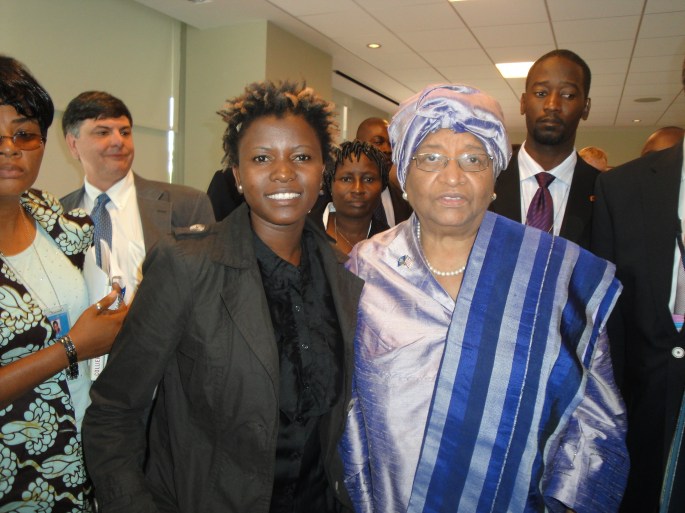
I took a few minutes of President Ellen Johnson Sirleaf to talk about the continent’s performance and what her country will embark on in the next five years.

Q: Ten years after Africa endorsed the Millennium Development  Goals, what’s there to show the world?

Ans: As of now we cannot say that any African country will achieve all eight of the MDGs by the target date

But 11 of the 20 cnoutries that have made progress on the several of them are found in Africa. So what we need to do now is to see how we can each country and collectively as African countries begin to target the areas where we think we can achieve and put all our efforts behind that.

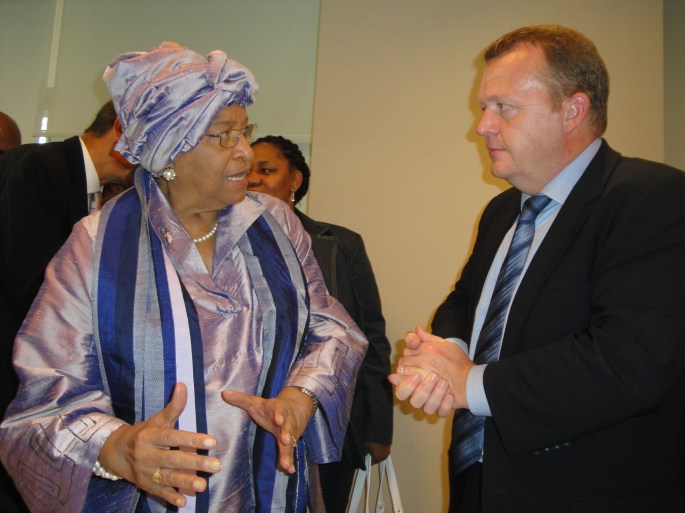
President Ellen Johnson Sirleaf and Danish Prime Minister Rasmussen. Rosebell's photo

Q: What would be the area that we should put the effort?

Ans: Each country will differ depending on their own institutions and their own capabilities in case of Liberia we are going to child mortality, women empowerment, partnerships, HIV/AIDS and maternal mortality

Other countries might go for poverty because it cuts across all sectors we all trying to find ways how we can achieve the targets but differently.

In Liberia maternal mortality is one of our biggest challenges we are going to be far from reaching the goal.

A minute with President Sirleaf

More commitment to Education in Africa needed

African nations lack the political will to provide access to primary education to all children, according to the Global Campaign for Education (GCE), a coalition of organisations in 100 countries.

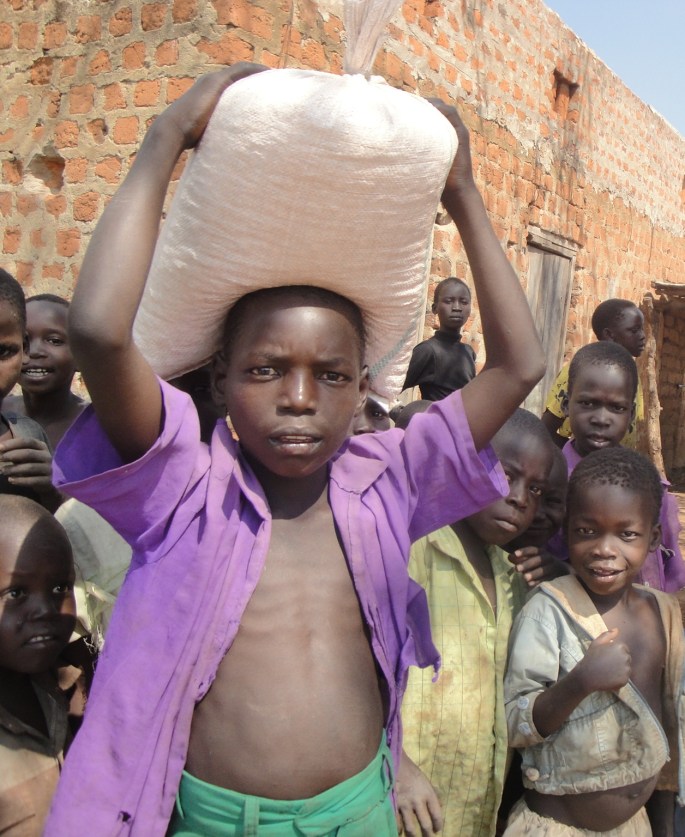
A school boy carrying grain in Lira Northern Uganda. Most children in post conflict Uganda can't stay in school due to hunger and poverty. Rosebell's photo

In most countries on the continent, achieving basic education remains a far-off dream, the coalition stated in a report titled, “Back to School? The worst places in the world to be a school child in 2010”, which was launched during the United Nations Millennium Development Goals (MDG) Summit in New York, where world leaders are gathering to evaluate their countries’ progress five years ahead of the 2015 deadline. Read more