It wasn’t me, President Museveni

The president has denied responsibility whether direct or indirect in last weeks riots that killed over 20 people in Kampala.

Without remorse or sympathy over the loss of lives, the president blamed the opposition for the riot.  The president must think Ugandans have eyes but no vision. This is total disrespect especially to those who lost their loved ones. He said the government will compensate those who lost property and if they are to pay relatives for the lives lost, this utter insensitivity from a head of state should cannot be tolerated.

Happy Independence, Costa Rica!

Pura Vida!

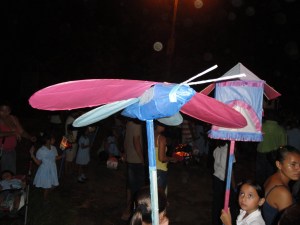
I was in Tortuguero on the day before independence and the performances are so great and so different from Uganda’s where the occassion is about the military marching. Here, ordinary people took time to make constumes and children really look up to the day as they are involved in the day’s performances.People show love for their country. Most Independence days in Uganda, people go about their business and it is almost a government/NRM show which gives one a real reflection of feelings of Ugandans towards this day

Independence day eve performances in Tortuguero. Rosebell Kagumire photo
A Costa Rican girl lights a candle inside a house with her country's flag.

My tribe is my pain

uganda-ethnic-diversityIf you live in Uganda you must come across these sentiments. My last name begins with Kag-Kagumire. My blog is not under that name for many reasons but this is one of them. When I say my last name to people sometimes they will say: Kaguta, so you’re from the west, Museveni’s relative etc. Even if it’s a slight joke it evokes a feeling that I can’t describe. To associate me with someone that is increasingly becoming negative makes me mad and in my tribe most times it’s okay to be mad and show it. I take time to explain to friends, sometimes gently other times with some emotion that I am from Bushenyi and I have never been to Rwakitura and that my father doesn’t own a single head of cattle. I am a private person but for the sake of clarity I am forced to talk about all these things and now i am writing about them.

The conversation  is only possible when the person saying this is civil enough to listen. Other times I am shopping in down town Owino and I believe a buyer should be free to check the garments and see if they like it. If they don’t they should be free to leave. For many times because I speak Luganda with a heavy Kinyankole accent, my tribe shows up in reactions from the trader.

Abanyankole nwatutama, Mulowooza mujja ku fira kuntebbe?” loosely translated as we are tired and you Banyankole, do you think you will die in power? Of course being in Owino I keep my cool and gently shake my head and I walk away. It happens many times and I look around to see whether others disagree with the sentiment but most keep mum and a few support this.

One in particular said that ‘we’ actually don’t come to buy but to check their suffering.

I like  bodas and I get to discuss with the riders that take me around Kampala. they will at times talk ill about my tribe with no idea that am one of the ‘evil people’ simply because sometimes it’s difficult for some to tell where am from. All this attacks  hurt more than any other abuse I have experienced in life.

But this kind of view is not limited to the ‘uneducated’ Ugandans. A friend once told me that his Ugandan female friend hates ‘westerners’ so much that at her work place when job applications are brought in, she sorts out the west first.  This personal level of disdain for a group of people  is unfathomable. Others point out how rich you’re and how many opportunities you get. Many times I tell the people about my life which is not the most difficult one but is not any better than that of an educated person from the east, north or central.

I am forced to tell them that I am not just a product of Museveni’s love for power that my story goes a few generations ago. That am what I am because my grandfather, late Paskali Bwantamu happened to be a teacher (who by the way died without getting his pension despite many attempts, he served  government for over 30 years). And that he rose above society attitudes about educating a woman to give my mother an education. That my father’s side, my grandfather made several trips to Buganda to till gardens for most of the year to buy himself and his family chunks of land and that these trips enlightened him and that he valued education too and sent my father to school. That my mother was not educated because of Museveni or Banyankole in power, but she went to school during Idi Amin’s era when education was not a hassle. She still values her picture from her graduation day where Amin was holding her hand. That she simply went to school on merit and became a Vet doctor on merit. Without having a relative in the Bushenyi district administration she got a job there.

I am still forced to say that I am what I am because my mother struggled to get loans and all sorts of help to see me and my five siblings through school. I can’t easily convince these people who say tribalistic words to me that I spent most of early years tilling land to get food and money with family. That I have learnt from my mother that  hard work pays and that I don’t need to know anyone to be somebody. I have learnt also from many people’s experience that you can’t keep a good man down. That from this motivation I have literally taken on any chances that have come my way including working in three newsrooms in four years.

All I am, I have learnt from friends many of whom are not even from the ‘west’. My friends are a mixed bag of all tribes and races. It’s hard to convince some people that my generation is unfortunate because Uganda has become no man’s land with many not caring about the effects of their actions. That to get a job you must know someone who will get a bribe from you, sometimes your first salary goes to this person. We are facing high levels of unemployment that at 25 years sometimes 30, many of us still live on handouts from relatives and our old parents.

I try to tell people that I worked for over 4 years but I still have no savings that If I lost a job I would probably go back to Kibona or look for a relative in Kampala who cannot easily allow me to stay under their roof. I try to say that we face the same challenges but these people disagree. That because Makerere increased fees I don’t get much sleep here in Costa Rica where I am studying because I worry much about my little brother who’s just enrolled.

And when I say study, they will ask, was that state scholarship? I get mad and  ask why would a state sponsor someone that disagrees with them. And because I know why the question came up I already know the answer, my tribe is the ‘fortunate one’. They don’t believe that I am at UPEACE because I dared to apply many times.

In the wake of these riots in Kampala, I fear that tribalism is consuming us bit by bit. I also fear that because sometimes I can’t say the L without calling it R, it may translate the earlier stated sentiments into an attack.

Because these people wont listen to my cries or my confession that my father is no cattle herder and  that my siblings don’t have jobs despite having a good education, that I have to work not only for myself but also for my little cousins who are less fortunate. They will not see me as facing the same predicament as they are. They will not believe that everyday I long for the day Museveni will decide to leave that seat peacefully. They don’t get it that I dream of a Uganda where my gains and progress are not tied to my long nose (which is not even long by Ankole standards). They will not listen that I have traversed Uganda and have seen people in inhumane conditions in northern Uganda. That many times I think about children that I once interviewed who had been forced to kill their parents by LRA. That I feel hopeless and helpless and wonder what their lives will be with no proper rehabilitation in the area.

They don’t see my story and lots of other people’s stories that I carry with me everyday especially that child soldier at a rehab centre in Gulu that I played football with and when I tried to wash my hands at a tap he was abit agressive and  told me that I was washing my hands in blood. Yes blood, thats what he sees when most of us see water. They won’t believe me that this brings tears to my eyes because my tribe is supposed to only look for power. They will not see me in this way because my tribe blurs their vision. I am not denying that some people in my tribe have enriched themselves on state money but why should I pay for their deeds? I don’t fear judgement for sometimes it avails a chance for self assesment but judge me by character as Dr.King said.  Why should my tribe be my pain?

I told you so, Otafiire tells Museveni

I may not agree with Maj. Gen. Kahinda Otafiire’s words but certianly I agree with his disagreement on restoration of kingdoms without prior assesment on how they would work and what their position in power would be. Read more about Otafiire’s comments here at Daily Monitor.

“Gen. Otafiire is vehemently opposed to the restoration of the monarchy in Ankole; which has never benefited from the 1992 High Command waiver as well as the 1995 constitution which restored traditional institutions.”

And I am glad we never got this Kingdom back, Ankole is a better place in terms of unity and progress.

No Ugandan life should be lost because Govt wants to keep Kabaka hostage

I woke up this morning to the news of riots and death in Kampala. The Baganda youth protesting the decision by Police to block the prime minister of Buganda to enter Kayunga ahead of the Kabaka’s visit sent Kampala ablaze.

I am not a sympathiser of most of Buganda’s demands and moves but I don’t think the government can keep the Kabaka hostage in his own country. He is free to visit anywhere as long as there are his subjects in that part of the country.  The minority Banyala as much as they have a concern for them to ask Kabaka to seek permission from their leader means that cultural institution have power to choose who enters their kingdom or not. The power which I believed the constitution puts in the hand of government through the police and courts.  I think it’s hard to see kingdoms in Uganda right now in terms of territories. It’s like the Kabaka for instance can’t meet Baganda in UK without permission from the Queen of England instead of the police of the area. The Police in this case is the institution to allow the Kabaka to visit his subjects in that part of the country. The question that Museveni  didn’t forsee was the terriotorial issue of that comes with kingdoms. Should the cultural institutions be observed only in historical territories amidst a modern Uganda where many Ugandans live outside their Kingdom. Is this to say that the Alur King cannot meet the Alurs in Kampala unless he asks permission from the Kabaka?  The riots are just a symptom of tribal divisions in Uganda.

Back to the riot why should Ugandans die in a riot that could have been prevented? This reactionary behaviour of the government in Uganda has must be checked. Ugandans must seek explanations for the loss of lives and property in the riot. The government is basically failed to protect citizens from destruction.

But this is not to exonerate those who orchestrated the riots. For the youth to resort to riots which cause losses to traders who are already struggling is not logical. And using violence against the state many times is counter-productive.  Burning government cars when you and I are the ones who pay taxes to buy them is like being disappointed and you burn your own house. Anyone behind this movement to oppose government decision regarding the Kabakaship should know that when you fight alone your cause is likely to be lost. I think if you want a certain status you have to do so much to win others who don’t see the self-governance in the same prism as you.

I have covered riots in Kampala and what I know they tend to actually lose grip on what direction they should take. There more about attention and leaders often think causing property loss attracts attention, which it does, but this is just being myopic. I believe if one has a cause worth fighting for they should do a lot of planning and try not to cause loss to those who have nothing to do with the state of things. Often the demonstrations have turned into looting which really blurs the intentions of the demonstration.

But still government could have prevented this by dealing with the situation in a different way. But when you have a government that doesn’t care about the losses of many struggling ordinary Ugandans it will take decisions that incite violence other than resolve matters at hand.

I don’t think the Kabaka poses such a threat to the regime and the Banyala that he has to be made a prisoner of sorts. And if he doess, there are better ways to address this.  And no Ugandan life should have been lost in the name of blocking a king from visiting another part of the country.

Was genocide committed in northern Uganda?

The recent return of Olara Otunnu, the former UN Under secretary to Uganda politics and his continued claims that genocide was committed in northern Uganda has drawn quite some reactions in the country. Top of it has been the army spokesperson Lt. Col Felix Kulaigye who is defending the institution saying it behaved well and a few incidents of murders got deserved attention and justice from the army system. Otunnu’s claim is backed by some members in the Acholi Parliamentary group like Reagan Okumu.

For anyone especially outsiders (read not direct victims of the conflict) to engage in the debate we must understand what genocide is.

Scholars like Gregory H. Santon, the founder of Genocide Watch have said genocide doesn’t only just describe the killings but it is rather a process that happens over time. There are eight stages of genocide which include classification, symbolisation (using symbols to distinguish the group), dehumanisation (“dehumanization overcomes the normal human revulsion against murder.”), organisation and polarisation, preparation, extermination and then denial.

Whereas all genocides don’t follow this chronology, most of them have most elements of these stages.

With the accusations at hand we must ask ourselves, was there a well planned strategy to exterminate people of the north by President Museveni’s regime? If it happened, how did it happen and what features of dehumanisations can we point out. What about symbolisation?  I know many people both in the past and today have referred people from northern Uganda with derogatory terms like Badokoli. In fact in my language ‘we’ even go further to dehumanise them calling them Bakooko

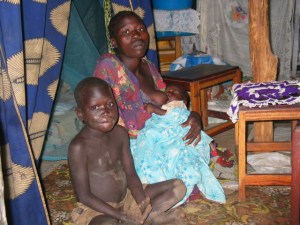
A woman with her kids in hut at Anaka IDP camp. Rosebell Kagumire photo.

(ekikooko is an animal) because of their different black colour.Did such kind of dehumanisation play a major role in how government dealt with the conflict, either its inaction or bad reactions?

If we follow these stages, then Kulaigye’s institution, the army is just a small part in the genocide process because the armies usually move to act on orders from the politicians and this is after the politicians have done enough negative canvassing to justify their moves.

And for a situation to be genocide there has to be a plan to kill a population in part or as a whole. Otunnu’s claims suggest that the government is at the denial stage.

And Kulaigye points out that the ICC investigations cleared the Ugandan army but this doesn’t necessarily take away the debate for it can take long before genocides are acknowledged because of politics.

For instance the genocide of Armenians in 1915 has just been recognised. Also the

Surviving Herero after an escape through the arid desert of Omaheke. Wiki photo

mass killings of the Herero and Namaqua in Southern Africa by Germans from 1904 until 1907 what has come to be called the first genocide of the 20th century, wasn’t recognised as genocide straight away.

(In 1985, the United NationsWhitaker Report recognized Germany’s attempt to exterminate the Herero and Nama peoples of South-West Africa as one of the earliest attempts at genocide in the 20th century. The German government apologized for the events in 2004)

I believe we still need to investigate and debate killings in northern Uganda and what happened especially times when there was restricted movement and when the outside world and media in Uganda was not on top of the issue. I am among those who are not quick to say there was a genocide but I will also not be part of the group that believes that government actions in the north were free of any contempt for the population. It’s the truth that will set the country free not the blame games. It’s unfortunate that Kulaigye and the regime want to use use seditous laws to stop the debate.  We should be able to disect the claims and deal with them. If you stop debates, it kind of gives the impression you’re scared of debate or its outcomes. Besides that doesn’t end the debate but only postpones it.

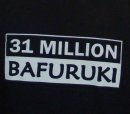
Get the 31 MILLION BAFURUKI T-SHIRT

The T-Shirt front writting

A s I indicated in an earlier post, you can get a T-SHIRT, for 31 Million Bafuruki, an expression against those that seem to be enjoying the naming and supporting of proposal that will have implications on ethnic harmony in Uganda. This is not to say people can’t seek genuine interventions to help a certain group of disadvantaged Ugandans get the required attention and solutions to their problems. But members of this group are against use of ethnicity as a dividing factor which politicians in Uganda are currently doing. One can be proud of their tribe and at same time be committed to seeing a a justice country.So stand for Uganda and be part of the 31 Million Bafuruki.  You can also join the discussion on facebook. Just search for 31 Million Bafuruki.

Slavery Memorial Day, We can’t forget

Today August 23rd is a a Slavery Memorial Day, many set this day aside to remember the horrendous inhumane acts that saw Africa and Africans robbed of their dignity for centuries. Even though slavery was abolished, its consequences are still faced by many today. Like someone said at UPEACE, if history is not remembered it may happen again. I also think on such a day, we should support people that are working hard to eliminate modern day slavery. Slavery is still practiced in many parts of the world and it goes on with little attention. In many African countries like Niger, Chad, Mali the estimates of enslaved people go beyond 20 million. In many African settings many practice child labour. In Uganda, some people shameless employ 12 year olds to watch over and cook for their children who are almost their age.  In Uganda, slavery-like acts may not necessarily be brought upon these children forcefully but poverty and economic inequality force many to be victims.

I looked up for discussions on this subject today being the day for remembrance and didn’t find much. I found this blog post on slavery commemorations discussion in the UK.

Below are pictures from Goree Island off the Senegalese coast where most slaves were kept and shipped off. I visited the island March this year and everything on the island has a moving slavery related story behind it.

A view of the Island of Goree is 2 kilometres from Dakar main harbour. Rosebell Kagumire photo
A view of the Island of Goree 2 kilometres from Dakar main harbour. Rosebell Kagumire photo
A writting on a wall in one of the slave cells. A slave had to be 60 kg. Rosebell Kagumire photo
A writting on a wall in one of the slave cells. A slave had to be more than 60 kg. Rosebell Kagumire photo
A cell for children
A cell for children
My guide standing at the door of no-return facing the Atlantic. Rosebell Kagumire photo
From the museum on the island. some shackles, guns and other things used by slave traders
DSCF4144
Rosebell Kagumire
The statute of freedom signifying the end of slavery. Rosebell Kagumire photo.

Olara Otunnu returns.Observer interview a must read

“You know the cynicism of this lot knows absolutely no bounds.” Olara Otunnu on Museveni’s regime in a 2007 interview with Observer.

The paper reproduced the interview ahead of Otunnu’s return to Uganda on August 22.

Kulayigye go beyond rubbish on the army’s part in Northern Uganda war crimes

Maj.Felix Kulayigye, Uganda army spokesperson

The return of Otunnu has been the talk of town for the last 3 or so months and The Independent wrote a good story on what Otunnu’s return to Uganda politics means for the political map come 2011.

I may agree with some of Otunnu’s criticism of Museveni’s government but on genocide I don’t know if that charge would stand especially seeing that Omar al Bashir was not charged for genocide in darfur. Of course Otunnu will not bring such charges before the ICC as they have their eyes on Joseph Kony for now. But what the government has refused to do is accept that mistakes have been on their part and the Mukura massacre has never been given due attention.

Daily monitor gave perspective to Olara Otunnu’s BBC interview and what caught my eye was this quote from Lt. Col. Kulayigye, the army spokesperson.

“What he is saying is total rubbish,” said Lt. Col. Kulayigye, the defence and military spokesman, adding “If government forces were committing genocide, how then could civilians run away from rebels to them for sanctuary?” Lt. Col. Kulayigye said Dr Otunnu served in both the Obote II government and Gen. Tito Okello Lutwa junta “that massacred Ugandans”, and he has “no moral right whatsoever to talk against human rights records of the UPDF.”

If you have spoken to Kulaigye as a journalist for him to explain a certain assertion against the army you must have failed to catch what quote him on and the Daily monitor quote says it all. It’s all about rubbish, nosense and God knows we are about to hear some bull….. But above that I feel that Kulaigye in this story sounds like a politician or some sort of historian rather than an army spokesperson. I don’t think he should even be the first person to be quoted because apparently he can’t seem to refute a statement or defend the army without saying rubbish.

Well Afande Kulaigye to show that what you’re saying is not rubbish please stop politicking just provide names of UPDF officers or soldiers who were prosecuted for killing, raping civilians over the course of the war and explain what happened at Mukura at length. We are not asking you about Obote’s sins and deeds for you were not his spokesperson. You are responsible for speaking for the current army so just explain to the nation.

For those of us who are not sure of what really went on you must convince us by going beyond the rubbish word.

Note: I stand to be corrected, was Kulayigye promoted?